
Assaulting Flight Attendants: Law, Safety and Consequences
How mid‑air violence against flight attendants triggers criminal charges, federal investigations, and long‑term consequences.
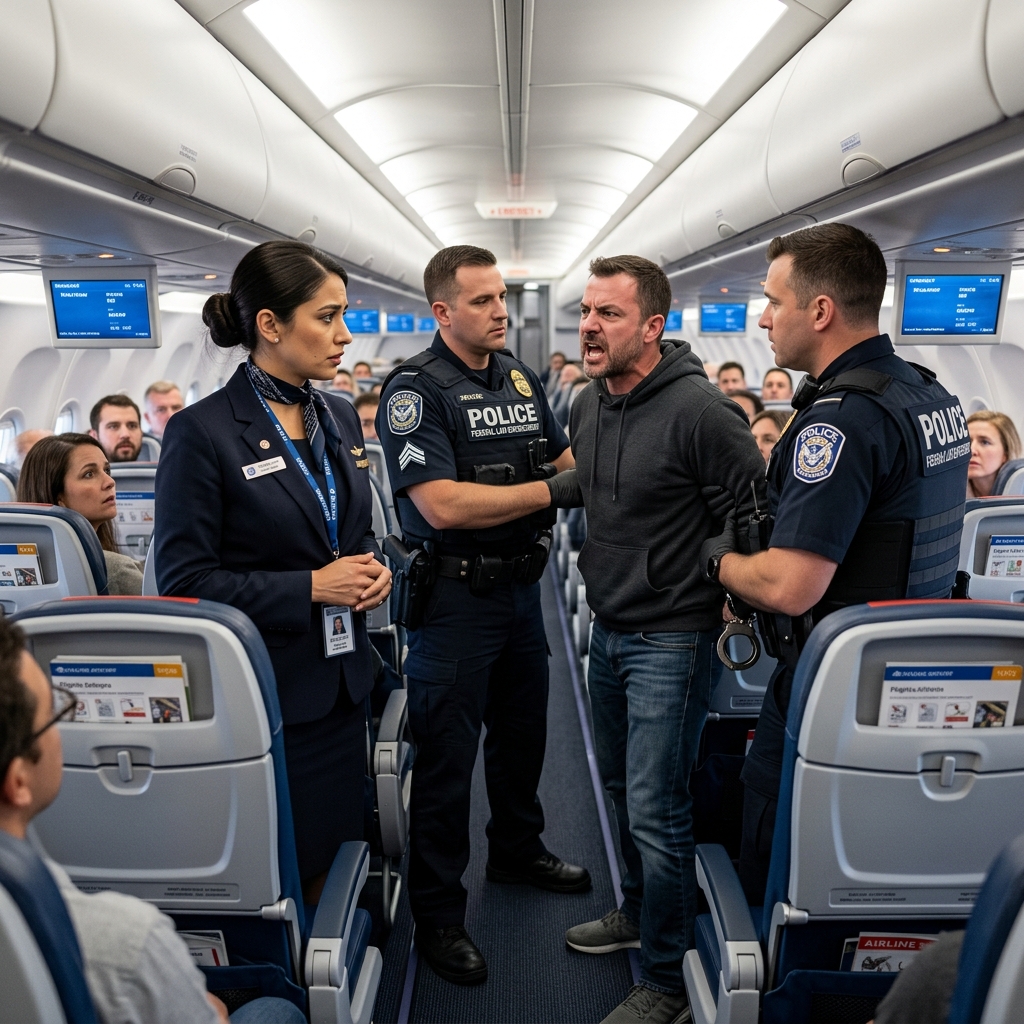
Reports of passengers attacking flight attendants have underscored how quickly a routine flight can turn into a criminal investigation and emergency landing. These incidents raise important questions: What laws apply at 30,000 feet, who investigates, and how serious are the consequences for passengers who cross the line into violence?
This article uses a high‑profile case of a diverted U.S. flight as inspiration to explore the broader legal and safety landscape surrounding assaults on cabin crew. It offers practical guidance for travelers, explains the relevant statutes, and highlights how airlines and federal regulators respond when the “friendly skies” become anything but.
Why Assaults on Flight Attendants Are Treated So Seriously
Flight attendants are not just service staff; they are safety professionals responsible for enforcing federal regulations, managing emergencies, and protecting passengers. When a passenger assaults a flight attendant, the incident jeopardizes:
- Physical safety of crew and nearby passengers.
- Order and discipline required for safe operation of the aircraft.
- Compliance with federal rules such as mask mandates or seatbelt requirements.
- Security, particularly when the disturbance is near the cockpit or emergency exits.
Because an aircraft is a confined environment and escape is impossible mid‑flight, U.S. law treats interference with crew duties as a serious offense. Under federal statutes, intentionally assaulting or intimidating a flight attendant in a way that interferes with their duties can be prosecuted as a felony, with substantial prison exposure.
Key Legal Framework: Who Has Jurisdiction?
When an assault occurs in the air, multiple layers of jurisdiction may apply. The exact mix depends on the route, the airline, and where the plane lands, but common players include:
| Authority | Primary Role | When Involved |
|---|---|---|
| Federal Aviation Administration (FAA) | Regulates flight safety; can investigate disruptive passenger incidents impacting safety. | Almost any serious disturbance affecting crew duties or flight safety. |
| Federal law enforcement (e.g., FBI) | Investigates federal crimes on aircraft and refers cases for prosecution. | Assaults, threats, or interference with crew on U.S. flights, especially interstate or international routes. |
| Local police at diversion or destination airport | Immediate response, arrest, and initial custody of the suspect. | When aircraft lands following an in‑flight incident. |
| U.S. Attorney’s Office | Decides whether to bring federal charges and what counts to file. | Serious assaults, repeated misconduct, or incidents with broad safety implications. |
The FAA has made clear in public statements that aircraft diverted due to passenger disturbances are subject to investigation, and that it will examine both the safety impact and the circumstances leading to the event. Local law enforcement typically handles the arrest and initial booking when the plane lands, while federal authorities assess potential felony charges.
Common Federal Charges for In‑Flight Assault
Several federal statutes can apply when a passenger attacks or seriously disrupts a flight attendant. Key categories include:
- Interference with flight crew functions: Federal law prohibits assaulting, threatening, or intimidating a flight attendant if it interferes with their performance of duties. Convictions can carry lengthy prison sentences, sometimes referenced as “up to 20 years” in public reporting when the conduct is severe.
- Simple or aggravated assault: If a crew member is injured—for example, suffering a broken nose or being hospitalized—the act may be treated as aggravated assault, increasing potential penalties.
- Threats of violence or attempted access to the cockpit: Trying to enter the cockpit or making credible threats can lead to additional charges related to aircraft security and terrorism‑related statutes.
- Interference with transportation safety: Extremely disruptive behavior that endangers the aircraft or passengers can trigger broader transportation safety provisions and enhanced sentencing.
These federal offenses are distinct from ordinary local assault charges. Because airlines operate across state lines and the federal government regulates aviation safety, incidents on commercial flights often fall squarely within federal jurisdiction.
Typical Incident Timeline: From Cabin Chaos to Courtroom
While each case is unique, many serious assaults on flight attendants follow a similar pattern:
- Initial dispute: The event often begins with a disagreement over compliance, such as refusing to wear a mask, follow seating rules, or stop consuming personal alcohol.
- Escalation and physical assault: Conflict escalates to yelling, threats, or physical contact. In high‑profile cases, witnesses have reported passengers punching flight attendants and causing visible injuries.
- On‑board restraint: Crew may use handcuffs, seat belts, or improvised restraints, sometimes with assistance from volunteer passengers, to limit the aggressor until landing.
- Emergency diversion: The captain, informed by the crew, may decide to divert to the nearest suitable airport to remove the passenger and provide medical care to the injured attendant. Aircraft have been diverted to major hubs such as Denver for this purpose.
- Law enforcement boarding and arrest: After landing, the plane taxis to a gate where police or security officers board, remove the restrained passenger, and take them into custody.
- Investigation and charging decisions: Federal regulators, airline security, and prosecutors review witness statements, video evidence, and medical records to determine what charges and penalties are appropriate.
Many airlines publicly condemn such behavior and cooperate closely with investigators. In some widely reported incidents, airline executives have described assaults on crew as among the most disturbing conduct they have seen, signaling strong institutional support for aggressive prosecution.
Airline Policies and Civil Consequences for Passengers
Beyond criminal liability, passengers who assault flight attendants face significant civil and administrative consequences. Common airline and regulatory responses include:
- Lifetime or long‑term bans from the airline involved, preventing the passenger from booking future flights with that carrier.
- Placement on internal or industry‑shared “no‑fly” lists, especially for severe or repeated misconduct, limiting access to air travel more broadly.
- Civil lawsuits by injured crew members seeking compensation for medical bills, lost wages, and emotional distress.
- Regulatory fines imposed by federal authorities for unruly passenger behavior that threatens safety, which can reach tens of thousands of dollars in some cases.
- Insurance and employment impacts, including difficulties obtaining certain jobs that require travel or security clearances.
These measures complement criminal sanctions. A passenger might simultaneously face imprisonment, restitution orders, civil damages, and long‑term travel restrictions.
Factors That Frequently Contribute to In‑Flight Assaults
Public reporting and regulatory statements highlight several recurring factors in violent incidents involving flight attendants:
- Intoxication: Witnesses often describe passengers who assaulted crew members as having consumed significant alcohol before or during the flight.
- Refusal to comply with safety rules: Mask mandates, seatbelt requirements, and restrictions on movement during turbulence or approach phases have been frequent flashpoints.
- Stress and frustration: Delays, tight connections, and broader societal tensions can amplify conflicts and reduce patience.
- Mental health or behavioral issues: Some incidents appear to involve individuals struggling with mental health crises or impulse control, though this does not eliminate legal responsibility.
Understanding these factors helps airlines design prevention strategies—such as limiting alcohol service, improving communication, and training crew in de‑escalation techniques—but also underscores that individual passengers retain responsibility for their choices.
Preventing Incidents: What Passengers Should Do
Most flights are uneventful, and serious assaults on crew remain rare relative to the millions of passengers carried each year. Nonetheless, there are practical steps travelers can take to reduce the risk of conflict and contribution to overall safety:
- Know and follow the rules: Review airline communications and listen to safety briefings. Crew instructions are not suggestions; they are backed by law and designed for safety.
- Limit alcohol and substance use: Consider avoiding heavy drinking before or during flights. Intoxication frequently appears in reports of severe in‑flight disturbances.
- Manage expectations and stress: Build extra time into itineraries, prepare for delays, and use coping strategies to handle frustration without lashing out.
- Respect crew authority: Flight attendants are tasked with enforcing regulations on behalf of the airline and federal government. Calm, respectful dialogue is more effective than confrontation.
- Support safety if an incident occurs: Passengers may be asked to move, change seats, or help secure a disruptive individual. Complying with such requests can protect everyone on board.
By treating crew as safety partners rather than service staff, passengers help maintain the stable environment necessary for safe air travel.
What Happens If You Witness an Assault on a Flight?
Witnesses play a crucial role in documenting assaults and supporting investigations, especially in crowded cabins where events unfold rapidly. If you observe an attack or serious disruption:
- Do not intervene recklessly: Only assist if crew request help or if you can safely do so without escalating the situation.
- Follow crew instructions: You may be asked to change seats, help restrain an individual, or clear an area.
- Observe details: Note the time, the sequence of events, and any statements made by the disruptive passenger.
- Provide a statement after landing: Law enforcement and airline security often interview witnesses as part of their investigation.
- Share evidence appropriately: Photos or videos can assist investigators, but be mindful of privacy and follow guidance from authorities.
Objective witness accounts can help clarify whether the passenger’s actions were intentional, how severely they interfered with crew duties, and whether additional charges are warranted.
Implications for Airlines and Regulators
High‑profile assaults on flight attendants have broader implications beyond individual prosecutions. They influence:
- Regulatory priorities: Agencies such as the FAA may adjust enforcement strategies, increase fines, or issue new guidance on unruly passenger behavior.
- Training and staffing: Airlines may expand de‑escalation training, modify crew staffing levels, or alter onboard security practices to better manage aggressive passengers.
- Public messaging: Carriers often issue strong public statements condemning violence and explaining consequences, both to reassure employees and deter future misconduct.
- Operational decisions: The frequency of severe disturbances may affect policies on alcohol service, mask enforcement, or early removal of visibly intoxicated passengers.
Each serious incident serves as a case study in how quickly safety can be threatened—and how the system responds to restore order. As regulators compile data on disruptions, they refine approaches to balancing passenger comfort with robust safety enforcement.
Frequently Asked Questions
Is assaulting a flight attendant always a federal crime?
Assaulting a flight attendant can trigger both federal and state charges. On U.S. commercial flights, interference with crew duties is commonly treated as a federal offense, especially when the aircraft is operating interstate or internationally. Local authorities may also pursue state assault charges once the plane lands.
How severe can the penalties be?
Penalties vary depending on injuries, intent, and prior record. In serious cases, public reporting has referenced potential sentences of up to two decades of imprisonment for interference offenses combined with assault charges. Fines, probation, and restitution to the victim are also possible.
What role does the FAA play after an incident?
The FAA investigates passenger disturbances that affect safety, such as assaults on flight attendants, and can impose civil penalties or refer matters to law enforcement. It also reviews whether additional regulatory or policy measures are needed to prevent similar incidents.
Can an airline permanently ban a passenger?
Yes. Airlines generally reserve the right to refuse carriage to individuals whose behavior endangers safety or disrupts operations. After a serious assault on crew, permanent or long‑term bans are common, sometimes accompanied by placement on internal no‑fly lists.
What if the dispute began over a rule the passenger disagreed with?
Disagreement with a rule, such as a mask mandate or seating policy, does not justify violence or refusal to comply. Flight attendants are obligated to enforce regulations, and passengers remain legally responsible for responding in a lawful, non‑violent manner.
References
- Passenger on American Airlines flight punches flight attendant — ABC7 News. 2021-10-28. https://abc7news.com/post/american-airlines-flight-attendant-assaulted-jfk-airport-passenger-assaults/11175238/
- Plane diverted to Denver after passenger assaults flight attendant — NPR. 2021-10-28. https://www.npr.org/sections/coronavirus-live-updates/2021/10/28/1049981680/american-airlines-passenger-flight-attendant-assault-diverted-mask
- Orange County-bound flight diverted after passenger assaults flight attendant — ABC7 Los Angeles. 2021-10-28. https://abc7.com/post/american-airlines-flight-attendant-assaulted-jfk-airport-john-wayne/11175184/
- American Airlines CEO: Alleged assault on flight attendant among worst acts he’s seen — Fox Business. 2021-10-28. https://www.foxbusiness.com/markets/american-airlines-outraged-flight-attendant-assault-denver
- United Airlines passenger tries to enter cockpit, assaults flight attendant — Denver7. 2021-03-05. https://www.denver7.com/life/travel/united-airlines-passenger-tries-to-enter-cockpit-assaults-flight-attendant
Similar Articles








Read full bio of medha deb




