
Assault vs Battery: Key Legal Distinctions
Unravel the differences between assault, battery, and aggravated forms to navigate criminal charges effectively and understand penalties.
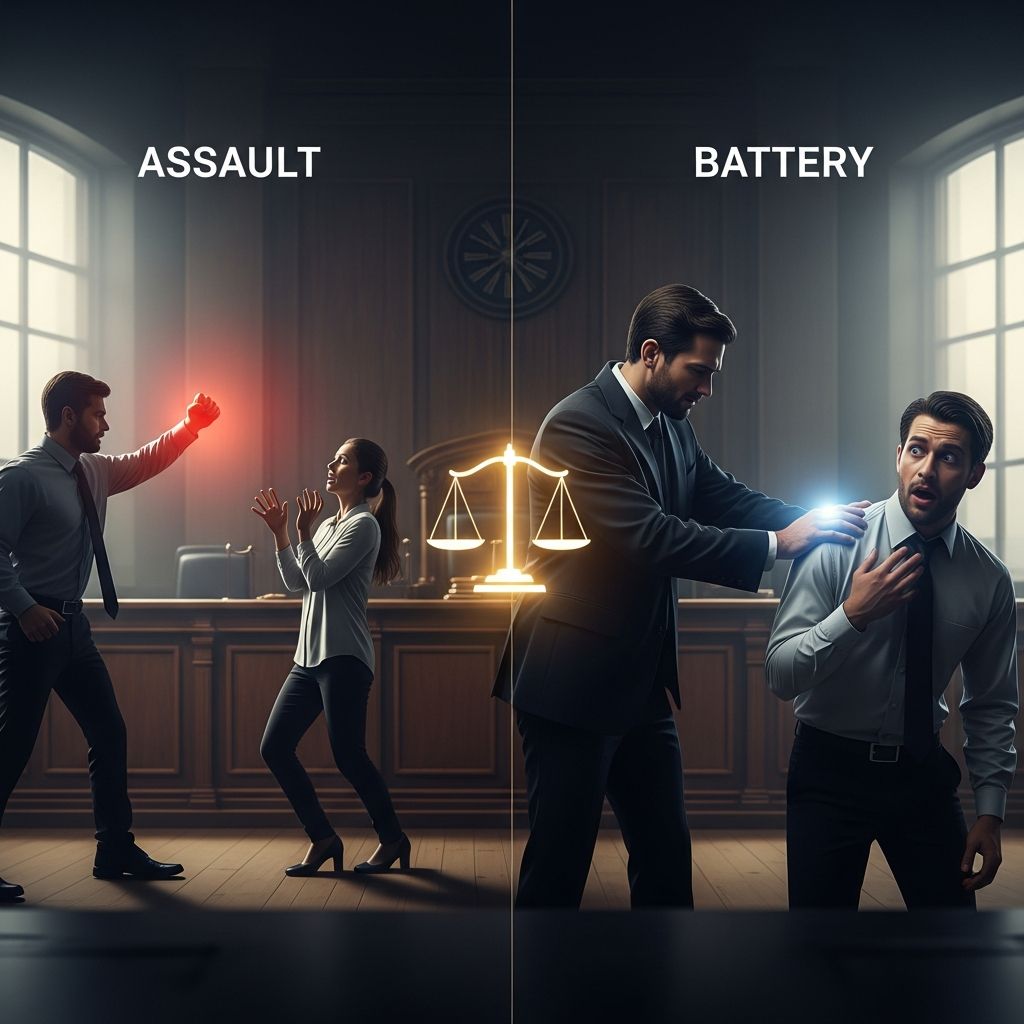
Assault and battery represent foundational concepts in criminal law, distinguishing between threats of harm and actual physical contact. While assault focuses on creating fear of imminent injury, battery requires offensive or harmful touching, with both potentially escalating to aggravated forms involving weapons or serious injury.
Core Definitions in Criminal Law
Criminal statutes across the U.S. define these offenses to protect individuals from violence and intimidation. Assault generally involves an intentional act that places another person in reasonable apprehension of immediate bodily harm, without needing physical contact. For instance, swinging a fist aggressively or pointing a gun while issuing a verbal threat can constitute assault if it induces genuine fear.
Battery, by contrast, demands actual physical interaction—either harmful or offensive—performed intentionally without consent. This includes striking, pushing, or even spitting on someone, as no significant injury is required; the unauthorized contact suffices. Jurisdictions like Florida explicitly codify battery under statutes such as Section 784.03, emphasizing intentional touching against the victim’s will.
State Variations in Terminology and Application
Laws differ significantly by state, affecting how charges are framed. In Maryland, assault encompasses both traditional assault (threats) and battery (contact), consolidated into degrees like first- and second-degree assault. Second-degree covers offensive touching, while first-degree involves weapons or severe injury.
Colorado treats assault and battery as distinct, with assault requiring intent, victim apprehension, and capability to harm, but no contact. Battery completes the act through intentional contact. Illinois similarly separates them: battery involves bodily harm or provoking contact. These variations underscore the need to consult jurisdiction-specific codes when facing charges.
- Maryland: Single ‘assault’ statute includes contact (battery-like acts).
- Florida: Separate assault (threat) and battery (touching) definitions.
- Colorado: Distinct offenses; battery needs harmful/offensive contact.
Simple vs Aggravated Offenses
Offenses classify as simple (misdemeanor) or aggravated (felony) based on severity. Simple assault involves threats or minor acts causing no or minimal injury, like a shove resulting in bruises. Penalties often include fines or short jail terms.
Simple battery mirrors this with light contact, such as slapping without weapons, typically a misdemeanor. Aggravated assault elevates when a deadly weapon is used or serious injury is intended/threatened, becoming a felony with years in prison.
Aggravated battery involves weapons, great bodily harm, or vulnerable victims (e.g., elderly, children), leading to severe sentences. For example, using a knife in an attack shifts simple battery to aggravated.
| Offense Type | Key Elements | Classification | Typical Penalties |
|---|---|---|---|
| Simple Assault | Threat of harm, no contact | Misdemeanor | Fines, up to 1 year jail |
| Simple Battery | Minor offensive contact | Misdemeanor | Fines, short jail |
| Aggravated Assault | Weapon or serious injury threat | Felony | 5-20 years prison |
| Aggravated Battery | Weapon, severe harm | Felony | Years in prison, high fines |
Real-World Examples Illustrating Differences
Consider a bar fight: Yelling threats while raising a fist is assault; landing the punch is battery. If a broken bottle is wielded, it becomes aggravated assault or battery.
Non-contact battery occurs indirectly, like injuring someone during a purse snatch without touching them directly. Offensive acts like pouring hot water or spitting qualify as battery due to their provocative nature, even sans injury.
Threats must be immediate; future harm warnings alone do not suffice for assault— an overt act, like advancing menacingly, is needed.
Penalties and Consequences
Misdemeanor convictions bring fines (hundreds to thousands), probation, community service, or jail up to a year. Felony aggravated cases escalate: 2-4 years for lesser forms, up to life for extreme violence with weapons or near-death risks. Additional penalties include restraining orders and restitution to victims.
Classifications matter: Class 1 misdemeanors carry harsher terms than Class 3. Aggravating factors like targeting protected groups amplify sentences.
Common Defenses Against Charges
Defenses hinge on negating elements. Lack of intent defeats both—accidental contact isn’t battery. Self-defense justifies actions if reasonably responding to threat.
For assault, proving no reasonable fear (e.g., empty threats from afar) or inability to harm works. Consent negates battery in sports or medical contexts. Alibi, mistaken identity, or false accusations are viable.
Experienced attorneys challenge evidence, witness credibility, or procedural errors for dismissals or reductions.
When Charges Overlap or Combine
Prosecutors often charge both assault and battery for complete acts: threat followed by contact. North Carolina exemplifies assault as imminent threat, battery as harm completion. Dual convictions heighten penalties, but plea deals may consolidate.
Aggravated overlaps intensify: Weapon use in contact elevates to felony assault/battery.
Seeking Legal Help: Next Steps
Facing charges? Contact a criminal defense attorney immediately. They analyze specifics, build defenses, and negotiate outcomes. Early action preserves rights and options.
Frequently Asked Questions (FAQs)
Does battery always require injury?
No, offensive or provocative contact without consent suffices, like spitting or unwanted touching.
Can words alone be assault?
No, an overt act creating imminent harm fear is needed, not mere verbal threats.
What makes an offense aggravated?
Weapons, serious injury intent/result, or vulnerable victims elevate to felony.
Are assault and battery always separate charges?
No, states like Maryland combine them under assault statutes.
What are typical misdemeanor penalties?
Fines, probation, or up to 1 year jail; felonies bring multi-year prison.
References
- What Are the Differences Between Assault and Battery? — Zachary McCready Law. 2023. https://zacharymccreadylaw.com/blog/what-are-the-differences-between-assault-and-battery/
- Assault vs. Battery: What’s the Difference in Maryland? — Andrew Alpert. 2023. https://andrewalpert.com/blog/assault-vs-battery-whats-the-difference-in-maryland/
- Florida Assault and Battery Laws Explained in Simple Terms — Flaherty Defense Firm. 2023. https://www.flahertydefensefirm.com/faqs/florida-assault-and-battery-laws-explained-in-simple-terms.cfm
- Assault vs. Battery: Are they the same or different crimes? — Vindicate Law. 2023. https://www.vindicatelaw.com/blog/assault-vs-battery-are-they-the-same-or-different-crimes/index.html
- Assault Vs Battery: Understanding The Difference In Criminal Law — Criminal Lawyer Denver. 2023. https://criminallawyerdenver.com/blog/what-is-the-difference-between-assault-and-battery/
- Differences Between Assault, Battery, and Aggravated Assault — Nolo. 2023. https://www.nolo.com/legal-encyclopedia/assault-battery-aggravated-assault-33775.html
Similar Articles








Read full bio of Sneha Tete




