
Arrestee DNA Collection: A Threat to Privacy and Justice
Expanding DNA databases to include mere arrestees threatens civil liberties.
The Allure and the Danger of Biometric Surveillance
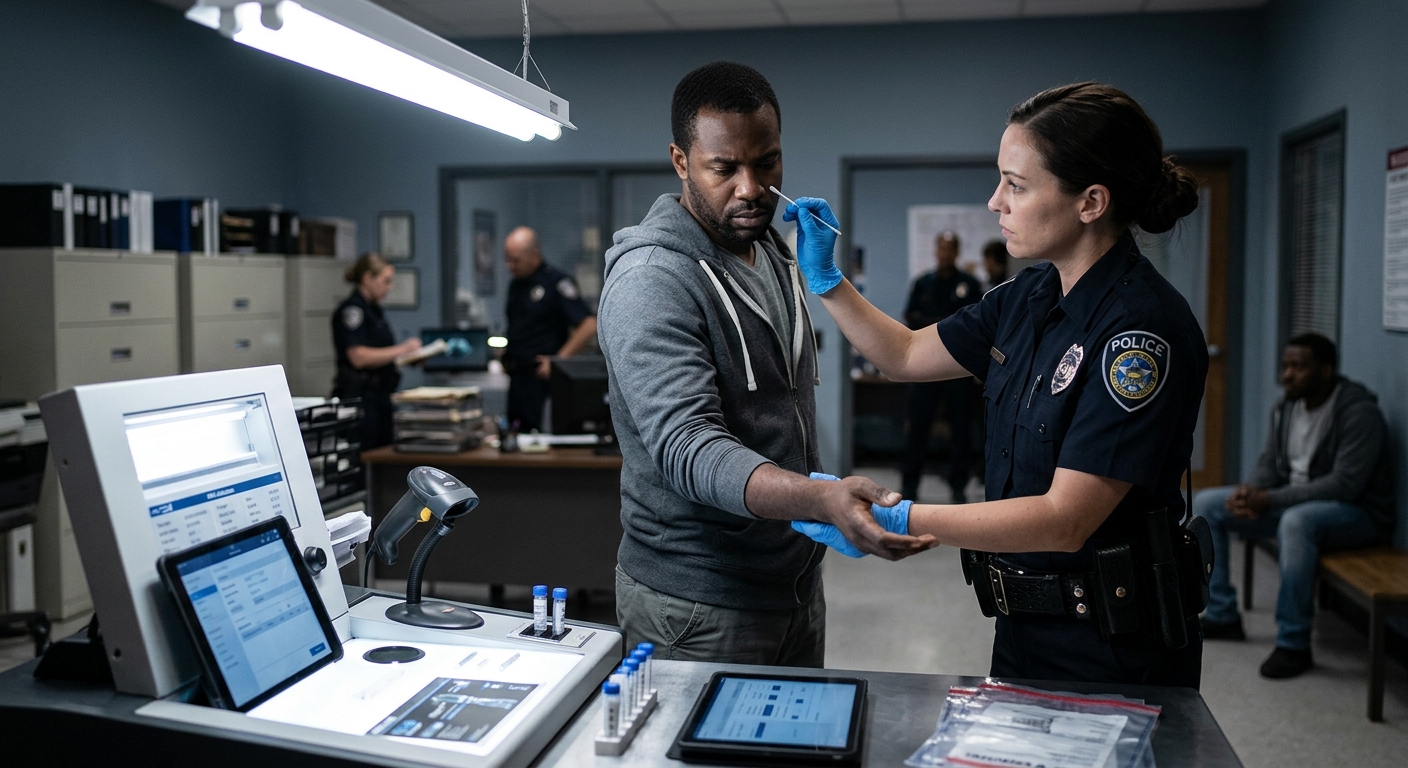
In the modern era of criminal justice, the utilization of advanced forensic science is widely celebrated as the ultimate tool for truth-seeking. Television shows, political rhetoric, and high-profile cold cases have deeply ingrained the idea that forensic evidence—most notably, Deoxyribonucleic Acid (DNA)—is a flawless mechanism for keeping society safe. Unquestionably, biological profiling has revolutionized investigations, exonerated the innocent, and successfully identified countless dangerous perpetrators. However, the scope of biological surveillance is rapidly expanding beyond its original intent. A deeply concerning trend has emerged across various jurisdictions: the aggressive push to harvest and permanently store the genetic material of individuals who have merely been arrested, rather than legally convicted of a crime.
This legislative and policy shift toward pre-conviction genetic harvesting represents a monumental pivot in how the state treats its citizens. It transitions the utility of forensic databases from a repository of known, convicted offenders to a broad surveillance dragnet encompassing legally innocent people. While proponents argue that larger databases inevitably lead to more solved cases, this perspective severely underestimates the profound constitutional, ethical, and logistical ramifications. Expanding forensic registries to include everyday arrestees fundamentally disrupts the presumption of innocence, strips individuals of their biological privacy, and paradoxically cripples the very crime laboratories it aims to empower by generating insurmountable processing backlogs.
The Constitutional Erosion: Presumption of Innocence
At the bedrock of a fair and equitable legal system lies the fundamental principle that an individual is innocent until proven guilty in a court of law. When law enforcement agencies mandate the swabbing of an individual’s cheek the moment they are brought into police custody, this sacred presumption is functionally inverted. An arrest is merely an accusation; it requires only probable cause, which is a far lower legal threshold than the evidence required to secure a formal conviction. Countless arrests result in dropped charges, acquittals, or cases being dismissed entirely due to a lack of evidence or procedural errors.
Subjecting an unconvicted citizen to a highly invasive biological search treats them as a latent criminal. Unlike traditional booking procedures such as taking a photograph or rolling ink fingerprints, extracting a biological specimen is an intrusion into the most intimate aspects of a human being. Fingerprints serve a singular purpose: identity verification. They map the friction ridges of a digit to confirm that the person in custody is who they claim to be. In stark contrast, a genetic profile contains the entire biological blueprint of an individual. Retaining this deeply personal code before any judge or jury has validated the criminal charge effectively places the individual in a permanent, state-run lineup for the rest of their life, constantly comparing their essence against every unsolved crime in the system.
Beyond Identification: The Depth of Genetic Information
To truly grasp the gravity of pre-conviction biological harvesting, one must understand the sheer volume of personal information embedded within our cells. When the state takes a sample, they are acquiring far more than a simple identification number. They are seizing a biological encyclopedia that outlines an individual’s past, present, and future.
- Medical Predispositions: Our genetic sequence holds the keys to our medical future, indicating predispositions to various cancers, neurological disorders, and inherited diseases.
- Familial Mapping: Because biology is shared, uploading one person’s profile inherently exposes their biological relatives. It charts out siblings, parents, and children, dragging entire family trees into state databases without their consent.
- Ancestry and Heritage: The data can reveal intricate details regarding a person’s ethnic background and geographic origins, which historically raises concerns regarding profiling and targeted surveillance.
The potential for the misuse of this deeply sensitive data cannot be overstated. If these state-run databases were to be compromised by malicious cyberattacks, or if inter-agency data sharing policies were suddenly broadened, the ramifications for individuals would be catastrophic. You can change a stolen credit card number or reset a compromised password, but you cannot alter your genetic code. The fear of genetic discrimination is a profound modern anxiety. Recognizing this vulnerability, the federal government enacted the Genetic Information Nondiscrimination Act (GINA) of 2008 to protect citizens from being penalized by employers or health insurers based on their biological makeup . However, the safeguards established by GINA generally do not extend to the vast repositories operated by law enforcement agencies, leaving legally innocent arrestees in a precarious grey area regarding their ultimate biological privacy.
The Logistical Paradox: How More Data Weakens Investigations
Perhaps the most counterintuitive argument against the indiscriminate swabbing of arrestees is that it actively harms the efficiency of law enforcement. Politicians frequently champion the expansion of DNA collection under the simplistic premise that more data equals a higher probability of solving crimes. However, this narrative ignores the physical, financial, and temporal limitations of forensic laboratories.
When state laws mandate the biological sampling of every person arrested for a minor offense, the volume of incoming swabs skyrockets exponentially. The National Institute of Justice (NIJ) clearly outlines the severe impact of backlogs in forensic testing facilities, noting that crime laboratories simply cannot expand their analytical capacity fast enough to meet the artificially inflated demand . There are two distinct types of forensic backlogs: casework backlogs and database backlogs. Casework backlogs involve crucial evidence recovered directly from crime scenes—such as biological material left on a weapon or a sexual assault kit. Database backlogs consist of the reference swabs taken from offenders and arrestees.
By forcing laboratories to process tens of thousands of routine arrestee swabs, valuable state resources, funding, and personnel hours are heavily diverted away from active casework. Highly trained forensic analysts find themselves bogged down processing the biological blueprints of individuals arrested for shoplifting or protesting, rather than analyzing evidence that could identify violent predators. Historically, when laboratories are subjected to overwhelming volume and immense pressure to clear backlogs, the environment becomes ripe for procedural negligence, rushed analyses, cross-contamination, and catastrophic errors. Consequently, the “tough on crime” policy of mass DNA collection effectively delays justice for actual victims of severe crimes.
Comparing Booking Methods: Fingerprints vs. Genetic Material
| Characteristic | Fingerprinting | DNA Profiling |
|---|---|---|
| Primary Purpose | Immediate identity verification | Biological blueprinting and long-term investigation |
| Information Revealed | Surface skin friction ridges only | Medical history, family lineage, predispositions |
| Impact on Relatives | None. Only identifies the individual | Exposes biological markers of entire family trees |
| Processing Time | Minutes to hours (digital scanning) | Weeks to months (laboratory analysis required) |
The Expungement Labyrinth: Escaping the Database
A common reassurance offered by advocates of pre-conviction collection is the promise of expungement: if an arrestee is cleared of all charges, their biological profile will theoretically be removed from the system. In reality, this process is rarely automatic and is designed as a bureaucratic labyrinth that overwhelmingly burdens the innocent citizen.
According to federal statistics, systems like the Combined DNA Index System (CODIS) currently house millions of arrestee profiles alongside convicted offenders . When an innocent person’s case is dismissed, the state rarely takes the initiative to proactively locate and destroy their biological sample. Instead, the onus is placed squarely on the individual to petition the state, hire legal representation, and navigate a complex, multi-step administrative process to request the removal of their data. For low-income individuals, marginalized groups, or those simply unaware of the retention laws, this financial and procedural barrier is insurmountable. As a result, countless legally innocent individuals remain permanently cataloged in federal and state criminal registries, their most intimate biological information continuously monitored by the state.
Striking a Balance: Targeted Justice Over Mass Surveillance
No rational entity disputes the immense value that forensic biology provides in solving complex criminal cases and ensuring violent offenders are brought to justice. However, the pursuit of public safety must not morph into the systematic erosion of constitutional boundaries. A free society must maintain a firm line between the aggressive investigation of actual crimes and the passive, dragnet surveillance of its general populace.
To protect civil liberties while maintaining effective law enforcement, policymakers must prioritize targeted, post-conviction collection. By restricting database entry to individuals who have been formally found guilty of serious offenses in a court of law, we preserve the presumption of innocence. Furthermore, by alleviating the crushing burden of arrestee swabbing, crime laboratories can redirect their finite resources toward efficiently processing actual crime scene evidence. True justice requires balance; sacrificing the fundamental privacy of innocent citizens on the altar of hypothetical database hits is a dangerous precedent that society must firmly reject.
Frequently Asked Questions (FAQs)
What is the CODIS database?
The Combined DNA Index System (CODIS) is a massive software program and database system operated by the Federal Bureau of Investigation (FBI). It allows federal, state, and local crime laboratories to exchange and compare genetic profiles to link evidence from crime scenes to known individuals .
Can the police legally take my genetic material without a conviction?
Yes, depending on the jurisdiction. Many states and the federal government have passed laws permitting law enforcement to collect biological swabs from individuals upon arrest for certain crimes, long before any formal trial or conviction occurs.
How do laboratory backlogs affect public safety?
When forensic labs are overwhelmed by the mandatory processing of thousands of routine arrestee swabs, they have less time and fewer resources to test urgent evidence from active, violent crime scenes. This delay means dangerous criminals may remain free longer, and actual victims face prolonged waits for justice .
Does the government automatically delete my profile if I am found innocent?
In most jurisdictions, expungement is not automatic. If your charges are dropped or you are acquitted, you typically must initiate a formal, and often costly, legal petition to force the state to remove your biological profile from their registry.
What does the Genetic Information Nondiscrimination Act (GINA) do?
Passed in 2008, GINA is a federal law that prohibits discrimination by health insurers and employers based on an individual’s genetic information . However, its protections do not generally prevent law enforcement agencies from operating large-scale biometric databases.
References
- CODIS-NDIS Statistics — Federal Bureau of Investigation. 2025. https://le.fbi.gov/science-and-lab/biometrics-and-fingerprints/codis/ndis-statistics
- Backlogs of Forensic DNA Evidence — National Institute of Justice. 2010-08-11. https://nij.ojp.gov/topics/articles/backlogs-forensic-dna-evidence
- Genetic Information Nondiscrimination Act of 2008 — U.S. Equal Employment Opportunity Commission. 2008. https://www.eeoc.gov/statutes/genetic-information-nondiscrimination-act-2008
Similar Articles








Read full bio of Sneha Tete


