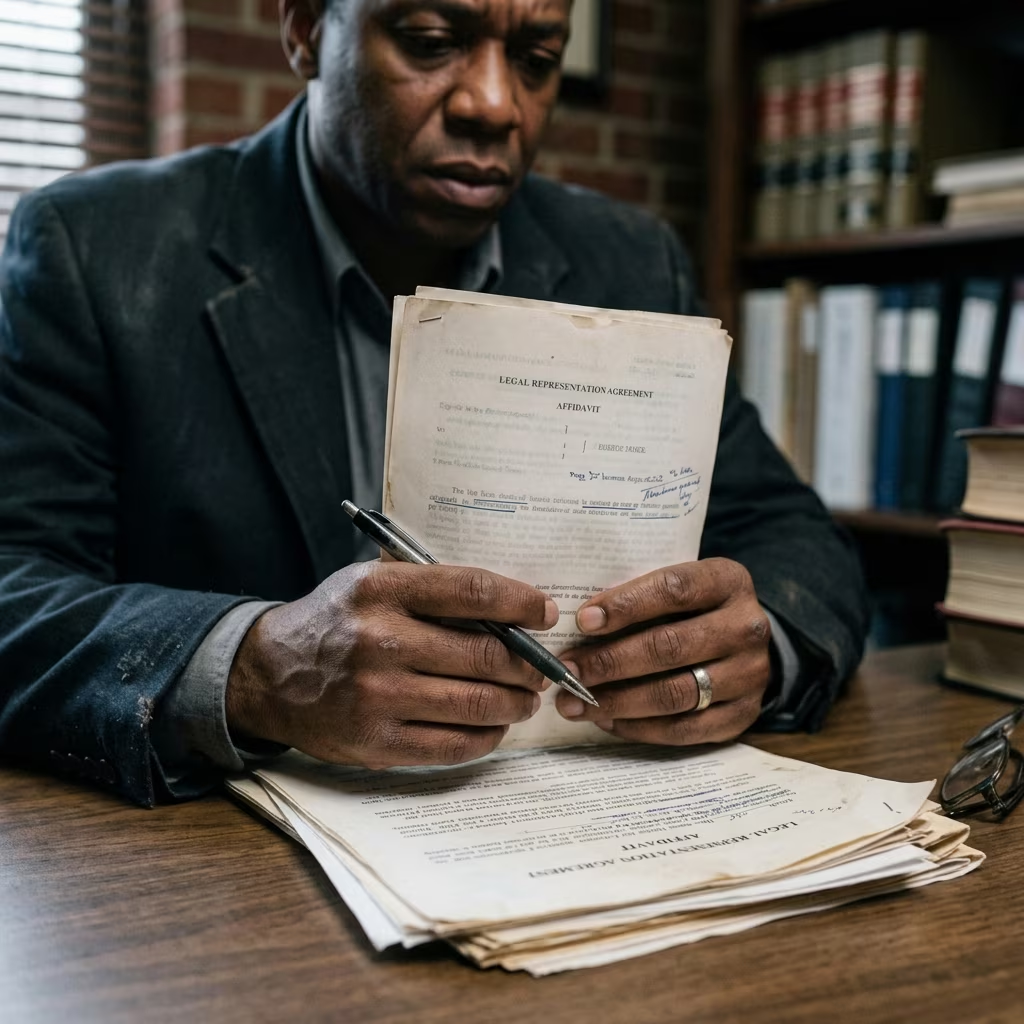
Being arrested or accused of a crime you did not commit is frightening, confusing, and deeply unfair. Yet what you do in the minutes and days that follow can dramatically affect the outcome of your case. This guide explains how to protect yourself, safeguard your rights, and work toward clearing your name when you are facing criminal charges you believe are wrong.
Although examples in this article draw on Oregon law for illustration, many of the core concepts—such as the right to remain silent, the presumption of innocence, and the right to a lawyer—come from the United States Constitution and apply nationwide.
Understanding What an Arrest Really Means
An arrest does not mean you have been found guilty. It means law enforcement believes there is probable cause to think a crime has been committed and that you may be involved. A judge or jury must still decide whether the prosecution can prove guilt beyond a reasonable doubt.
- Probable cause: Reasonable grounds to suspect you committed a crime. It is a much lower standard than proof beyond a reasonable doubt.
- Presumption of innocence: You are legally presumed innocent unless and until the government proves otherwise at trial.
- Arrest vs. conviction: An arrest starts a criminal case. A conviction only happens if you are found guilty or plead guilty in court.
In other words, being arrested is the beginning of a legal process, not the end. Your actions from this point on can help—or seriously harm—your defense.
Your Core Constitutional Rights During an Arrest
Two rights are especially critical when you are arrested, whether you are innocent or not: the right to remain silent and the right to an attorney. These are commonly known through the Miranda warning, which police must give before custodial interrogation.
| Right | What It Means | How It Protects You |
|---|---|---|
| Right to remain silent | You do not have to answer police questions about the alleged crime. | Prevents you from making statements that can be misunderstood, misquoted, or used against you later. |
| Right to an attorney | You can have a lawyer present during questioning and throughout the case. | Allows a trained professional to protect your interests, advise you, and deal with the prosecution on your behalf. |
| Right against self‑incrimination | You cannot be forced to testify against yourself in court or during police interrogation. | Ensures that your silence cannot be punished or treated as proof of guilt. |
In Oregon, the state bar emphasizes that besides giving your name and address, you do not have to answer further questions or sign any papers after arrest, and anything you say may be used against you. This guidance is consistent with constitutional protections across the United States.
Immediate Steps to Take If You Are Wrongfully Arrested
When officers place you under arrest, emotions run high. A natural reaction is to argue or to try to explain your innocence. That impulse can make matters worse. Instead, focus on actions that protect you legally and physically.
1. Stay Calm and Do Not Resist
Resisting arrest—even when you believe it is unjust—can lead to additional charges and potentially dangerous confrontations. In many states, resisting arrest is a separate crime that can be prosecuted on its own.
- Do not push, strike, or try to flee from officers.
- Follow lawful instructions about moving, sitting, or being handcuffed.
- Keep your hands visible and avoid sudden movements.
Remaining physically compliant does not mean agreeing that you are guilty; it means protecting yourself from extra charges and risk of force, while preserving your opportunity to challenge the arrest later.
2. Invoke Your Right to Remain Silent
Politely but clearly say:
- “I am exercising my right to remain silent.”
- “I do not want to answer any questions without a lawyer.”
After saying this, stop discussing the incident with police. Legal organizations consistently advise that you should avoid talking about the case with anyone except your lawyer, because even casual statements can be misinterpreted.
3. Ask for a Lawyer Immediately
Once you request an attorney, questioning is supposed to stop until counsel is present. If you cannot afford a private lawyer, the court will appoint a public defender or other counsel to represent you.
- Do not be embarrassed to ask for a lawyer; it is your constitutional right.
- Use your limited phone calls to reach a trusted person and ask them to help locate an attorney if needed.
- Do not discuss the charges in detail over the phone; jail calls are often recorded.
4. Avoid Signing Documents Without Legal Advice
You may be presented with forms, statements, or waivers. In Oregon, the state bar notes that you do not have to sign any papers after you have been arrested, and promises of lighter sentences in exchange for a confession are improper.
- Politely decline to sign written statements or waivers until you have spoken with your lawyer.
- If you are pressured, repeat that you are invoking your right to counsel.
What Happens Next: The Early Criminal Process
Once you are taken into custody, your case enters the formal criminal justice process. Understanding the basic steps can reduce anxiety and help you make informed decisions.
Booking and Initial Detention
After arrest, you are typically transported to a jail for booking. This may include photographing, fingerprinting, and storing personal property. You may be held for a short period before seeing a judge.
In Oregon, most arrested individuals must appear before a judge within a relatively short timeframe, often within the first 36 hours, unless there is good cause for delay. At this first court appearance—called an arraignment—you are advised of the charges and of your right to counsel.
Arraignment and Bail
At arraignment:
- The judge informs you of the charges and your rights.
- You are asked to enter an initial plea, often “not guilty” in contested cases.
- The court considers whether you will be released and on what conditions—bail, supervised release, or in rare cases, no release.
In Oregon, most people charged with crimes other than murder have a right to bail or conditional release, subject to the judge’s assessment of risk and other factors. Your lawyer can argue for your release by highlighting factors such as your lack of criminal history, ties to the community, and evidence of innocence.
How Innocent People End Up Charged
It is tempting to assume that if you did nothing wrong, you cannot be charged. Unfortunately, people are sometimes prosecuted based on what turns out to be mistaken or incomplete information. Legal practitioners identify several common paths to wrongful accusation:
- Mistaken identity: A witness incorrectly identifies you as the perpetrator.
- Association or proximity: You are near the crime scene or know the real offender, so police infer involvement.
- Constructive possession: Illegal items are found in a place you control (like a car or home), even if you did not know they were there.
- Misinterpreted statements: Things you say to police are taken out of context or treated as admissions.
- False or exaggerated accusations: Another person wrongly implicates you, sometimes to protect themselves.
Recognizing that errors and misjudgments can occur even when you are innocent underscores why exercising your rights and obtaining legal counsel is so important.
Working With a Criminal Defense Lawyer When You Are Innocent
A defense lawyer is not just for people who are guilty; in fact, the stakes may be especially high for an innocent defendant who risks a wrongful conviction. Attorneys experienced in criminal law can analyze the government’s evidence, spot weaknesses, and present alternative explanations to judges and juries.
What Your Lawyer Will Typically Do
- Review police reports, witness statements, and physical evidence.
- Identify constitutional violations, such as unlawful arrest or improper questioning.
- Advise you on whether to make any statements, testify, or accept plea offers.
- File motions to suppress illegally obtained evidence.
- Prepare for trial, including cross‑examining witnesses and presenting your side of the story.
Legal organizations emphasize two critical rules for accused persons: do not talk to police about the accusations, and contact an experienced criminal defense lawyer as soon as possible.
Long‑Term Impacts of Arrests and Non‑Conviction Records
Even if charges are dropped or you are acquitted, an arrest record can still cause problems in employment, housing, and licensing. Many jurisdictions, including Oregon, provide ways to set aside or seal certain non‑conviction records after specific waiting periods.
In Oregon, for example, records of arrest may be eligible to be set aside and sealed if no charges are filed and certain time conditions are met, or after the state elects not to proceed with prosecution. The procedure generally involves filing a petition in the appropriate court and notifying the prosecutor.
Clearing your record can be an important step in truly moving past a wrongful accusation. Your lawyer can advise you on eligibility and timing.
Practical Do’s and Don’ts When You Are Innocent
It can be helpful to keep a simple checklist in mind. These practical guidelines reflect common advice from courts and legal organizations.
- Do: Stay calm and avoid physical confrontation with police.
- Do: Clearly state that you are exercising your right to remain silent.
- Do: Request a lawyer as early as possible.
- Do: Use early phone calls to reach someone who can help you retain counsel.
- Do: Keep notes (once you are able) about what happened, who was present, and what was said.
- Don’t: Try to explain everything to officers on the spot.
- Don’t: Sign statements or waivers without legal advice.
- Don’t: Contact witnesses or alleged victims on your own; this can look like interference.
- Don’t: Discuss your case on social media or in casual conversations.
Frequently Asked Questions (FAQs)
Am I required to answer police questions if I am arrested?
No. After providing basic identifying information such as your name and address, you do not have to answer questions about the alleged crime. You have a constitutional right to remain silent, and legal authorities advise using it, especially when you are a suspect.
What if I am innocent—should I talk to the police to clear things up?
Many attorneys caution that innocent people can accidentally make statements that are later used against them or misinterpreted. It is safer to remain silent and let your lawyer handle communications with law enforcement. Innocence does not protect you from misunderstandings.
Can I be held in jail before being found guilty?
Yes. Courts can order pretrial detention or release under conditions, depending on the seriousness of the charge, your history, and other factors. In Oregon, individuals usually appear before a judge within a relatively short period, where release and bail are addressed.
What if I cannot afford a lawyer?
If you are charged with a crime and cannot afford counsel, the court will appoint an attorney, such as a public defender, to represent you. This right to counsel in criminal prosecutions is rooted in the U.S. Constitution and reinforced by state law.
Can an arrest be removed from my record if I am not convicted?
In some jurisdictions, yes. Oregon, for instance, allows certain arrest records and non‑conviction records to be set aside and sealed after specific conditions are met, such as a decision not to prosecute or the passage of time. A lawyer can help you determine eligibility and file the necessary petition.
Will the judge believe me if I say I did not do it?
Courts rely on evidence, not just statements of innocence. Your lawyer’s role is to challenge the prosecution’s proof, present supporting evidence, and ensure that the presumption of innocence is honored. Merely insisting you are innocent, without a strategic defense, is rarely enough.
Key Takeaways
Facing an arrest for a crime you did not commit is a serious legal emergency. Your best protection is to use your rights wisely: stay calm, do not resist, remain silent about the incident, request a lawyer, and follow professional legal advice at each stage of the process. With the right approach and representation, the system does provide ways to challenge accusations, secure release, and, in many cases, clear your record.
References
- What To Do When You’re Arrested for a Crime You Didn’t Commit — Super Lawyers (Thomson Reuters). 2023-11-09. https://www.superlawyers.com/resources/criminal-defense/oregon/what-to-do-when-youre-arrested-for-a-crime-you-didnt-commit/
- How can I be charged for a crime I did not commit? — Justia Ask a Lawyer. 2024-06-08. https://answers.justia.com/question/2024/06/08/how-can-i-be-charged-for-a-crime-i-did-n-1017320
- Your Rights If You Are Arrested — Oregon State Bar. 2023-01-01 (approx.). https://www.osbar.org/public/legalinfo/1077_ArrestRights.htm
- Understanding why people accused but not yet convicted of crimes may be held in jail or mental health facilities — Oregon Judicial Department. 2022-11-01. https://www.courts.oregon.gov/news/Documents/WhyPeopleAccusedCrimesMayNotHeldJailMentalHealthFacilities.pdf
- Oregon: Adult Non-Conviction Arrests (OR-NC-1) — National Reentry Resource Center. 2021-05-01. https://nationalreentryresourcecenter.org/cleanslate/states/oregon/policies/or-nc-1
- Criminal Case Process — Washington County District Attorney, Oregon. 2022-09-01. https://washingtoncountyda.org/da/criminal-case-process
- Accused Of A Crime? — Reinhard Law. 2023-03-01. https://www.reinhard.law/accused-of-a-crime/