
Arrest Warrants and Unpaid Traffic Tickets Explained
Learn how unpaid traffic tickets can trigger arrest warrants, affect your license, and what to do if you discover a warrant.
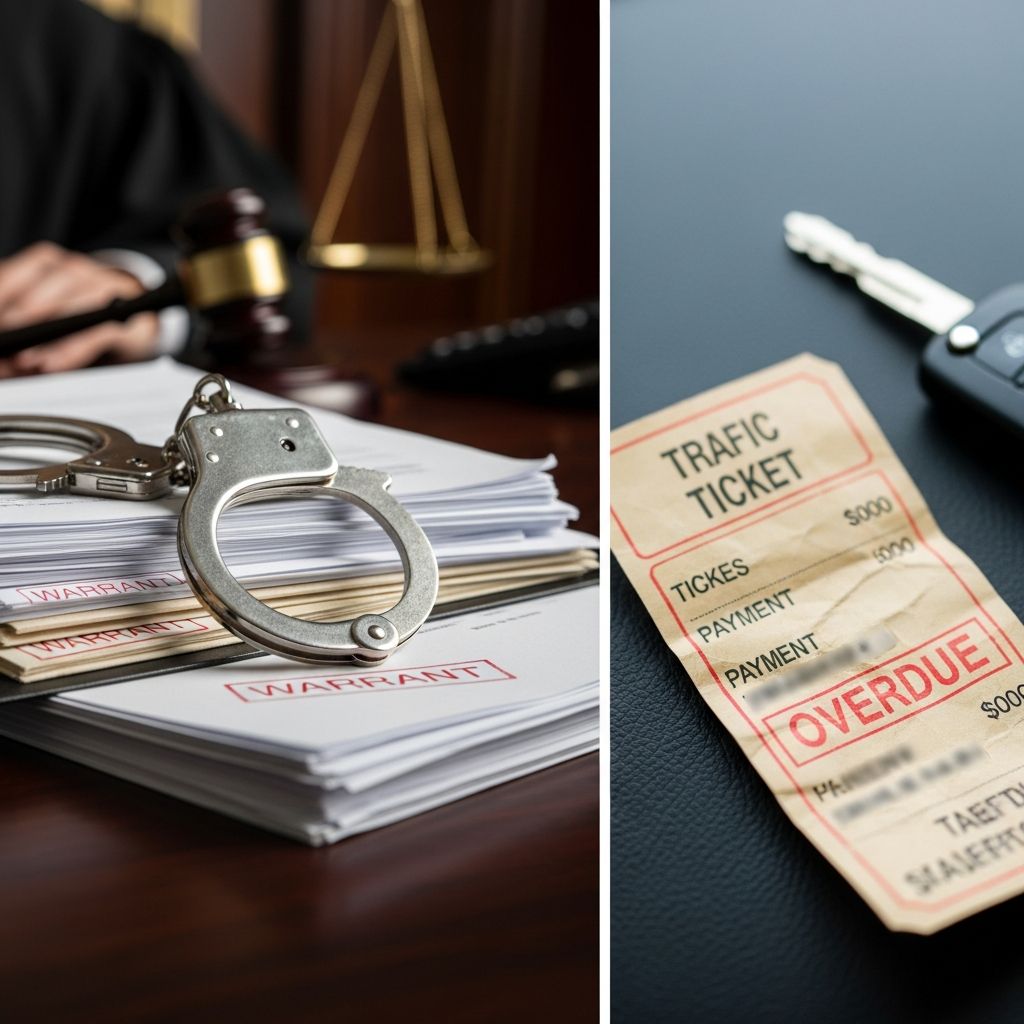
Ignoring a traffic ticket might feel harmless at first, but in many jurisdictions it can escalate into an arrest warrant that follows you for years. Courts use warrants to force people back into the legal process when they do not respond to citations, miss court dates, or fail to pay ordered fines. Understanding how this works is critical if you want to protect your license, your record, and your freedom.
This guide uses general U.S. practices and credible legal sources to explain how traffic tickets can lead to warrants, what risks you face with an open warrant, and sensible steps to resolve the problem as safely and efficiently as possible.
1. Key Concepts: Tickets, Court Dates, and Warrants
Before looking at consequences, it helps to understand how an ordinary traffic stop can turn into an issue serious enough to justify an arrest warrant.
1.1 What a Traffic Ticket Really Is
A traffic ticket is more than a bill; it is usually one of the following:
- Citation for a civil infraction (for example, minor speeding in many states), where the main penalties are fines and court costs.
- Citation or complaint for a traffic misdemeanor (for example, reckless driving or driving with a suspended license in many jurisdictions), which is a criminal offense that can lead to probation or jail time.
- Summons to appear in court, ordering you to show up before a judge on a specific date to answer the charge.
By signing a ticket in many states, you are not admitting guilt; you are promising to either pay, contest the ticket, or appear in court by the deadline. If you do not follow through, the court can use its contempt powers and issue a warrant.
1.2 Bench Warrants vs. Other Arrest Warrants
In the traffic context, most warrants are bench warrants. A bench warrant is issued by a judge (from the “bench”) when you fail to appear or fail to comply with a court order such as payment of fines or completion of required classes.
Bench warrants differ from standard arrest warrants, which are usually issued at the start of a criminal case based on probable cause that a crime was committed. With traffic tickets, a bench warrant often comes later—when you stop responding to the court.
2. How a Traffic Ticket Can Turn into an Arrest Warrant
The path from citation to warrant follows a fairly predictable pattern, though specific timelines and terminology vary by state law.
2.1 Typical Escalation Timeline
| Stage | What Usually Happens | Possible Court Response |
|---|---|---|
| Ticket issued | Officer gives citation with instructions and deadlines. | Case is opened in the court’s system. |
| Deadline missed | You neither pay nor request a hearing by the date on the ticket. | Additional fees; possible license hold or suspension. |
| Failure to appear | You skip your scheduled court date without permission. | Judge may issue a bench warrant for your arrest. |
| Ongoing noncompliance | You do not pay fines or complete court-ordered conditions. | Bench warrant and further penalties or collections. |
Some states have grace periods before a warrant is issued. For example, information from consumer rights practitioners indicates that Georgia allows a short period (often around 30 days) to resolve a missed hearing or payment before a judge can authorize a warrant. In other states, a warrant may issue as soon as you fail to appear at the first court date.
2.2 Civil Infractions vs. Criminal Traffic Offenses
Whether you face a warrant can depend on how the law in your state classifies the violation:
- Civil-only jurisdictions: Some states treat many traffic violations as purely civil matters. Courts there may use license suspensions, collections, or other civil tools rather than arrest warrants—except where the original offense was criminal (such as DUI).
- Criminal-traffic jurisdictions: In other states, citations for certain moving violations are handled as criminal cases. Missing court in those cases commonly results in a bench warrant.
- Mixed systems: Many states combine these approaches, reserving warrants mainly for failures to appear, repeat violations, or more serious traffic misdemeanors.
Because classification and procedure differ from state to state, local legal advice is essential if a ticket is tied to a warrant.
3. What an Active Traffic Warrant Allows Police to Do
Once a bench warrant is issued, law enforcement has formal authority to arrest you and bring you before the court that issued the warrant.
3.1 Where and When You Can Be Arrested
Police and, in some states, court constables can typically execute a warrant:
- During any traffic stop, even for minor reasons such as a broken taillight or routine speeding.
- At your home or workplace, depending on local rules and how aggressively the agency enforces warrants.
- When you appear at a government office, such as a DMV or license renewal center, because your name is checked against court and warrant databases.
Information from criminal defense practitioners confirms that a person arrested on a warrant may be held in jail until brought before a judge, especially if the warrant is from another court or there are past failures to appear.
3.2 How Long a Traffic Warrant Lasts
Bench warrants generally do not automatically expire. They typically remain active until you:
- Appear in court and the judge recalls (cancels) the warrant.
- Pay fines or meet other conditions set for lifting the warrant.
- Resolve the underlying case through plea, dismissal, or trial.
Some states permit courts to withdraw warrants administratively after a certain number of years, but that is the exception, not the rule. Relying on a warrant to “age out” is dangerous because it can still lead to an unexpected arrest long after you have forgotten the ticket.
4. Practical Consequences of Ignoring a Traffic Warrant
The risk is not just a single night in jail. A traffic-related warrant can reach into many areas of your life.
4.1 Possible Arrest and Detention
If you have any contact with law enforcement—whether because of a new stop, an accident, or even calling the police as a victim—officers usually run your name through statewide or national databases. An outstanding warrant can result in immediate arrest. Defense lawyers note that in some jurisdictions, people arrested on bench warrants are required to post additional bond or remain in custody until a judge is available.
4.2 Additional Fines, Fees, and Court Costs
Courts frequently add costs for noncompliance, such as:
- Failure-to-appear fees.
- Collection charges if the debt is sent to a private collector.
- Higher fines for the original violation.
These financial penalties can eventually exceed the amount of the original ticket, making the problem harder to resolve the longer it is ignored.
4.3 Driver’s License and Driving Record Problems
State motor vehicle agencies have authority to restrict driving privileges when a driver ignores court-ordered obligations. According to the National Conference of State Legislatures, many states historically suspended licenses for unpaid fines or failures to appear, though there has been a recent trend to limit this practice for minor infractions to reduce hardship on low-income drivers.[NCSL]
Still, in jurisdictions that use this tool, an active warrant or unpaid ticket can lead to:
- Suspension or non-renewal of your driver’s license.
- Rejection of vehicle registration renewals.
- Additional tickets and even criminal charges if you are later caught driving while suspended.
4.4 Employment and Background Check Issues
An active warrant can appear on some criminal background checks. Employers in sensitive fields such as transportation, security, or government may treat an open warrant as a red flag, even when the underlying matter is a minor traffic case. Clearing the warrant generally removes this particular concern, though any resulting conviction may still show up as part of your history.
5. Safe Steps to Take if You Suspect a Traffic Warrant
If you think a forgotten ticket or missed court date may have led to a warrant, there are structured ways to respond that reduce the risk of surprise arrest.
5.1 Confirm Whether a Warrant Exists
Options to check for warrants differ by state and county, but may include:
- Calling the clerk of the court listed on your ticket and asking if a case or warrant is recorded in your name.
- Checking online court or law enforcement databases, where some counties provide public warrant search tools.
- Having a lawyer check for you, which can be safer if you are worried about being arrested while asking questions.
When you call a court or clerk’s office directly, staff may be able to explain the basic status of the case, any outstanding fines, and whether a warrant has been issued, but they cannot give you individualized legal advice.
5.2 Contact a Defense Lawyer Before Appearing
Many criminal defense attorneys and traffic lawyers handle warrant issues routinely. Their assistance can be particularly helpful because, in some jurisdictions, counsel can:
- Ask the court to schedule a hearing to recall the warrant.
- Negotiate a voluntary surrender plan that avoids being arrested at home or work.
- Argue for release on your own recognizance (without additional bond) instead of continued detention.
Lawyers also know local practices—such as whether a particular judge usually allows walk-in warrant recalls, or how to coordinate with the prosecutor to resolve the underlying ticket and the failure-to-appear issue together.
5.3 Plan Logistically Before You Go to Court
Because a warrant gives the judge and court the power to detain you, practical planning matters:
- Arrange child care or work coverage in case you are held for several hours or more.
- Bring documentation showing why you missed court or fell behind on fines (for example, medical records or proof of incarceration elsewhere).
- Bring as much money as you can reasonably afford in case the court requires payment toward fines or bond to recall the warrant.
Courts sometimes show more flexibility when a person appears voluntarily and clearly wants to fix the problem rather than waiting to be arrested on a new traffic stop.
6. Preventing a Traffic Ticket from Escalating
The most effective strategy is to keep a ticket from ever turning into a warrant. That usually means prompt, informed action.
6.1 Respond Before the Deadline
When you receive a ticket, read it carefully and note:
- The last day to pay or contest.
- Whether a court appearance is mandatory.
- Any specific instructions on how to plead by mail, online, or phone.
If you wish to fight the ticket, many defense attorneys advise you to formally request a hearing and plead not guilty rather than immediately paying, because paying is usually treated as an admission of liability or guilt in most states.
6.2 Communicate if You Cannot Appear
If an emergency or serious conflict arises:
- Contact the court clerk as early as possible and ask about rescheduling procedures.
- Follow local rules for filing a written request to continue (postpone) your hearing date.
- Keep copies of all correspondence and any confirmations from the court.
The U.S. state court systems generally allow judges to excuse a failure to appear when you show good cause, but the most favorable outcomes typically happen when you notify the court before you miss the date, not after a warrant is already issued.
6.3 Avoid Future Problems After Resolution
Once your ticket is resolved and any warrant is recalled:
- Confirm that your driver’s license status is active with your state motor vehicle agency.
- Pay close attention to any ongoing obligations (classes, probation reporting, community service) and their deadlines.
- Keep proof of compliance in case questions arise later.
According to U.S. Department of Justice research on court debt and compliance, losing track of deadlines and paperwork is a common reason people fall back into noncompliance and face renewed sanctions.[DOJ]
7. Frequently Asked Questions
Q1: Can I really be jailed over a simple unpaid traffic ticket?
In many states, yes—not technically for the ticket itself, but for failing to appear in court or disobeying a court order related to that ticket. A judge can respond to that failure by issuing a bench warrant, which authorizes police to arrest you and bring you before the court.
Q2: Will police come to my house just because of a traffic warrant?
Practices vary widely. Defense attorneys report that for minor traffic matters, law enforcement usually does not actively hunt people down at home, but instead arrests them when an opportunity arises—such as a new traffic stop or contact with another agency. However, some jurisdictions or constables may serve warrants at residences, so you should not assume you are safe from arrest.
Q3: If I pay my ticket after a warrant is issued, does that automatically cancel the warrant?
Not always. In some courts, paying outstanding fines may lead to automatic recall of the warrant; in others, you must still appear before a judge or file a formal motion to have the warrant lifted. You should confirm the procedure with the specific court or consult a lawyer before assuming the warrant is gone.
Q4: Can I travel or fly with an outstanding traffic warrant?
Many routine domestic trips occur without incident, but an active warrant carries real risk. If you are stopped by airport police, pulled over on the way to the airport, or encounter law enforcement for any reason, you could be arrested. Some warrants, especially for more serious offenses, may also appear in databases used by federal agencies.
Q5: Do traffic warrants show up on criminal background checks?
Often they do. Many background reports include open court cases and active warrants. That can create employment, housing, or licensing issues even before the underlying ticket is resolved. Clearing the warrant and closing the case usually improves your record, although the original charge and outcome may still be visible depending on state law.
References
- How Long Before An Unpaid Ticket Becomes A Warrant? — ConsumerShield legal information (summarizing state practices). 2024-06-01. https://www.consumershield.com/injuries-accidents/car-accidents/unpaid-ticket-becomes-warrant-timeline
- What should I do about a traffic warrant? — Lewis & Dickstein, P.L.L.C., criminal defense firm. 2023-10-10. https://www.notafraidtowin.com/what-should-i-do-about-a-traffic-warrant/
- When A Traffic Ticket Becomes A Warrant — Rispoli & Borneo, P.C., New Jersey traffic defense firm. 2022-09-05. https://www.rbsattorneys.com/when-a-traffic-ticket-becomes-a-warrant/
- I Had A Warrant Out For My Arrest Due To Unpaid Traffic Tickets — KIA Law Firm, criminal defense information. 2023-05-15. https://kialaw.com/warrant-out-for-unpaid-traffic-tickets/
- Frequently Asked Questions (Constables & Warrants) — Shippensburg Police Department, CrimeWatch Pennsylvania. 2021-03-01. https://cumberland.crimewatchpa.com/shippensburgpd/faq-page
- Suspending Driver’s Licenses for Non-Driving Offenses — National Conference of State Legislatures. 2023-04-24. https://www.ncsl.org/transportation/suspending-drivers-licenses-for-non-driving-offenses
- Fines, Fees, and Bail: Payments in the Criminal Justice System — U.S. Department of Justice, Office of Justice Programs (research report). 2017-01-01. https://ojp.gov/library/publications/fines-fees-and-bail-payments-criminal-justice-system
Similar Articles








Read full bio of Sneha Tete




