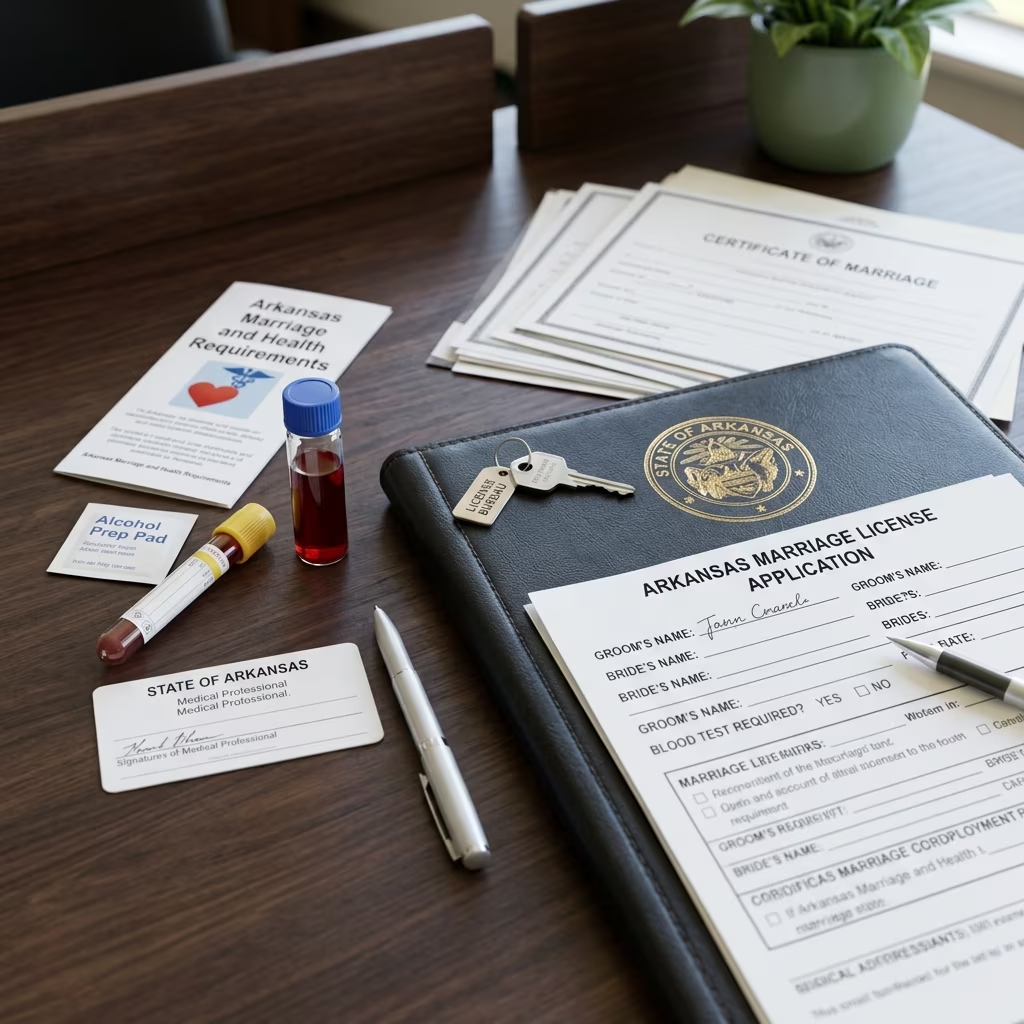
Arkansas offers a relatively straightforward process for couples who want to marry, but there are specific legal rules you must follow. This guide explains who can marry, how to get a marriage license, blood test requirements, waiting periods, and practical tips so you can plan a legally valid wedding in Arkansas.
Overview: How Marriage Works Legally in Arkansas
Under Arkansas law, a marriage becomes legally valid when:
- The couple meets the age and eligibility rules.
- They obtain a marriage license from an Arkansas county clerk or circuit clerk.
- A qualified officiant performs the ceremony within the license validity period.
- The completed license is returned to the county for recording.
Arkansas does not require residency and does not require blood or medical tests for marriage, making it an accessible state for both residents and non-residents.
Basic Eligibility: Age, Residency, and Prior Marriages
Age Requirements for Marriage
Arkansas law sets clear minimum ages for marriage and uses different rules for adults and 17-year-olds:
- 18 or older: May marry without parental consent if other requirements are met.
- 17-year-olds: May marry only with parental consent and judicial approval, and must complete a mandatory waiting period.
- Under 17: Not permitted to marry under current Arkansas law.
These age rules are designed to protect minors and ensure that only individuals with sufficient legal capacity enter into a marriage contract.
Residency and Citizenship
Arkansas does not impose residency requirements for marriage licenses. You can live in another state or country and still marry in Arkansas as long as you apply in person at a county clerk or circuit clerk office.
Non-resident couples often choose Arkansas for destination weddings because:
- Any couple can obtain a license in any Arkansas county.
- The license can be used anywhere within the state.
Prior Marriages and Legal Capacity
To enter a new marriage, any prior marriage must be legally terminated, typically through:
- Divorce decree (final judgment of divorce).
- Annulment order.
- Proof of death of a former spouse, if applicable.
County clerks frequently require a certified copy of the divorce decree when an applicant’s legal name was restored yet the current photo ID does not reflect that change.
Arkansas Marriage License: Where, How, and How Much
Where to Apply
Marriage licenses are issued by county clerks or circuit clerks throughout Arkansas. Examples include:
- Circuit clerk offices, such as Pulaski County Circuit Clerk.
- County clerk offices like Craighead County and Clark County.
You may obtain a license in any county, and the ceremony can be performed anywhere within Arkansas.
In-Person Application Requirements
Both parties must generally appear together in person to apply for the license.
Typical requirements include:
- Completing a marriage license application form with full legal names, dates of birth, and other identifying details.
- Providing a valid government-issued photo ID, such as a driver’s license, passport, or military ID.
- Providing proof of Social Security numbers, often via a Social Security card or documentation containing the number.
- Presenting a birth certificate if required due to age (for example, some counties require it for applicants under 21).
Fees and Payment Methods
Across many Arkansas counties, the marriage license fee is commonly around $60.
Payment details vary by county but often include:
- Cash accepted at most clerk offices.
- Credit or debit cards accepted, typically with a small transaction fee added by the payment processor.
- Checks often not accepted in some counties, such as Pulaski County.
License Validity and Use
Once issued, an Arkansas marriage license is generally valid for 60 days.
Key points about validity:
- The ceremony must be performed within the 60-day period.
- Licenses may be used anywhere in Arkansas, but not outside the state.
- Some counties require the completed license to be returned within a set number of business days after the ceremony (for example, Clark County specifies seven working days).
Blood Tests and Medical Requirements
Are Blood Tests Required?
Arkansas law currently imposes no blood test or medical test requirement to obtain a marriage license.
County-level guidance, including Craighead and Pulaski counties, explicitly confirms that no blood or medical tests
are needed when applying.
Why the Blood Test Requirement Was Removed
Historically, many U.S. states required blood tests before marriage to screen for conditions such as syphilis or genetic disorders. Over time, these requirements were repealed as public health policies evolved and other screening mechanisms became available. Arkansas follows this modern approach by focusing on legal eligibility instead of medical testing.
Waiting Periods and Timing Considerations
Standard Waiting Rules
Arkansas distinguishes between adult applicants and 17-year-old applicants when it comes to waiting periods:
- Applicants aged 18 or older: No waiting period. The license can usually be issued on the same day that you apply.
- 17-year-old applicants: A mandatory 5-business-day waiting period applies once parental consent and judicial approval are secured.
Planning Around the Waiting Period
Couples involving a 17-year-old should plan for:
- Time to gather notarized parental consent documents.
- Time to appear in court if judicial approval is required.
- At least five business days between application and license issuance.
Identification, Sobriety, and Other Legal Requirements
Proof of Identity and Age
Because marriage is a legal contract, clerks must verify each applicant’s identity and age. Common acceptable IDs include:
- State-issued driver’s license or ID card.
- Passport or visa (not expired).
- Military identification card.
- Original birth certificate (often required for younger applicants or where ID details are inconsistent).
Where a name change occurred through divorce and the photo ID does not match, a certified copy of the divorce decree may be required.
Sobriety at the Time of Marriage
Arkansas law requires that parties be sober and free from the influence of intoxicating alcohol or drugs at the time they marry.
This rule helps ensure that consent is knowing and voluntary, consistent with general principles of contract and family law.
Officiants: Who May Perform the Ceremony?
An Arkansas marriage must be performed by an authorized officiant, which commonly includes:
- Judges or justices of the peace.
- Ordained ministers or religious leaders with properly recorded credentials in Arkansas.
- Other officiants recognized under Arkansas law.
Witnesses
Arkansas is unusual in that witnesses are not required for a valid marriage ceremony.
While couples often choose to have family and friends present, the law only requires the two parties and the officiant for the ceremony itself.
After the Ceremony: Recording and Certificates
Returning the License
Once the ceremony is performed, the officiant and parties must ensure that the completed marriage license is returned to the issuing county for recording.
Some counties specify a time limit (for example, Clark County directs couples to return the license within seven working days).
Obtaining a Certified Copy
After recording, couples can request a certified copy of the marriage certificate directly from the clerk’s office.
A certified copy is commonly required when:
- Changing the name on a Social Security card with the Social Security Administration.
- Updating a driver’s license or state ID.
- Updating financial, employment, and insurance records.
Key Arkansas Marriage Rules in One Table
| Requirement | Arkansas Rule |
|---|---|
| Minimum age to marry without parental consent | 18 years |
| Marriage possible at age 17 | Yes, with parental consent and judicial approval; 5-day waiting period |
| Marriage under age 17 | Not permitted |
| Residency requirement | No residency requirement; non-residents may marry |
| Blood or medical tests | Not required for a marriage license |
| License validity period | Generally 60 days from issuance |
| Waiting period for adults (18+) | No waiting period; same-day issuance possible |
| Waiting period for 17-year-olds | Mandatory 5-business-day waiting period |
| Witness requirement | No witnesses legally required |
| Officiant | Judge, justice of the peace, or ordained minister with recorded credentials |
Practical Tips for Couples Marrying in Arkansas
To make the process smoother, consider the following:
- Confirm office hours with your chosen county clerk before visiting, as hours can vary.
- Bring extra documentation if you have changed your name previously through divorce or other legal means.
- Plan around holidays and weekends because license issuance and recording generally occur on business days.
- Schedule your ceremony within the 60-day license validity period and allow time to return the license for recording.
FAQs: Arkansas Marriage and Blood Test Requirements
Do I need to live in Arkansas to get married there?
No. Arkansas has no residency requirement for marriage licenses. Anyone who meets the age and legal eligibility rules may marry in Arkansas.
Are blood tests or medical exams required?
No. Arkansas does not require blood tests or medical tests to obtain a marriage license.
How long is my Arkansas marriage license valid?
A typical Arkansas marriage license is valid for 60 days from the date of issuance, and the ceremony must occur within that period.
Is there a waiting period before I can get married?
Adults aged 18 or older face no waiting period; the license can often be issued the same day. However, 17-year-old applicants with parental consent must wait five business days before the license can be issued.
Can 17-year-olds marry in Arkansas?
Yes, but only with parental consent and judicial approval, and they must comply with a five-business-day waiting period. No one younger than 17 may marry.
Are witnesses required at the ceremony?
No. Witnesses are not legally required for an Arkansas marriage ceremony, though many couples still choose to have friends or family present.
Who can officiate my wedding?
Authorized officiants include judges, justices of the peace, and ordained ministers or religious leaders whose credentials are properly recorded in Arkansas.
What happens after the ceremony?
After the ceremony, the completed marriage license must be returned to the issuing county clerk so that the marriage can be officially recorded. You may then request certified copies of your marriage certificate for legal purposes such as name changes.
References
- Arkansas Marriage and Blood Test Requirements — FindLaw. 2023-06-01. https://www.findlaw.com/state/arkansas-law/arkansas-marriage-and-blood-test-requirements.html
- How to Get Married in Arkansas — Joy (WithJoy.com). 2023-04-10. https://withjoy.com/blog/arkansas-wedding-guide/
- How to Get a Marriage License — Craighead County, Arkansas. 2024-01-15. https://www.craigheadclerk.com/HowToMarriage
- Marriage License — Pulaski County Circuit Clerk, Arkansas. 2024-02-20. https://pulaskiclerkar.gov/departments/marriage-license/
- Marriage License Info — Clark County, Arkansas. 2023-11-30. https://clarkcountyar.gov/county-clerk/marriage-license-info/
- Marriage Licenses — Garland County, Arkansas. 2023-09-01. https://www.garlandcounty.org/178/Marriage