Arkansas Auto Insurance Guide 2026
Essential coverage requirements, minimum limits, and updates for Arkansas drivers in 2026 to stay protected on the road.
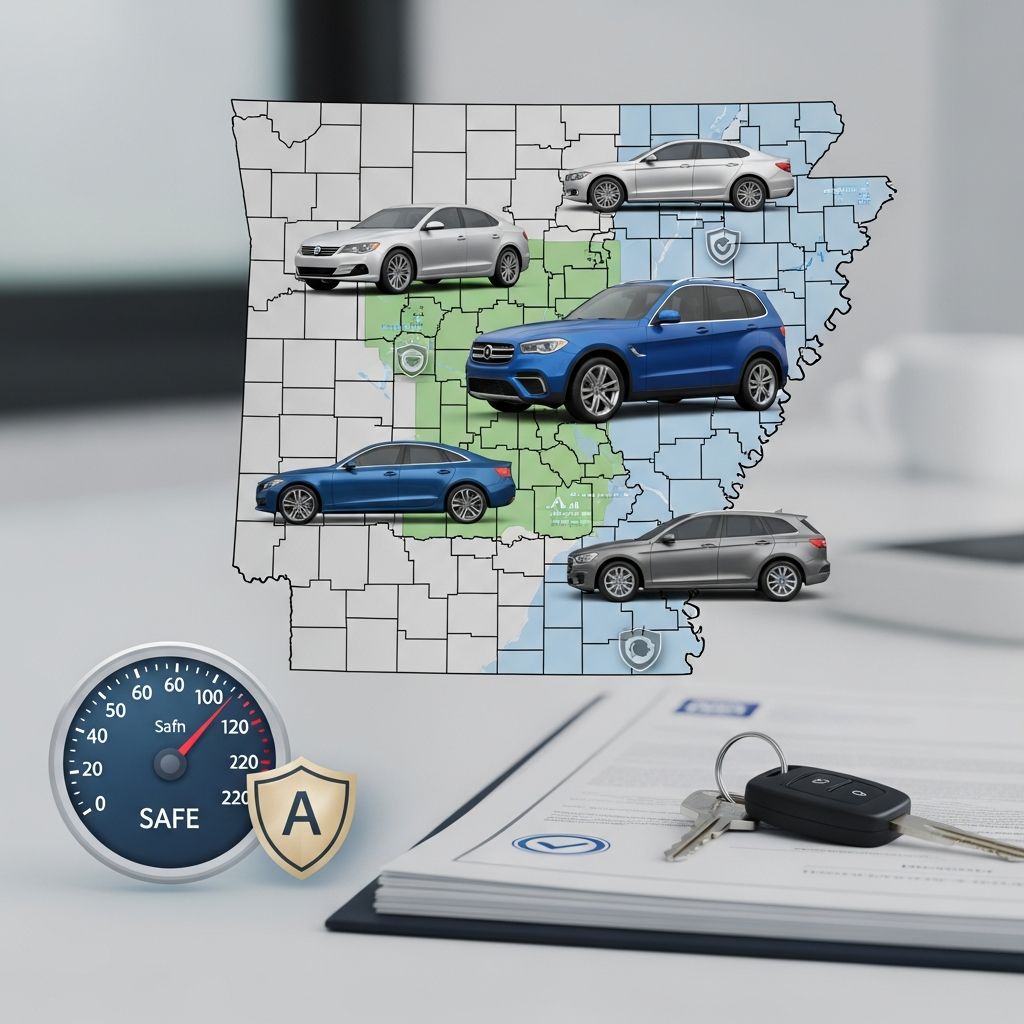
Driving legally in Arkansas demands adherence to specific auto insurance mandates designed to protect drivers, passengers, and property from accident-related losses. As a financial responsibility state, Arkansas enforces minimum coverage levels to ensure compensation for damages caused by negligent drivers. This guide details core requirements, optional protections, special rules for rideshare operations, enforcement mechanisms, and key updates effective in 2026.
Core Coverage Mandates for All Drivers
Arkansas classifies as a financial responsibility jurisdiction, meaning vehicle owners and operators must demonstrate ability to cover crash damages, primarily via liability insurance. State code sets baseline limits expressed as 25/50/25: $25,000 per person for bodily injury, $50,000 total per accident for bodily injury to multiple parties, and $25,000 for property damage. These thresholds represent the least protection; higher limits are advisable given escalating repair and medical expenses.
Every private-passenger vehicle policy automatically includes first-party benefits, akin to personal injury protection (PIP) or medical payments. Mandated components cover up to $5,000 in medical and hospital expenses per person, 70% wage loss up to $140 weekly for 52 weeks (plus essential services for non-earners), and a $5,000 accidental death payout. These activate regardless of fault, providing swift access to funds for immediate needs.
Uninsured and Underinsured Protections Explained
Arkansas mandates insurers offer uninsured motorist (UM) coverage at 25/50 levels, matching liability minimums, though drivers may reject it in writing. UM compensates when the at-fault party lacks insurance or meets statutory uninsured criteria, such as hit-and-runs. Underinsured motorist (UIM) coverage, requiring UM purchase, bridges gaps if the responsible driver’s limits fall short of your damages, capped at your policy’s UIM amount.
UIM claims involve specific procedures: when settling with the at-fault insurer at their limits, policyholders must notify their carrier for consent, enabling pursuit of UIM if losses exceed. This dual-carrier dynamic demands careful navigation to preserve all recovery avenues.
Rideshare and Delivery Driver Insurance Tiers
Transportation network companies (TNCs) like Uber or Lyft trigger distinct coverage phases under Arkansas statutes. During app-logged but pre-ride ‘on’ periods, primary coverage minimums rise to 50/100/25 ($50,000 per person bodily injury, $100,000 per accident, $25,000 property). Upon ride acceptance and transit, TNCs provide $1 million primary coverage, dramatically elevating available limits.
Accident investigations hinge on app timestamps, logs, and status verification. Attorneys often secure TNC records, police reports, and witness accounts to confirm coverage tier, potentially multiplying recoverable insurance by factors of 40 or more. Personal policies may exclude rideshare activity, underscoring need for commercial endorsements or TNC-specific add-ons.
Proof Requirements and Violation Consequences
Drivers must maintain continuous coverage, verifiable electronically via state systems. Lapses trigger fines, license suspension, vehicle impoundment, and registration holds. Courts access online portals to validate insurance at hearings, streamlining enforcement. For 2026, while direct auto mandates remain stable, related legislative acts introduce tangential supports like the Blue Envelope Program (ACT 16), aiding interactions between law enforcement and drivers with autism during stops via dedicated document holders.
| Coverage Type | Per Person | Per Accident | Property Damage |
|---|---|---|---|
| Liability (Standard) | $25,000 | $50,000 | $25,000 |
| Rideshare (App On) | $50,000 | $100,000 | $25,000 |
| Rideshare (On Trip) | $1,000,000 (Combined) | – | Included |
Enhancing Protection Beyond Minimums
State minimums offer bare-bones safeguards insufficient for modern risks. Experts recommend liability at 100/300/100 or higher, plus comprehensive/collision for vehicle repairs, gap insurance for financed cars, and umbrella policies extending liability millions further. Bundling auto with home insurance often yields discounts while bolstering overall security.
- Liability Boost: Covers legal defense and settlements exceeding at-fault damages.
- Comprehensive/Collision: Addresses theft, weather, or crash repairs irrespective of fault.
- Medical Payments: Supplements PIP for co-pays or excesses.
- Roadside Assistance: Towing, fuel, lockouts.
Annual reviews ensure alignment with life changes like new vehicles or family additions. Independent agents assist in tailoring policies, confirming rebuild costs for bundled home coverage, and evaluating flood gaps prevalent in Arkansas.
2026 Legislative Impacts on Insurance Landscape
Effective January 1, 2026, several acts reshape insurance peripherally. ACT 261 (SB236) imposes group capital calculations, liquidity tests, and receivership rules on insurance holding companies, enhancing solvency oversight. ACT 348 (HB1583) requires health plans cover acquired brain injury treatments without extra limits, potentially intersecting auto injury claims via medical reimbursements.
Health insurers must include lung cancer screenings, birthing center deliveries, and lactation services, broadening post-accident care access. Vision plans face anti-steering rules, prohibiting provider favoritism or differential reimbursements. While not altering auto mandates, these foster a robust ecosystem for recovery, including newborn delivery coverage (ACT 866). Motor vehicle tax exemptions for charitable leases (ACT 497) may indirectly aid nonprofit fleets.
Claim Processes and Recovery Strategies
Post-accident, document injuries, damages, and witness details. Notify insurers promptly, but consult counsel before statements. Prognoses anchor demands, quantifying medical futures, wage losses via experts. Negotiate anchored to limits; escalate to suit if needed. Rideshare crashes amplify via tiered coverages; UM/UIM unlocks after at-fault tenders.
Penalties for violations escalate with repeats: first offenses fine modestly, but persistency risks plate confiscation. Proactive verification prevents lapses during renewals.
Frequently Asked Questions
Are Arkansas minimums sufficient for most drivers?
No; 25/50/25 covers basics but leaves gaps in high-cost scenarios. Aim for 100/300/100 minimum.
Can I decline UM/UIM coverage?
UM yes, via written rejection; UIM requires UM retention.
What if I’m ridesharing without TNC coverage?
Personal policies often exclude; secure endorsements. TNC provides tiered primary during operations.
How does electronic verification work?
State systems check real-time with insurers; lapses flag instantly at stops or courts.
Do 2026 laws change auto minimums?
No direct alterations, but health expansions aid injury recoveries.
Practical Steps for Compliance and Savings
Checklist for 2026: Verify 25/50/25+ liability; confirm PIP inclusions; review UM/UIM elections; assess rideshare needs; bundle for discounts; consult agents on deductibles. Shop comparably, prioritizing financial stability over lowest premiums. Maintain digital proof via apps for seamless verification.
Arkansas roads demand vigilance; robust insurance fortifies financial resilience against uncertainties. Regular audits align coverage with realities, averting regret post-incident.
References
- 2026 Insurance Checklist for Arkansas – G&G Independent Insurance — G&G Insurance. 2026. https://www.gg-insurance.com/insurance-checklist-for-2026-a-complete-guide-for-arkansas-residents/
- Arkansas Car Insurance Requirements — Levar Law. Accessed 2026. https://levarlaw.com/blog/arkansas-car-insurance-requirements/
- 2025 Legislation with January 1, 2026 Effective Date — Arkansas House of Representatives. 2025. https://www.arkansashouse.org/news/post/33121/2025-legislation-with-january-1-2026-effective-date
- Arkansas to roll out new laws in 2026: tax relief, health benefits, and more — KATV. 2026-01-01. https://katv.com/news/local/arkansas-to-roll-out-new-laws-in-2026-tax-relief-health-benefits-and-more-katv-news-share-inform-community-public-safety-aware
Similar Articles








Read full bio of Sneha Tete