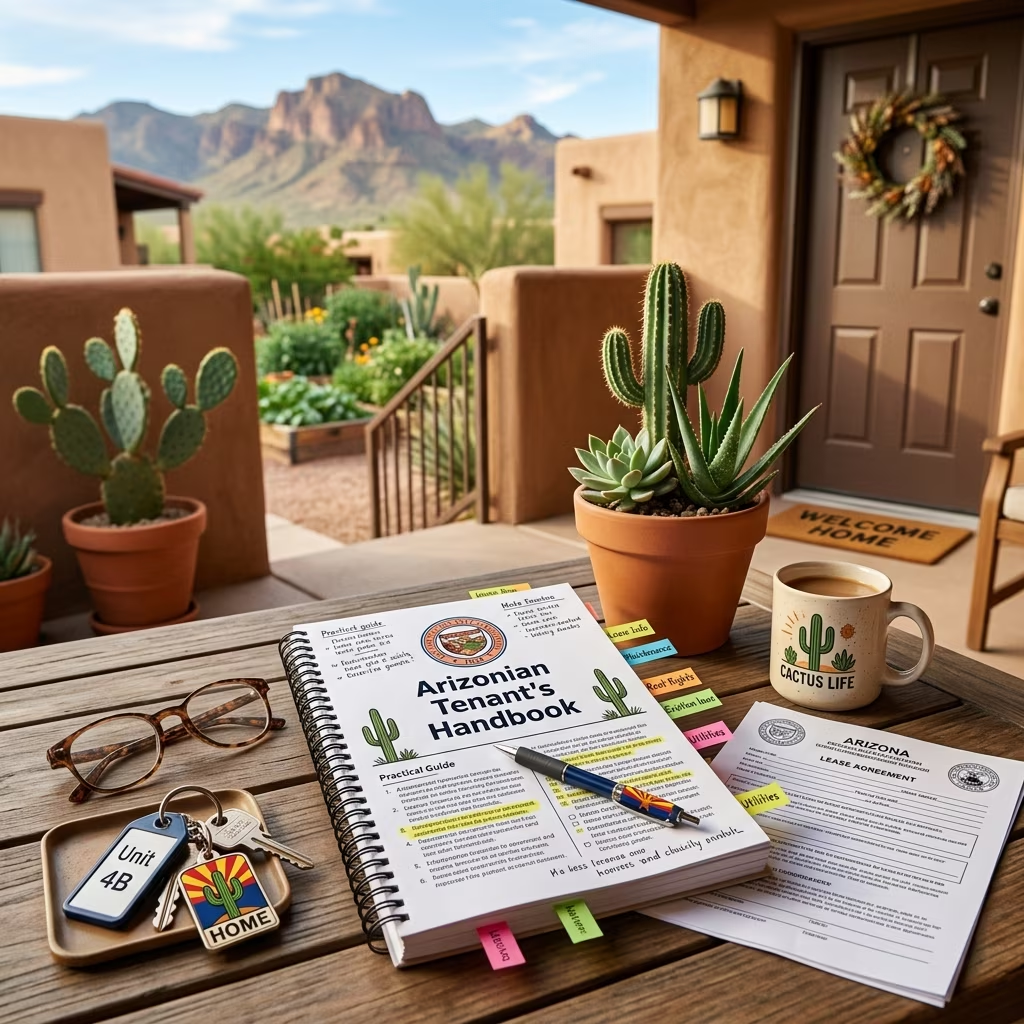
People who rent homes or apartments in Arizona are protected by a specific set of state laws commonly known as the Arizona Residential Landlord and Tenant Act (ARLTA). These rules define what landlords must provide, what tenants are expected to do, and what happens when either side fails to live up to the agreement. Understanding these protections can help you avoid disputes and respond effectively if problems arise in your rental.
This guide explains the main rights Arizona tenants have, the obligations that go along with those rights, and the legal tools available when something goes wrong. It is for informational purposes and does not replace advice from a licensed attorney.
1. The Legal Framework for Tenants in Arizona
Most residential rentals in the state are governed by ARLTA, which applies to houses, apartments, and many other standard dwellings. Separate rules may apply to mobile home spaces and certain specialized housing, but the general concepts of habitability, repairs, notice, and fair treatment are similar.
- ARLTA outlines landlord and tenant duties and the remedies if those duties are violated.
- Local city or county building, housing, and health codes can add further requirements, particularly for safety and essential services such as cooling.
- Federal law, including fair housing statutes, also affects how landlords must treat tenants and applicants.
When a dispute arises, courts generally look first to ARLTA, then to the written rental agreement, and finally to relevant local codes and federal law.
2. Core Rights of Arizona Tenants
2.1 Right to a Habitable and Safe Home
Arizona law requires landlords to provide a rental unit that is safe, clean, and habitable. The dwelling must meet basic health and safety standards and comply with applicable housing codes.
In practical terms, habitability usually means:
- Working plumbing, electrical, and heating systems.
- Functioning cooling systems and appliances necessary for safe occupancy, especially in extreme heat.
- Reasonable protection from weather, pests, and structural hazards.
- Compliance with local building and fire codes.
If conditions become so poor that the unit violates health or safety standards, tenants may have options such as demanding repairs, terminating the lease, or seeking damages.
2.2 Right to Essential Services (Including Cooling)
Arizona’s climate makes cooling systems and other essential services critical. State law and guidance from the Arizona Attorney General emphasize that landlords must provide a rental unit with fully operating cooling systems and other appliances needed to make the unit safe to occupy.
When an essential service fails (for example, air conditioning during dangerous heat):
- The tenant should notify the landlord in writing as soon as possible.
- For health- and safety-threatening temperatures, the landlord generally has up to five days from written notice to fix the problem.
- For other non-emergency essential services, many repairs must be completed within about ten days, depending on the circumstances and applicable statutes.
- If the landlord fails to act, tenants may be able to repair the problem themselves and deduct the cost from rent, terminate the lease, or seek damages under Arizona’s self-help and remedy statutes.
2.3 Right to Privacy and Advance Notice for Entry
Tenants have a strong interest in privacy, and landlords cannot enter a rental unit at will. Arizona law requires that landlords provide written notice before entering the property, with limited exceptions.
- In most situations, landlords must give about two days’ written notice before entering the dwelling for non-emergency reasons, such as inspections or repairs.
- Entry without notice is generally allowed only in true emergencies, such as fires or serious water leaks.
- Repeated or unreasonable entries, or entry without proper notice, may amount to harassment or a violation of the tenant’s rights and can justify legal remedies or early termination of the lease in some cases.
2.4 Protection from Retaliation and Discrimination
Arizona tenants are protected from both unlawful discrimination and certain forms of retaliation.
- Landlords may not discriminate based on characteristics such as race, color, religion, sex, disability, familial status, or national origin, in line with federal fair housing laws.
- Landlords generally cannot retaliate against tenants for exercising legal rights, such as reporting health code violations, joining tenant organizations, or using repair and remedy procedures.
- Retaliatory eviction or adverse treatment after a tenant lawfully asserts their rights can be challenged under Arizona statutes.
3. Key Responsibilities of Tenants
With legal rights come legal responsibilities. ARLTA sets out what tenants must do to keep their protections intact.
3.1 Basic Duties Under ARLTA
At a minimum, tenants must:
- Use the dwelling primarily as a residence and follow reasonable rules in the lease.
- Keep the unit reasonably clean and not deliberately damage the property.
- Respect noise, occupancy, and safety rules that are lawfully included in the rental agreement.
- Promptly report serious defects or problems that affect health or safety.
3.2 Access for Repairs
Tenants must allow reasonable access for landlords or authorized workers to make repairs. Refusing access could delay necessary work and weaken a tenant’s ability to claim that the landlord failed to make repairs.
3.3 Paying Rent and Following the Lease
Rent must be paid on time and in the manner specified in the rental agreement unless a specific statute permits withholding or deduction. Tenants should not withhold rent on their own initiative without confirming it is allowed under ARLTA, because improper nonpayment can lead to eviction.
4. Repairs, Self‑Help, and Remedies
One of the most common issues in rentals is how to handle needed repairs. Arizona law provides a structured process for requesting repairs and, if necessary, taking further action.
4.1 How to Request Repairs
To preserve legal rights, tenants should:
- Notify the landlord as soon as a serious problem appears.
- Use written notice, delivered in person or by certified mail, describing the problem and the date.
- Keep copies of all correspondence and any photos or records showing the defect.
Written notice generally starts the legal timetable for landlord repairs.
4.2 Deadlines for Landlord Action
| Type of Issue | Typical Timeframe After Written Notice | Examples |
|---|---|---|
| Health or safety threat / serious essential service failure | Often about 5 days | Dangerous indoor temperatures due to broken cooling system. |
| Other substantial breach of habitability or lease by landlord | Often about 10 days | Nonfunctioning appliances, nonemergency repairs affecting safe occupancy. |
If the landlord does not remedy the problem within the applicable period, tenants may have several options under ARLTA and related statutes.
4.3 Self‑Help Repairs and Rent Deductions
Arizona law allows some tenants to use a form of self-help repair in limited circumstances. Essentially, after proper written notice and a failed opportunity to repair, a tenant may be able to fix the issue and deduct the reasonable cost from rent, if statutory requirements are met.
- Self-help is generally limited to problems that materially affect health and safety or essential services.
- Tenants must follow the exact procedures in the statute, including giving notice that they intend to repair and deduct.
- Keeping receipts and documentation is critical in case the landlord later disputes the deduction.
4.4 Terminating the Lease and Seeking Damages
When a landlord materially fails to comply with the rental agreement or statutory duties, and does not fix the problem after proper notice, tenants may have the right to terminate the lease.
- Written notice should specify the violation and state that the rental agreement will end on a date at least ten days after receipt if the breach is not corrected.
- If the defect seriously affects health or safety, the timeline may be shorter, as little as five days in some scenarios.
- If the lease ends because of the landlord’s fault, tenants may be entitled to the return of their security deposit and any prepaid rent, and may sue for damages such as medical expenses or difference in rental value.
5. Eviction Rules and Tenant Protections
Eviction in Arizona follows detailed procedures. Landlords cannot simply remove a tenant without proper legal steps.
5.1 Common Grounds for Eviction
Typical reasons a landlord may seek eviction include:
- Nonpayment of rent when no lawful withholding or deduction applies.
- Material violation of lease terms (for example, unauthorized occupants, serious property damage).
- Illegal activity on the premises.
- End of the lease term when the tenant does not leave and the landlord chooses not to renew.
5.2 Required Notices Before Eviction
Before filing an eviction case, landlords must typically give tenants written notice.
- Nonpayment of rent: A notice period (often five days) to pay or move out, as specified by statute.
- Lease violations: A longer notice (commonly around ten days) to correct the violation or vacate.
- In month‑to‑month rentals, either party usually must give written notice (often 30 days) before ending the tenancy.
If the tenant cures the violation within the required time—for example, paying all past due rent plus allowed fees—eviction may not proceed for that specific issue.
5.3 Limits on Eviction: Retaliation and Rights
Arizona law restricts eviction when it is used as retaliation or discriminatorily.
- A landlord generally cannot evict a tenant simply for reporting health or housing code violations.
- Eviction may not be used as a discriminatory action based on protected characteristics.
- After a properly noticed lease violation has been corrected on time, or after past due rent has been paid as required, the landlord typically cannot proceed with eviction on that cured ground.
Tenants who believe an eviction is retaliatory or discriminatory should seek legal help promptly, as court timelines in eviction cases are often short.
6. Security Deposits, Rent, and Ending a Tenancy
Issues involving deposits and move‑out procedures are common. While details may vary by lease, several general principles apply under Arizona law.
6.1 Security Deposit Basics
Arizona landlords may collect a security deposit to cover damage or other obligations. State law limits how deposits can be used and requires that they be handled fairly.
Common expectations include:
- Deposits cannot be kept for normal wear and tear.
- After the tenant moves out, the landlord must either return the deposit or provide an itemized statement of deductions within a period set by law.
- Improper withholding can be challenged in court, where tenants may seek return of funds and, in some cases, penalties.
6.2 Ending Month‑to‑Month Tenancies
For month‑to‑month rental agreements, Arizona tenants and landlords usually must give 30 days’ written notice before the next rent due date to end the tenancy. Written notice provides clear proof of the timing.
6.3 Early Termination for Special Circumstances
Arizona law and federal statutes recognize that certain situations justify ending a lease early, including military service and domestic violence. For example, renters who are service members may have rights under the federal Servicemembers Civil Relief Act to terminate leases under specific conditions.
Victims of domestic violence may also have additional protections and options to leave unsafe housing early under Arizona law, with requirements such as providing documentation of the abuse.
7. Getting Help and Staying Informed
Because landlord‑tenant disputes can escalate quickly, tenants should not hesitate to seek assistance when problems arise.
- Arizona courts and judicial resources provide information sheets on landlord and tenant obligations and the eviction process.
- Arizona Department of Housing publishes the Residential Landlord and Tenant Act and related guidance for the general public.
- Local programs, such as city landlord‑tenant education offices, offer counseling and educational services to both landlords and tenants.
- Legal aid organizations and tenant‑focused centers can help interpret statutes, draft notices, and prepare for court.
Tenants should always read their lease carefully, keep records of payments and communications, and act promptly when serious issues appear.
8. Frequently Asked Questions (FAQs)
FAQ 1: Can I withhold rent if my landlord is not making repairs?
Not automatically. Under Arizona law, tenants cannot simply stop paying rent unless a statute explicitly authorizes withholding or deduction. Instead, tenants generally must provide written notice, allow the landlord time to fix the problem, and then follow approved remedies such as self‑help repairs, termination of the lease, or filing suit.
FAQ 2: How much notice does my landlord need to enter my home?
In most non‑emergency situations, landlords must give about two days’ written notice before entering the rental unit. Emergencies—such as fire, major leaks, or similar urgent events—may justify entry without prior notice.
FAQ 3: What should I do if my air conditioning breaks during extreme heat?
First, notify your landlord in writing and keep a copy of the notice. If the temperature inside your unit reaches a level that threatens health or safety, Arizona guidance indicates the landlord often has up to five days from written notice to repair or otherwise reduce the temperature to acceptable levels. If they fail to do so, you may have options such as self‑help repair, lease termination, or seeking damages under Arizona statutes.
FAQ 4: Can my landlord evict me for reporting code violations?
Generally no. Arizona law restricts landlords from evicting tenants in retaliation for exercising their legal rights, including reporting health or housing code violations to authorities. If you believe an eviction is retaliatory, you should seek legal advice promptly.
FAQ 5: How do I legally end my month‑to‑month lease?
To end a month‑to‑month rental agreement, tenants typically must provide at least 30 days’ written notice before the next rent due date. The notice should clearly state your intention to move out and the date you plan to vacate.
References
- Arizona Residential Landlord and Tenant Act — Arizona Department of Housing. 2023-01-01. https://housing.az.gov/general-public/arizona-residential-landlord-and-tenant-act
- Landlord and Tenant Obligations — Arizona Judicial Branch, Legal Info Hub. 2022-06-01. https://www.azcourts.gov/legalinfohub/Legal-Info-Sheets/Landlord-Tenant-Disputes-amp-Eviction/Landlord-and-Tenant-Obligations
- Arizona Residential Landlord-Tenant Law: For Tenants — University of Arizona Law Library Guides. 2023-05-01. https://law-arizona.libguides.com/c.php?g=1270587&p=9319717
- What Are My Arizona Tenant Rights? Frequently Asked Questions — Arizona Legal Center. 2023-04-01. https://arizonalegalcenter.org/arizona-tenant-rights/
- Attorney General Mayes Warns Landlords About Obligations Under Arizona Landlord-Tenant Law — Arizona Attorney General’s Office. 2023-07-01. https://www.azag.gov/press-release/attorney-general-mayes-warns-landlords-about-obligations-under-arizona-landlord
- Renter’s Rights — Luke Air Force Base, Legal Office (PDF). 2019-10-05. https://www.luke.af.mil/Portals/58/Renters%20Rights.pdf
- Landlord and Tenant Rights — City of Phoenix Human Services Department. 2021-03-01. https://www.phoenix.gov/administration/departments/humanservices/programs-services/tenant-landlord-rights.html