
Arizona Domestic Violence Protection Orders
Understand who can file, where to file, and what Arizona protective orders can do.
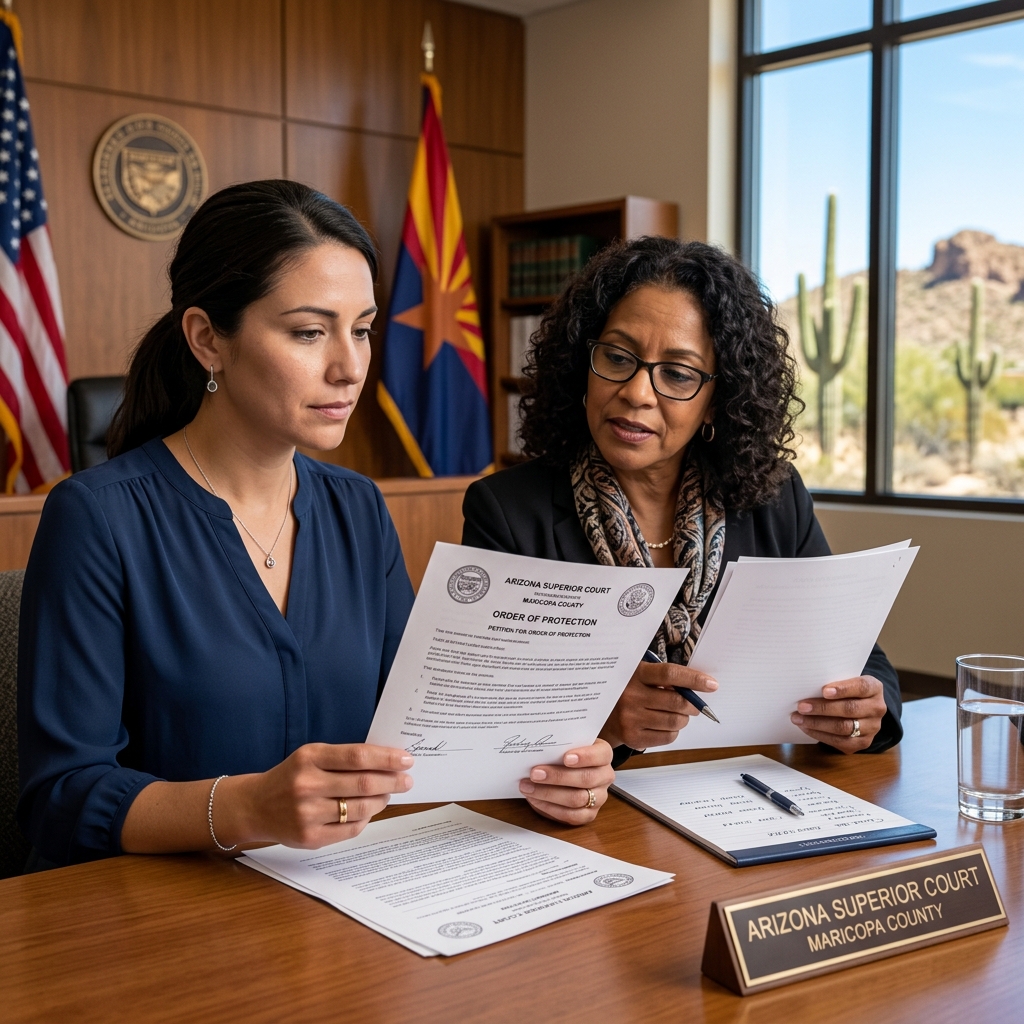
Arizona Domestic Violence Protection Orders: What They Do
An Arizona domestic violence protection order is a court order designed to stop a person from committing acts of domestic violence or continuing threatening behavior. In practice, it can require the restrained person to stay away, stop contacting the protected person, and avoid certain locations or people named in the order.
These orders are part of Arizona’s civil protection system. They are not criminal charges, but they can have serious legal consequences if violated. Arizona law allows courts to issue and enforce these orders even when the people involved live in different places, which makes the remedy easier to use when safety is urgent.
Who Can Ask for Protection
Arizona law limits domestic violence protective orders to people who have a qualifying relationship with the other person. That relationship may include current or former spouses, romantic partners, people who live or used to live together, parents of the same child, people related by blood or marriage, and certain other family-connected relationships recognized by state law.
A petition may also be filed on behalf of a minor by a parent, guardian, or person with legal custody. If a person cannot ask for protection because of a temporary or permanent inability, a third party may request the order on that person’s behalf, but the court must decide whether that requester is appropriate.
What the Court Looks For
To issue an order of protection, the court generally needs a verified petition and a factual showing that domestic violence has occurred or may occur. Arizona’s statute requires the petition to include names, addresses if known, the relationship between the parties, and a specific description of the alleged acts, including dates when possible.
The court may consider violence that occurred within the last year, and in some cases may look back farther if there is good cause to do so. A judge reviews the request to determine whether the facts justify immediate protection or whether the petition should be denied, modified, or set for hearing.
Where You Can File in Arizona
Arizona allows protective order petitions to be filed in municipal courts, justice courts, or superior courts. In many situations, the person seeking protection may file in any court in the state, regardless of where the parties live.
There are exceptions. If a family law case is already pending between the same parties, such as divorce, legal separation, paternity, custody, or related matters, the request usually belongs in the superior court handling that case. If the defendant is under 12 years old, only the juvenile division of the superior court may issue the order.
The Role of AZPOINT in the Filing Process
Arizona uses AZPOINT, the Arizona Protective Order Initiation and Notification Tool, to guide petitioners through the paperwork. The system is the preferred filing method and is used to prepare a petition for an order of protection or related injunctions.
AZPOINT helps gather the information the court needs and produces a confirmation number once the petition is completed. After finishing the online interview, the petitioner must still go to court to finalize the filing and, in many cases, schedule the hearing. Some courts also allow remote hearing arrangements after the petition is processed.
How the Filing Process Usually Works
- Create an AZPOINT account, which generally requires an email address.
- Answer the guided questions about the relationship, the incidents, and the people who need protection.
- Submit the completed petition and save the confirmation number.
- Bring the confirmation number to the courthouse, where staff can help complete filing and set the next step.
Some courts note that the petition must be taken to court within a limited period after completion in the online system, so it is important to follow the instructions provided by the court or the portal.
Emergency Protection When Courts Are Closed
If danger is immediate and the courthouse is closed, Arizona provides an emergency path through law enforcement. A person in urgent danger should call 911. When the situation is serious but not yet a 911 emergency, local law enforcement may still help arrange contact with an on-call judicial officer to request an emergency order.
This emergency process is especially important after hours, on weekends, or on holidays, when ordinary court filing may not be available. The point of the system is to create a fast legal response when waiting until the next business day could put someone at risk.
What an Order of Protection Can Include
Protective orders can do more than simply ban contact. A judge may require the restrained person to stay away from the protected person, cease direct or indirect communication, and avoid conduct that could be interpreted as harassment or intimidation.
Depending on the facts, the order may also cover children or other family members named in the petition. Arizona resources note that the order can extend to other people listed as protected parties, which is one reason careful completion of the petition matters.
How Long the Order Lasts
Arizona courts explain that once served, orders of protection are generally effective for a set period, and the length depends on when service occurs under the current rules. Courts note that orders served on or after September 24, 2022, remain in effect for two years from the date of service, while orders served before that date followed a one-year period.
Only the court can end or modify the order. That means neither party can simply ignore, cancel, or rewrite it on their own. If a change is needed, the issue must be brought back before a judge.
Why Proper Service Matters
A protective order does not fully take effect until it is served on the defendant. Service gives the restrained person formal notice and makes the order enforceable.
This is one reason Arizona’s process emphasizes accurate information in the petition. If the defendant cannot be identified or located, service may be delayed, and that can affect how quickly the order begins protecting the petitioner.
Common Filing Mistakes to Avoid
- Leaving out dates or details about the incidents.
- Using an incorrect court when a related family case is already pending.
- Forgetting that each defendant generally requires a separate petition.
- Failing to complete the AZPOINT process before appearing at court.
- Assuming the order is active before service is completed.
Careful preparation can reduce delays and help the court understand the urgency and pattern of conduct involved. If children are involved, the petition should clearly identify them and explain why protection is needed.
Order of Protection vs. Other Protective Remedies
Arizona also uses other protective remedies, such as injunctions against harassment and injunctions against workplace harassment. AZPOINT can help guide people toward the appropriate form of relief depending on the relationship and the type of conduct involved.
For domestic violence situations, the order of protection is the primary tool. The key difference is that domestic violence orders are tied to the relationships recognized by Arizona law, while other injunctions may apply to broader harassment settings.
How Courts Review the Request
After the petition is filed, a judge reviews the sworn allegations. In some situations, the court may issue an order without the other person present first, often called an ex parte order, especially when immediate protection is needed.
In other cases, the court may schedule a hearing before deciding whether to continue, change, or deny the requested protection. The exact procedure depends on the court, the facts alleged, and whether the petition is complete and legally sufficient.
Practical Tips for Petitioners
If you are thinking about filing, it helps to gather records before you begin. Helpful materials may include messages, call logs, photos, incident notes, police reports, and the names of witnesses who saw or heard the behavior.
You should also think carefully about safety planning. Arizona’s process is designed to move quickly, but the petitioner still needs a safe way to get to court, receive service information, and follow any hearing instructions from the judge or court staff.
Frequently Asked Questions
Can I file in any Arizona court?
In many cases, yes. Arizona law allows protective orders to be issued or enforced by courts across the state, and people often may file in municipal, justice, or superior court. Exceptions apply when a related family case is already pending or when the defendant is under 12 years old.
Do I need to use AZPOINT?
AZPOINT is the preferred method and is used by Arizona courts to prepare the petition. Even if you plan to finish the process at the courthouse, the online guided interview is part of the modern filing workflow.
Can I get protection at night or on a weekend?
Yes, if the situation is urgent. Arizona uses law enforcement and an on-call judicial process for emergency orders when courts are closed. If someone is in immediate danger, call 911.
Does one order cover more than one defendant?
Generally, no. Arizona law states that an order of protection is not granted against more than one defendant, so separate petitions are typically needed for each person.
How long will the order stay in effect?
Court guidance explains that the time period depends on the service date and current rules. After service, orders are generally valid for a significant period, and only the judge can change or end them.
When Legal Help May Be Useful
Some people can complete the process on their own, especially when the facts are straightforward. Others may need legal help if there is a related divorce or custody case, complicated service issues, or disagreement about the relationship needed to qualify for an order.
Legal assistance can also help if the petitioner needs to ask for protection for children, is unsure which court to use, or wants help understanding how the order interacts with other family court proceedings. Because the process can affect housing, parenting time, and future court orders, it is important to provide complete and accurate information from the start.
References
- Arizona Rules of Protective Order Procedure — University of Arizona James E. Rogers College of Law. 2024-01-01. https://law.arizona.edu/sites/default/files/arizona%20rules%20of%20protective%20order%20procedure.pdf
- Legal Information On Protective Orders in Arizona — Arizona Crime Victim Help. 2025-01-01. https://azcrimevictimhelp.org/safety/protective-orders
- A.R.S. § 13-3602 – Arizona Legislature — Arizona Legislature. 2026-01-01. https://www.azleg.gov/viewdocument/?docName=https://www.azleg.gov/ars/13/03602.htm
- Arizona Order of Protection and Injunction of Harassment Forms — Arizona Court Help. 2025-01-01. https://azcourthelp.org/forms/protective-orders-form
- In Which County Can I File for an Order of Protection? — WomensLaw.org. 2025-01-01. https://www.womenslaw.org/laws/az/restraining-orders/domestic-violence-orders-protection/basic-information/which-county-can-i
- How to Get a Protective Order in Maricopa County, Arizona — Maricopa County Superior Court. 2025-01-01. https://superiorcourt.maricopa.gov/llrc/protective-orders/
- Orders of Protection — The Judicial Branch of Arizona, Mohave County Courts. 2025-01-01. https://www.mohavecourts.az.gov/orders-protection
Similar Articles








Read full bio of medha deb


