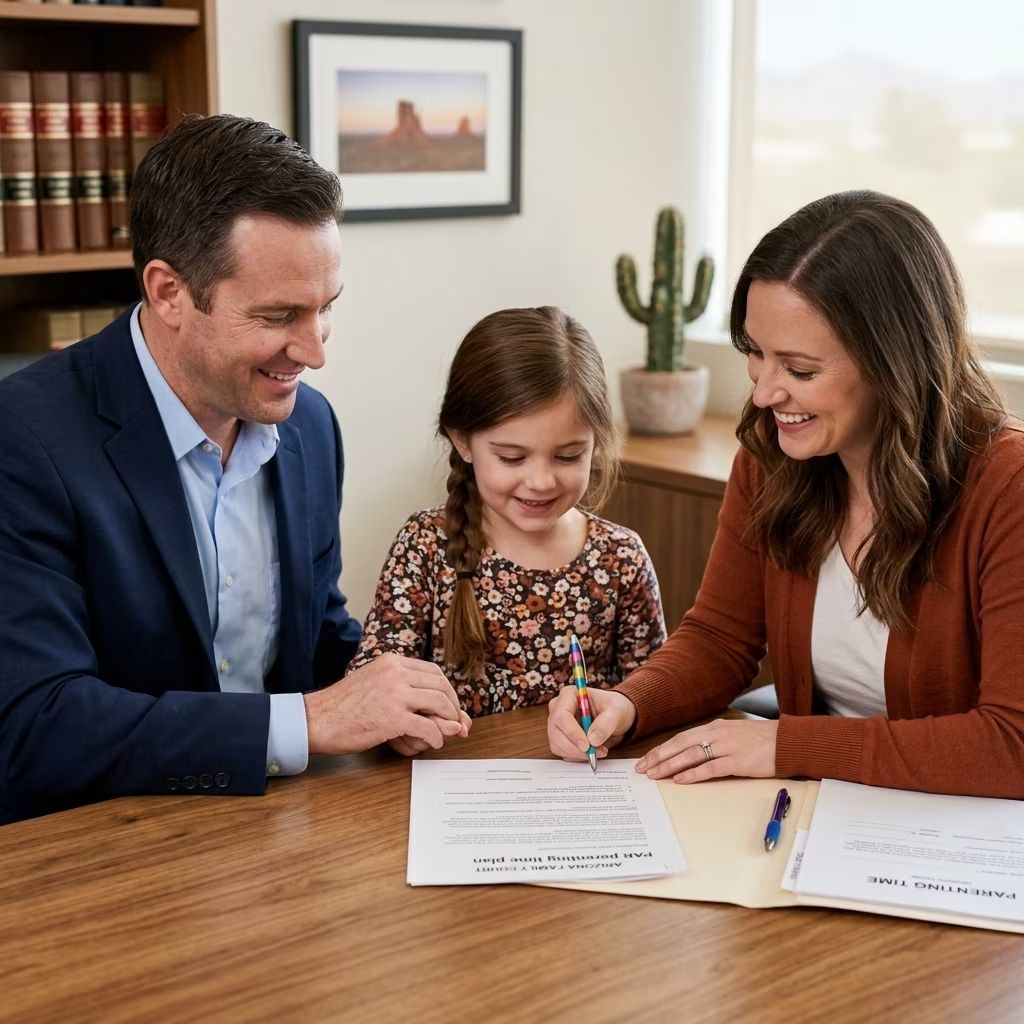
Arizona approaches child custody using modern terms like legal decision-making and parenting time rather than traditional labels such as sole custody or joint custody. The goal behind every order is to protect the child’s well-being while encouraging healthy relationships with both parents whenever it is safe to do so.
This guide explains how Arizona defines custody, the different types of arrangements available, how courts decide what is in a child’s best interests, and what parents can expect from the legal process.
Key Concepts in Arizona Child Custody Law
Arizona family law separates custody into two main components: the authority to make major decisions and the schedule for where the child lives.
- Legal decision-making: Who has the right and responsibility to make important choices about the child’s life.
- Parenting time: When and where the child spends time with each parent.
| Aspect | What It Covers | Common Questions |
|---|---|---|
| Legal decision-making | Education, medical care, religion, major life decisions. | Who chooses schools? Who decides on surgeries? |
| Parenting time | Daily schedule, holidays, vacations, transportation. | Where does the child live? How are holidays shared? |
Types of Legal Decision-Making Arrangements
Arizona courts can order different forms of legal decision-making depending on what best protects the child and supports stable parenting.
Joint Legal Decision-Making
Under joint legal decision-making, both parents share equal rights and duties to make major decisions about the child.
- Each parent has the same legal authority to participate in decisions about school, health care, and religious upbringing.
- Neither parent’s opinion automatically outweighs the other’s; they are expected to consult and cooperate.
- The court may still assign certain areas (for example, medical decisions) to one parent if that is in the child’s best interests.
Arizona law starts from the idea that frequent and continuing contact with both parents is generally best for children, so joint legal decision-making is often considered first when it is safe and practical.
Sole Legal Decision-Making
Sole legal decision-making places final authority for major decisions with one parent.
- The parent with sole authority can make important decisions without needing the other parent’s agreement.
- This arrangement may be ordered when cooperation is impossible or unsafe, or when one parent is unable to responsibly participate.
- Even when one parent has sole legal decision-making, the other parent may still receive parenting time if that does not endanger the child.
In Arizona, there is no automatic legal preference for mothers or fathers, and the court does not presume one parent should always have sole authority.
Parenting Time: How Schedules Are Structured
Parenting time is the physical schedule showing when the child is with each parent and where the child lives.
A typical parenting time schedule addresses:
- Regular weekdays and weekends
- School breaks and summer vacation
- Major holidays and special family events
- Pickup and drop-off locations and times
- Rules for communication and transportation
Arizona law expects parents seeking joint custody to submit a detailed written parenting plan explaining how these issues will be handled.
Balanced vs. Limited Parenting Time
The amount of parenting time each parent receives depends on what the court believes is best for the child’s health, safety, and emotional stability.
- Balanced parenting time gives both parents significant, predictable time with the child, often close to equal.
- Limited or supervised parenting time may be ordered when there are serious concerns about abuse, neglect, substance use, or other safety risks.
- No parenting time is rare and used mainly when contact poses a serious danger that cannot be managed through supervision or protective conditions.
The Best Interests of the Child Standard
Every Arizona custody and parenting time decision is guided by the best interests of the child standard.
To evaluate best interests, courts look at a range of factors, including:
- The child’s relationship with each parent and other household members
- The child’s adjustment to home, school, and community
- The mental and physical health of all parties
- Each parent’s willingness to promote ongoing contact with the other parent (when safe)
- Any history of domestic violence, child abuse, or substance misuse
- Whether one parent has been the primary caregiver
- Any special needs the child may have
When safety concerns exist—for example, serious domestic violence or sex offense history—Arizona law restricts the court’s ability to grant unsupervised parenting time or joint legal decision-making unless it is shown that the child would not face a significant risk.
Grandparents and Third-Party Rights
Arizona law allows certain non-parents, such as grandparents, to seek visitation or sometimes decision-making rights in limited circumstances.
- Grandparents may request court-ordered visitation when it serves the child’s best interests and specific conditions are met, such as the death or divorce of a parent.
- Other relatives or non-parents may pursue legal decision-making or placement in more serious situations, such as parental incapacity or risk of harm to the child.
These cases are evaluated carefully, because courts must balance the child’s need for extended family relationships with parents’ constitutional rights to direct their child’s upbringing.
Starting a Custody Case in Arizona
Parents can ask an Arizona court to decide custody and parenting time whether they are married, divorcing, or never married.
Where to File
- Cases are generally filed in the Superior Court in the county where the child has lived for at least six months.
- Divorcing spouses typically address custody within their divorce proceeding.
- Unmarried parents can file a separate action for legal decision-making and parenting time; paternity usually must be established first for fathers.
Basic Steps in the Process
While individual situations vary, the process often includes several common stages.
- Prepare and file court forms
Parents complete required forms asking the court for legal decision-making, parenting time, and often child support. - Serve the other parent
The filing parent must formally deliver copies of the documents to the other parent, following Arizona service rules. - Wait for a response
The other parent typically has 20 days to respond if served in Arizona and 30 days if served elsewhere. - Attend court hearings
The judge may hold temporary orders hearings, settlement conferences, and a final trial if the parents cannot agree. - Complete parent education
In many cases, parents must attend a court-approved information course about the impact of separation on children.
Parenting Plans and Co-Parenting Expectations
When parents share responsibilities, a detailed written parenting plan is central to managing daily life and long-term decisions.
An effective Arizona parenting plan typically includes:
- Regular weekly schedule for each parent’s time
- Holiday and vacation arrangements
- Procedures for exchanging information about the child
- Decision-making rules (joint vs. sole; tie-breaking steps)
- Conflict-resolution methods, such as mediation
Arizona courts promote a co-parenting approach in which both parents respect the court order and cooperate to reduce conflict for the child.
Relocation and Changing Custody Orders
Custody orders are not necessarily permanent. Parents can seek changes when circumstances significantly shift, but there are strict rules.
Relocation Rules
Arizona treats major moves carefully because they can disrupt a child’s relationship with both parents.
- Relocation typically means moving a child out of state or more than 100 miles within Arizona.
- The parent who wants to relocate usually must notify the other parent and ask the court for permission if a custody order is already in place.
- The court re-examines best interests, including the child’s ties to each parent and the impact of the move on schooling and support systems.
Modifying Custody and Parenting Time
Parents may request modifications when circumstances have changed in a way that affects the child’s welfare.
- In many situations, a parent must wait at least a year after the last order before asking for a change, unless there is a serious concern about harm.
- The parent seeking modification must show a substantial and continuing change, such as major relocation, health changes, or significant violations of the current order.
- Emergency modifications can be requested when the child appears to be in immediate physical or emotional danger.
Frequently Asked Questions About Arizona Custody
Can I get full custody of my child in Arizona?
Arizona does not use the phrase “full custody,” but the court can award sole legal decision-making and limit parenting time when necessary to protect a child. The judge evaluates best interests and safety concerns before giving one parent sole authority.
Does the court favor mothers over fathers?
No. Arizona law does not create a legal presumption in favor of either parent. The court focuses on the child’s needs, each parent’s abilities, and relevant history rather than gender-based assumptions.
Can my child decide which parent to live with?
Children do not have the legal right to make the final decision about custody. However, the judge may consider the child’s preferences as one factor, especially for older or more mature children, alongside many other best-interest factors.
What if there is domestic violence or substance abuse?
Domestic violence, child abuse, and serious substance misuse strongly affect custody outcomes. Courts may restrict legal decision-making, order supervised parenting time, or deny unsupervised contact to protect the child. A parent seeking sole authority must provide clear evidence of risk.
Do I need a lawyer to file for custody?
Parents are allowed to represent themselves, and Arizona courts provide forms and guidance. However, custody law is complex, and many parents choose to consult a family law attorney, particularly in cases involving safety issues, relocation, or contested decision-making.
Practical Tips for Parents Navigating Custody
- Document important events: Keep records of schooling, medical care, and any serious incidents that may affect the child’s safety.
- Communicate respectfully: Courts look favorably on parents who support the child’s relationship with the other parent when safe.
- Follow court orders closely: Ignoring parenting time or decision-making rules can lead to legal consequences and hurt your position in future hearings.
- Use mediation when possible: Neutral mediators can help parents reach agreements that reduce conflict and avoid trial.
- Focus on the child’s experience: The law centers on the child’s best interests; framing requests around the child’s needs often makes arguments stronger.
References
- Arizona Revised Statutes, Title 25: Marital and Domestic Relations — Arizona State Legislature. 2024-01-01. https://www.azleg.gov/arsDetail/?title=25
- Child Support & Family Law Information — Arizona Judicial Branch. 2023-06-15. https://www.azcourts.gov/familylaw
- Filing for Legal Decision-Making and Parenting Time (Child Custody) — AZCourtHelp (Arizona Supreme Court). 2023-05-10. https://azcourthelp.org/browse-by-topic/custody-information/process-ldmpt
- Arizona Custody — WomensLaw.org (National Network to End Domestic Violence). 2024-02-20. https://www.womenslaw.org/laws/az/custody/all
- What Are the Different Types of Child Custody in Arizona? — Udall Shumway PLC. 2023-04-01. https://www.udallshumway.com/blog/mesa-az-what-are-the-types-of-child-custody-in-arizona/
- Child Custody FAQs — Arizona Law Group. 2023-07-01. https://www.arizonalawgroup.com/child-custody/faqs/
- Establishing Legal Custody, Parenting Time, and Child Support — Maricopa County Superior Court Law Library Resource Center. 2022-09-15. https://superiorcourt.maricopa.gov/llrc/fc_drcv1/