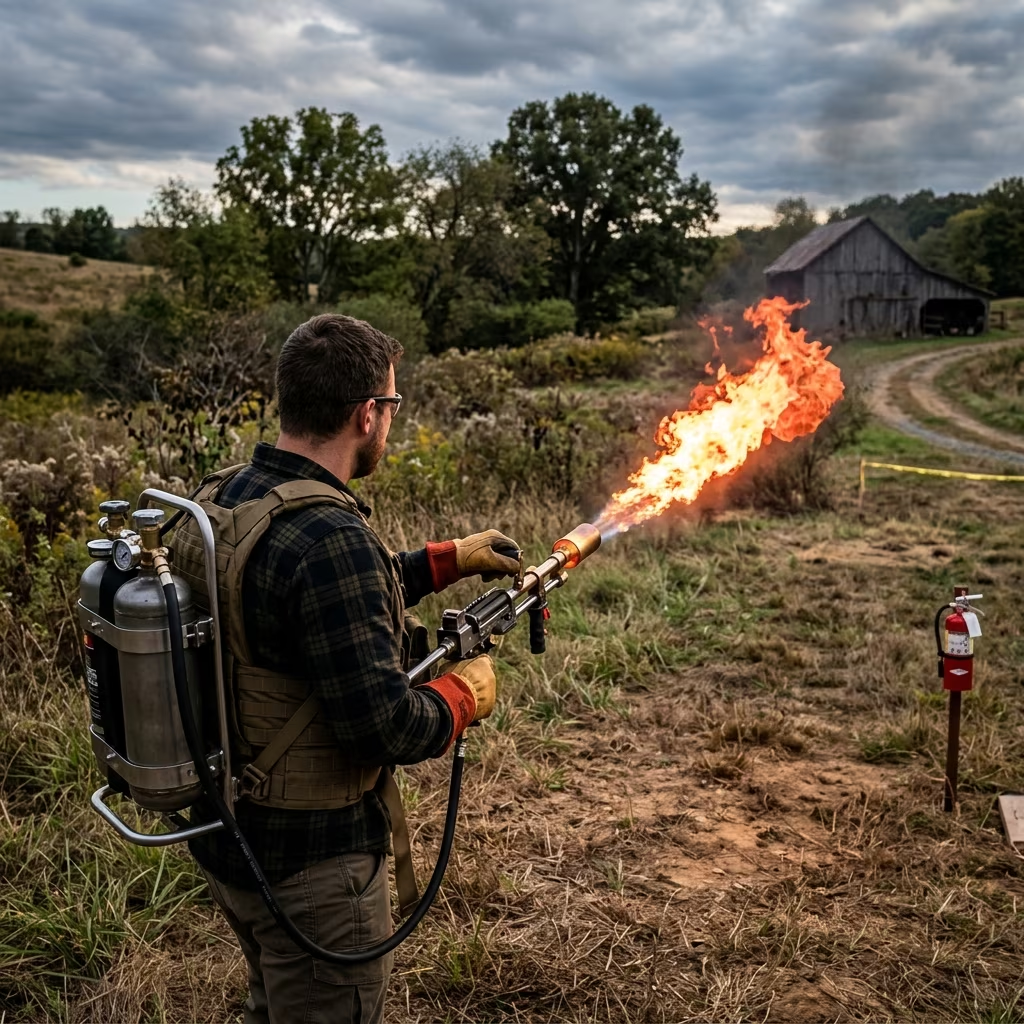
Flamethrowers occupy a strange place in American law: they are dramatic, dangerous, and widely recognized, yet they are not treated like guns under federal weapons law. In most of the United States, that means private ownership is generally not barred by a specific statewide ban. But the legal picture is not uniform. A small number of states impose their own restrictions, and local rules, safety codes, and misuse laws can still create serious trouble for owners.
Why Flamethrowers Draw Legal Attention
A flamethrower is not just a novelty item. It produces a concentrated stream of fire and can cause severe injury, property damage, and panic in public spaces. That combination makes lawmakers and fire officials pay attention even when the device is not classified as a traditional firearm. The legal question is not simply whether the item exists, but how a state defines it, how it is used, and whether it falls into a separate category of weapon or hazardous device.
In practical terms, the answer to whether a flamethrower is legal often depends on three issues:
- Whether the state has a specific law governing flamethrowers
- Whether the device is considered a weapon, a torch, or a fire-related tool
- Whether the owner uses it in a way that violates criminal, fire, or property laws
The Federal Baseline: Few Direct Restrictions
At the federal level, flamethrowers are not generally regulated as firearms under the main federal weapons statutes. That means there is no broad federal licensing system for ordinary civilian ownership in the way there is for some tightly controlled weapons. Federal agencies have also indicated that domestic production and possession are outside the scope of certain firearm-focused regulatory schemes.
This does not mean federal law is irrelevant. If a flamethrower is used to commit arson, assault, terrorism-related conduct, or another crime, existing federal criminal laws may still apply. Transportation, shipping, or import issues can also trigger other federal rules depending on the device’s design and intended use. The key point is that federal law does not create the kind of nationwide ban many people assume exists.
State Law Is Where the Real Differences Appear
Most of the legal action happens at the state level. The broad pattern in the United States is that flamethrowers are not heavily regulated in most states, but two states stand out for specific treatment: California and Maryland. California requires a permit in certain circumstances, while Maryland bans flamethrowers outright. Outside those states, owners usually face fewer direct possession restrictions, though general criminal and safety laws still apply.
| Jurisdiction | General rule | Practical effect |
|---|---|---|
| Most states | No specific flamethrower statute | Possession is often not directly prohibited, but misuse may still be criminal |
| California | Permit-based restrictions | Ownership or use may require authorization, especially for devices that meet the statutory definition |
| Maryland | Outright ban | Possession and use are prohibited |
California’s Permit Approach
California is the state most often cited for flamethrower regulation because it has a specific legal definition that can trigger permit requirements. The state focuses on devices designed to emit or propel a burning stream of flammable liquid over a defined distance. That means the details of the device matter. A consumer product marketed as a flamethrower may or may not fall within the statute depending on how it functions and how far the flame travels.
For buyers and owners, the practical lesson is simple: in California, do not assume a device is legal just because it is sold commercially. The device’s range, portability, and intended use can affect whether a permit is needed. Fire marshal approval or another authorization process may apply in limited situations, especially for controlled or professional uses.
Maryland’s Ban Is Much Stricter
Maryland takes the most restrictive approach by prohibiting flamethrowers rather than merely regulating them. That means possession itself can create criminal exposure, not just unsafe use. A person who buys one online and brings it into the state can run into legal problems even if the device is never fired in public.
This kind of ban is important because it changes the risk analysis completely. In a permit state, the question is often whether the owner followed the required procedure. In a ban state, the question is whether the item was possessed at all. For residents, visitors, and interstate buyers, that distinction matters a great deal.
What Counts as a Flamethrower?
Not every device that produces flame will be treated as a flamethrower under the law. Some commercially sold products are closer to torches or burners than to military-style weapons. That distinction can affect how a state classifies the device. A piece of equipment used for roofing, controlled burns, snow removal, or pest control may be viewed differently from a device marketed primarily for recreation or intimidation.
In legal disputes, courts and regulators often look at function rather than branding. A product label alone does not control the analysis. Instead, officials may ask what the device does, how far it projects flame, whether it uses flammable liquid, and whether it appears designed for practical work or for spectacle.
Common Misunderstandings About Ownership
Public discussion about flamethrowers often produces several myths. One is that a device sold by a famous company automatically comes with nationwide approval. That is not true. Another is that if a device is legal to buy online, it is legal to use anywhere. That is also false. A product may be lawful in one jurisdiction and unlawful in another.
Another common misunderstanding is that a lack of a specific flamethrower statute means there are no legal risks. In reality, general laws may still apply. Reckless endangerment, disorderly conduct, arson, property damage, assault, and local fire code violations can all become relevant if a person uses the device irresponsibly.
Safety and Liability Concerns
Even where ownership is lawful, flamethrowers present obvious civil and criminal liability risks. A fire started by a user can lead to lawsuits for injury or property damage. Insurance coverage may be unavailable or disputed. In some cases, a fire department’s response or a neighbor’s complaint can turn a private stunt into a law-enforcement matter.
Owners should also understand that local fire restrictions may be stricter than state weapon laws. Outdoor burn bans, drought rules, and emergency fire restrictions can apply even to devices not labeled as weapons. A lawful possession law does not override a fire safety order.
How Law Enforcement and Fire Officials May View the Device
When police or fire officials evaluate a flamethrower, they typically focus on risk, context, and intent. A device used in a professional setting may be treated differently from one displayed at a gathering or used near homes, vehicles, or dry brush. The same object can look like a legal tool in one context and a public hazard in another.
That is why owners should be cautious about transporting or demonstrating the device. Public display can create alarm and may lead to calls to law enforcement even if the item is not illegal to possess. Once officers are involved, the issue often becomes whether the conduct created a threat rather than whether the object itself is generally allowed.
Practical Questions to Ask Before Buying One
Anyone considering purchase should examine the law before ordering or transporting a flamethrower. The most useful questions are straightforward:
- Does my state specifically regulate or ban flamethrowers?
- Does my local city or county have fire or weapons rules that go further than state law?
- Will the device be used for work, demonstration, or recreation?
- Could the device fit a legal definition based on flame distance or fuel type?
- What civil or insurance consequences could follow if it causes damage?
These questions matter because the legal burden often falls on the owner to know the rules before using a device that can generate heat, fire, and public concern.
Comparing Legal Status by Location
| Location | Ownership status | Typical legal issue |
|---|---|---|
| Most U.S. states | Generally lawful unless misused | Criminal conduct if used dangerously or unlawfully |
| California | Restricted | Permit and definition-based compliance |
| Maryland | Prohibited | Possession itself may be unlawful |
| Other countries | Varies widely | Import rules and weapon definitions may differ significantly |
Why Context Matters More Than the Gadget
Legal disputes over flamethrowers often reveal a larger principle: the law usually cares less about novelty and more about risk. A device marketed as a joke, a prop, or a luxury gadget can still produce serious legal consequences if it can ignite property or threaten people. Conversely, a tool used for agriculture or construction may be treated more like equipment than a weapon when it is handled responsibly and fits a narrow functional definition.
This context-based approach explains why the same product can generate headlines, internet fascination, and legislative reaction all at once. Lawmakers respond to public fear, fire officials respond to hazard, and prosecutors respond to misuse. The object itself is only part of the story.
Frequently Asked Questions
Are flamethrowers legal in the United States?
In many states, yes. There is no broad federal ban on ordinary civilian possession, but state and local laws can still restrict or prohibit them.
Which states regulate flamethrowers the most?
California and Maryland are the best-known examples. California uses a permit-style approach, while Maryland bans them.
Can I carry a flamethrower across state lines?
Not safely from a legal standpoint without checking the laws of every state involved. A device lawful in one state may be prohibited in another.
Does calling it a tool instead of a weapon make it legal?
No. Regulators and courts focus on function, design, and use, not just marketing language.
Can I use one for home projects?
Possibly, but only if the device is lawful where you live and you comply with all fire, safety, and local code requirements.
Bottom-Line Legal Takeaway
For most Americans, a flamethrower is not automatically illegal to own, but that does not make it a low-risk purchase. State law, local fire rules, and misuse statutes can quickly turn a flashy device into a criminal or civil problem. California and Maryland show how different state approaches can be: one regulates, the other bans. Anyone interested in owning one should check the law carefully before buying, transporting, or using it.
References
- Elon Musk Sells Flamethrowers: Are They Legal to Own? — FindLaw. 2018-02-02. https://www.findlaw.com/legalblogs/criminal-defense/elon-musk-sells-flamethrowers-are-they-legal-to-own/
- New York Moves to Make Flamethrowers Illegal in Response to Elon Musk — NBC New York. 2018-01-31. https://www.nbcnewyork.com/news/local/new-york-flamethrowers-illegal-elon-musk-boring-co/1541539/
- Elon Musk’s flamethrowers are legal in Canada — but it’s not that simple — Global News. 2018-01-30. https://globalnews.ca/news/3995300/elon-musk-flamethrower-canada-legal/
- Regulation of flamethrowers in the United States — Wikipedia. 2026-07-10. https://en.wikipedia.org/wiki/Regulation_of_flamethrowers_in_the_United_States
- Flamethrower — The Boring Company. 2026-07-10. https://www.boringcompany.com/not-a-flamethrower