
Apple Bag Checks: Key Lessons For Employers And Employees Today
How a long-running dispute over retail bag searches reshaped views on off-the-clock work and employee rights.
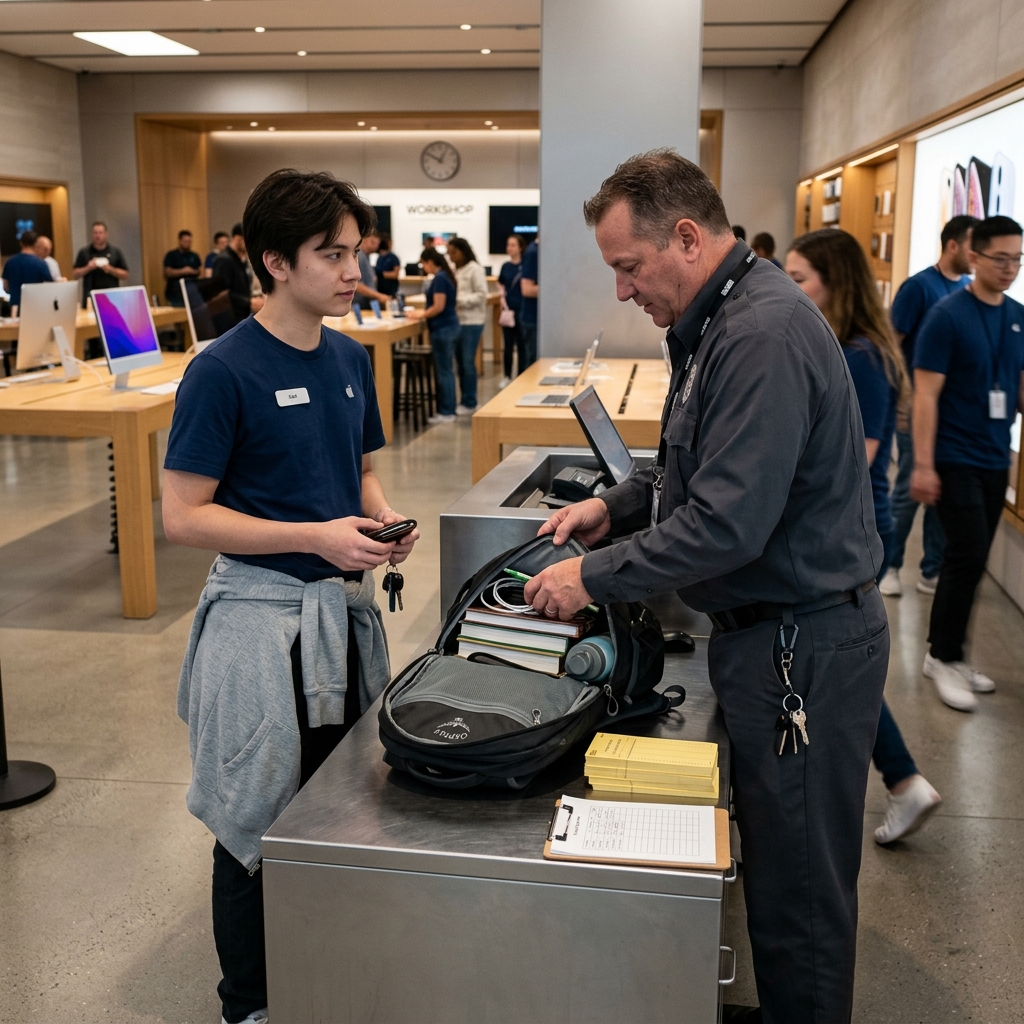
For nearly a decade, Apple’s retail workers in California challenged a company policy requiring bag and device searches at the end of their shifts, usually after they had already clocked out. At the center of the dispute was a simple but important question: must employees be paid for time spent waiting for mandatory security checks? The litigation that followed produced a notable shift in legal understanding of off-the-clock work and culminated in a multimillion-dollar settlement for thousands of workers.
This article uses that litigation as a lens to examine wage and hour rules on security screenings, how courts analyze “control” versus “choice” in workplace policies, and what employers and employees can learn from the Apple bag check saga.
Background: The Bag Check Policy and Employee Complaints
Apple’s policy required many retail employees to undergo a bag and personal device inspection whenever they left the store, including at the end of their shifts. These screenings were framed as security measures designed to prevent theft of merchandise and safeguard proprietary information. Employees alleged that, in practice, the checks could add up to about five to 30 minutes per day, depending on how many workers were waiting and the availability of managers to perform the searches.[10]
Critically, the policy operated off the clock. Workers were expected to clock out before lining up for inspections, meaning that any time spent waiting for or undergoing checks was unpaid.[10] Two former employees filed a class action lawsuit in 2013, arguing that this uncompensated time violated California wage and hour law and seeking payment for thousands of affected retail workers.[10]
Framing the Legal Question
The litigation turned on how California law treats periods when workers are under employer control, even if they are not actively performing job tasks. The core legal questions included:
- Is time spent waiting for mandatory bag and device checks “work”?
- Does employer control, rather than physical activity, determine whether time is compensable?
- Can an employer avoid paying for that time by characterizing bag checks as optional or by arguing employees can avoid them by not bringing personal items?
Different courts initially answered these questions differently, leading to a notable evolution in the legal analysis over time.
Early District Court Ruling: Bag Checks as Non-Compensable Waiting
In the early phase of the case, the federal district court initially sided with Apple and dismissed the workers’ claims. The judge concluded that the bag searches were not sufficiently connected to the employees’ job responsibilities and therefore did not qualify as compensable work time under the relevant wage regulations.
The court emphasized that the employees chose to bring bags and personal devices to work. In the judge’s view, this meant workers could avoid waiting for searches by simply arriving without items subject to inspection. The time spent standing in line was characterized as passive waiting, not “work” that the employer was required to pay for.
Key Points from the District Court’s Analysis
| Issue | District Court’s Perspective |
|---|---|
| Connection to job duties | Bag searches were seen as unrelated to the core duties of selling products or assisting customers. |
| Nature of the activity | Waiting in line was characterized as nonproductive, passive time, not “work” under wage rules. |
| Employee choice | Employees were deemed to have control over whether they brought bags or devices, effectively choosing whether to be searched. |
This reasoning reflected a narrower view of what counts as compensable time, focusing heavily on whether the activity resembled traditional work and whether employees could avoid it through personal choices outside of their job description.
Reversal at the State Supreme Court: Control and Practical Realities
The case took a significant turn when the California Supreme Court was asked to interpret state wage and hour rules in the context of Apple’s bag checks. In 2020, the court held that time spent waiting for and undergoing mandatory exit screenings is compensable under California law because employees are under the employer’s control during those periods.
The high court’s analysis was grounded in the California Industrial Welfare Commission (IWC) wage orders, which require employers to pay for all time an employee is subject to the control of the employer, not just for time engaged in active productive labor. The justices stressed the practical reality that telling employees they could avoid searches by leaving their personal items at home was unrealistic and ignored ordinary needs, such as bringing phones, wallets, or bags to work.
Why the Supreme Court Found the Time Compensable
- Employer control: Once workers reached the exit and requested permission to leave, they could not depart until the search was completed. This placed them squarely under Apple’s control.
- Mandatory nature: The screenings were not optional. Refusing inspection could subject employees to discipline, making compliance effectively required.
- Practical necessity of personal items: The court held it was impractical to expect employees not to bring personal belongings, such as phones or bags, to work, undermining the idea that bag checks were triggered by purely voluntary employee behavior.
- Broad scope of wage protection: California law is intentionally protective and covers time when employees are controlled by the employer, even if the employee is only waiting.
This decision effectively rejected the earlier district court’s focus on job duties and passive waiting, replacing it with an emphasis on control and the practical realities of modern workplaces.
Ninth Circuit Alignment and Case Revival
Following the California Supreme Court’s ruling, the U.S. Court of Appeals for the Ninth Circuit revisited the Apple case. The Ninth Circuit concluded that the district court had erred by granting summary judgment to Apple and ordered that summary judgment instead be entered in favor of the employees regarding liability for unpaid bag check time.
The appellate court reaffirmed that, under the state supreme court’s interpretation, waiting time associated with mandatory exit screenings is compensable. It rejected Apple’s argument that some employees might not bring bags, emphasizing that the policy itself—and the enforcement mechanisms behind it—placed employees under employer control when leaving the workplace.
The Settlement: Financial and Practical Outcomes
After the legal landscape solidified against Apple, the company agreed to settle the class action. In 2022, a federal district court approved a settlement of approximately $30.4 million to resolve claims by tens of thousands of retail workers affected by the bag check policy.
Key features of the settlement included:
- Approximately 14,000+ class members eligible for compensation, covering years of impacted shifts.
- Average individual payments estimated in the range of about $1,200–$1,300 per worker, depending on the number of shifts and other allocation factors.
- A portion of the settlement dedicated to attorneys’ fees, litigation costs, and administrative expenses, reflecting the complexity and duration of the case.
Beyond monetary relief, the settlement and preceding court decisions sent a wider signal to employers about how off-the-clock time and security screenings are treated under California wage law.
Legal Themes: Control, Choice, and Off-the-Clock Work
The Apple bag check litigation illustrates several broader themes that are highly relevant for both employers and employees navigating wage and hour rules.
Employer Control vs. Employee Choice
One of the main tensions in the case was whether employee decisions—such as carrying a bag—could transform a mandatory, employer-controlled process into a non-compensable, voluntary inconvenience. The final rulings emphasized that when a policy requires employees to submit to searches and ties compliance to continued employment, the company exerts control regardless of the choices that led employees to be subject to that policy.
In practice, this means employers cannot easily avoid paying for time by framing controlled activities as employee-initiated or optional if the consequences of refusal are disciplinary or if the activity is embedded in workplace exit procedures.
Expanding the Notion of “Work”
The case also highlights how modern wage and hour law, especially in California, has moved away from a narrow focus on traditional physical or mental tasks. Under the IWC wage orders, “hours worked” includes time when an employee is simply waiting but remains under the employer’s control. Security screenings, exit procedures, and other controlled waiting periods can all fall within this definition.
This broader understanding is significant for industries that routinely use security protocols, inventory checks, or mandatory after-shift procedures, especially when those events occur off the clock.
Implications for Employers and HR Professionals
Following the Apple settlement and related rulings, employers—particularly in California—have strong incentives to review policies involving exit screenings and any other activities that occur at the margins of workers’ shifts.
Policy Design Considerations
- Assess mandatory procedures: Employers should inventory all processes employees must complete before leaving, including bag checks, device inspections, or vehicle searches.
- Align timekeeping practices: If employees must wait for any employer-controlled procedure, timekeeping systems ought to be configured so that workers remain on the clock until the procedure is finished.
- Evaluate practicality of “voluntary” framing: HR teams should critically examine whether employees can realistically avoid procedures by changing personal habits (such as never bringing a phone or bag). As the Apple case shows, courts are sensitive to the practical limits of such expectations.
- Train managers: Supervisors overseeing security or closing procedures must understand that delaying screenings or requiring off-the-clock waiting can create wage exposure.
Risk Management and Compliance
Legal analysts have noted that the Apple case is part of a broader trend in wage and hour enforcement, where courts scrutinize employer practices around short, unpaid periods of time. For risk management purposes, companies should consider:
- Conducting audits of off-the-clock practices, including security protocols and required staff meetings.
- Reviewing state-specific rules, since California’s approach to employer control and compensable time may be more protective than federal standards under the Fair Labor Standards Act (FLSA).
- Factoring potential class-wide exposure into policy decisions, especially in large retail or warehouse environments where small increments of time can aggregate into significant liability.
What Employees Can Learn from the Case
For employees, the Apple bag check litigation underscores that wage and hour protections can extend to more than just the tasks performed while actively serving customers or operating equipment. If leaving work requires going through employer-directed steps, the time spent complying with those steps may be compensable.
Practical Takeaways for Workers
- Document waiting time: Employees who believe they are regularly waiting off the clock due to mandatory procedures should keep reasonable records of approximate time and frequency.
- Understand state law: Rules vary by jurisdiction. California’s standards on employer control are particularly protective, while other states may interpret similar situations differently.
- Raise concerns internally: Many issues can be addressed through HR channels if employers recognize the risk and are willing to adjust practices proactively.
- Seek legal advice for systemic issues: If off-the-clock waiting is widespread and appears tied to mandatory policies, consulting employment counsel or legal aid organizations can help clarify options.
Common Questions About Bag Checks and Pay
FAQs
Do all states require employers to pay for time spent in security screenings?
No. Wage and hour rules vary by jurisdiction, and federal law does not always treat short security screenings the same way California does. The Apple case specifically interprets California’s wage orders, which are more protective than some other legal frameworks.
What made Apple’s bag checks different from purely voluntary activities?
The checks were tied to leaving the workplace and enforced through company policy. Employees could not exit without complying, and refusing could lead to discipline, making the screenings effectively mandatory.
Is passive waiting ever considered “work”?
Under California’s IWC wage orders, yes. “Hours worked” includes time during which an employee is subject to the employer’s control, even if the employee is not actively performing tasks. Waiting in a controlled environment for mandatory procedures can be compensable.
How large was the class of affected Apple employees?
Court records indicate that roughly 14,000 or more retail workers were included in the settlement class, covering many years of shifts affected by bag check practices.
Does the settlement mean Apple admitted wrongdoing?
Settlements generally resolve litigation without necessarily requiring an admission of liability. In this case, the important practical result was compensation for workers and clarity on how California law treats similar policies.
Broader Significance: Security, Trust, and Labor Standards
Beyond the courtroom, the Apple bag check saga highlights the delicate balance between corporate security interests and employee rights. Technology companies and large retailers have strong incentives to protect inventory and intellectual property. At the same time, wage and hour rules seek to ensure that employees are not bearing uncompensated burdens associated with those security priorities.
As workplace technology and security protocols continue to evolve, future disputes may address not only physical bag checks but also digital screenings, device monitoring, and other forms of oversight. The principles articulated in the Apple litigation—especially the focus on employer control and practical realities—are likely to inform how courts approach these emerging questions.
References
- Court approves Apple’s $30M settlement with workers over time spent in bag searches — HR Dive. 2022-08-16. https://www.hrdive.com/news/court-approves-apples-30m-worker-settlement/630114/
- Apple Employees Won’t Be Paid for Bag Checks — FindLaw Legal Blog. 2015-09-04. https://www.findlaw.com/legalblogs/small-business/judge-says-apple-worker-bag-searches-ok-dismisses-suit/
- Apple on Hook for Millions for Off-the-Clock Bag Searches — Bloomberg Law. 2020-02-13. https://news.bloomberglaw.com/daily-labor-report/apple-owes-workers-millions-for-off-the-clock-bag-searches
- $30M Apple Mandatory Bag Check Class Action Settlement Granted Final Approval — Top Class Actions. 2022-08-15. https://topclassactions.com/lawsuit-settlements/employment-labor/apple-settles-security-bag-check-class-action-for-30m/
- Apple Employee Bag Check Class-Action Lawsuit Revived — AppleInsider. 2020-09-02. https://appleinsider.com/articles/20/09/02/apple-employee-bag-check-class-action-lawsuit-revived
- Apple to Pay $30.5M Settlement Regarding Employee Bag Check Compensation — The National Trial Lawyers. 2022-08-15. https://thenationaltriallawyers.org/article/apple-to-pay-30-5m-settlement-regarding-employee-bag-check-compensation/
Similar Articles








Read full bio of Sneha Tete




