
America’s Escalating Student Loan Debt Crisis
How rising tuition, easy credit, and policy gaps turned higher education financing into a national debt emergency.
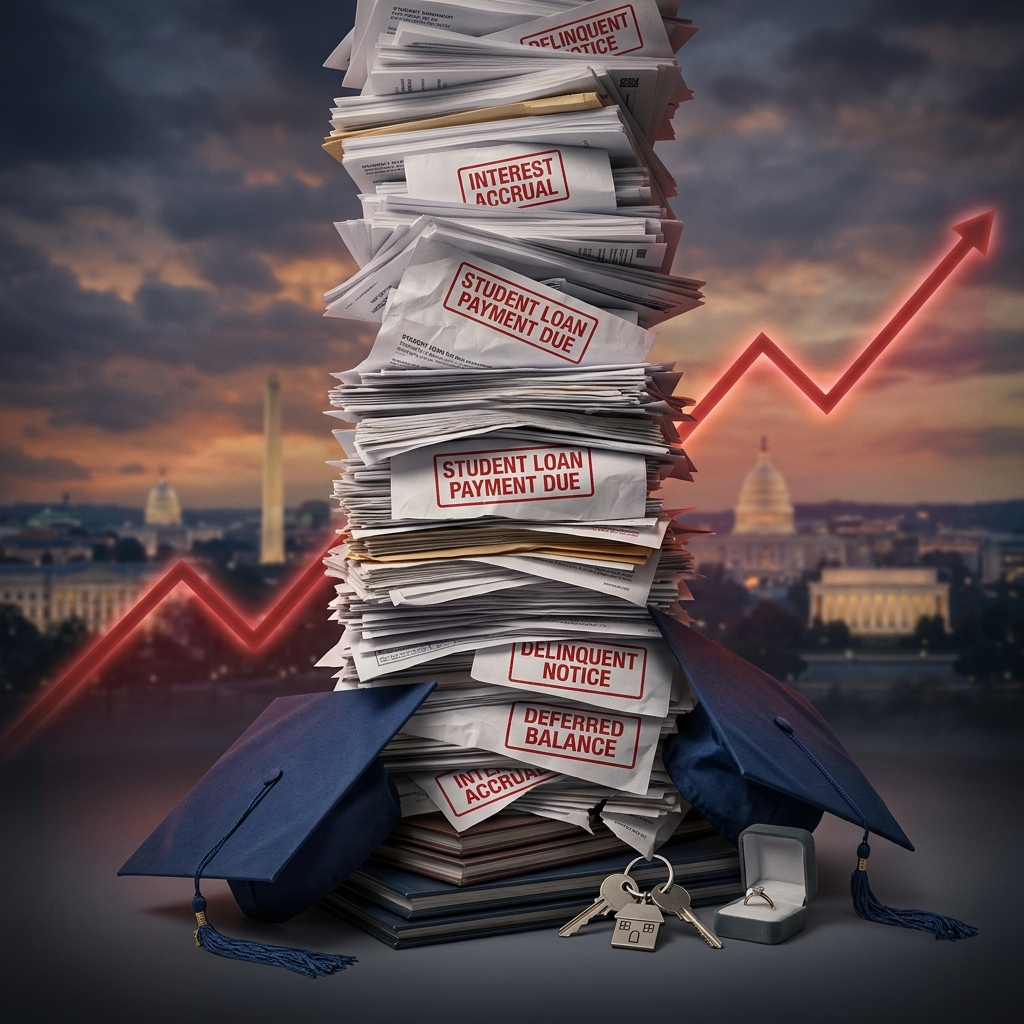
Student loans were originally designed to open the doors of higher education, not to trap borrowers in decades of repayment and financial anxiety. Today, the United States faces a student loan debt crisis that affects tens of millions of borrowers, reshapes life choices, and poses systemic risks to the economy. Understanding how this crisis developed, who it harms the most, and what can be done about it is essential for students, families, and policymakers alike.
The Scale of the Student Loan Debt Problem
Over the past two decades, student loan balances have grown from a relatively modest component of household debt into one of the largest consumer liabilities in the nation. The numbers highlight why many observers now call this situation a national emergency.
- Aggregate debt: Total student loan debt in the U.S. is about $1.8 trillion, making it the second-largest category of consumer debt after mortgages.
- Borrower count: Roughly 42–44 million people hold federal student loan debt, in addition to millions more with private loans.
- Average balances: The typical federal student loan borrower owes nearly $40,000, and the overall average including private loans may exceed $43,000.
- Growth rate: Between 2006 and 2023, federal student loan balances increased by more than 260%, reflecting rising tuition and greater reliance on borrowed funds.
This rapid expansion in borrowing has made student loans a central feature of American household finances. For many borrowers, these debts do not simply fade after graduation; they linger for years or decades, shaping every major financial decision that follows.
How We Got Here: Drivers of the Debt Explosion
The student loan crisis did not emerge overnight. It resulted from interacting trends in higher education costs, lending practices, labor market conditions, and policy choices. Together, these forces produced an environment in which borrowing became both more common and more risky.
Rising Tuition and Cost Shifts
At the center of the crisis is the long-standing trend of tuition inflation. As college costs climbed faster than incomes and overall prices, families increasingly turned to loans to fill the gap.
- Public colleges and universities reduced their dependence on state funding, shifting more of the cost burden to students.
- Private institutions, including many for-profit colleges, set prices that far exceeded typical family resources.
- Non-tuition costs such as housing, food, and textbooks rose alongside tuition, compounding the financial pressure.
When grants and scholarships failed to keep pace, student loans became the default solution, embedding substantial debt into the standard path to a degree.
Greater Reliance on Federal Loans
Federal student loan programs, authorized under Title IV of the Higher Education Act, expanded access to credit and enabled millions more Americans to enroll in college. While this access brought undeniable benefits, it also dramatically increased aggregate borrowing.
- Federal loans are widely available with relatively low barriers to eligibility.
- Borrowing limits rose over time, allowing students to finance costlier degrees.
- Loan programs became a primary revenue stream for many institutions, especially those with higher tuition levels.
The result is a higher education system deeply reliant on borrowed money, with federal loans now representing roughly 90% of all student debt. This dependence amplifies the consequences when borrowers struggle to repay.
Non-Traditional Borrowers and For-Profit Institutions
Research shows that default rates are not evenly distributed across all borrowers or institutions. Instead, the most severe problems often concentrate among non-traditional students and those attending for-profit and non-selective schools.
| Borrower/Institution Type | Common Characteristics | Default Risk |
|---|---|---|
| Non-traditional borrowers | Often older, first-generation students, or part-time enrollees with work and family obligations. | Higher risk due to unstable earnings and interrupted studies. |
| For-profit colleges | Programs with high tuition, aggressive marketing, and weaker graduation and employment outcomes. | Elevated default rates, often driven by poor labor market outcomes. |
| Non-selective institutions | Admit many students with limited academic preparation or financial support. | Increased defaults when students drop out or earn low-value credentials. |
Experts have argued that the growth of for-profit enrollment and increased borrowing among community college students explains a large portion of the spike in defaults over the past decade. In effect, loans flowed into programs that did not consistently lead to strong earnings, making repayment far more difficult than anticipated.
Labor Market Realities
Borrowers’ ability to repay depends heavily on their income after leaving school. When graduates enter a weak labor market or accept low-wage jobs, their loan payments can consume a substantial share of earnings.
- Economic downturns, such as the Great Recession and later disruptions, reduce job opportunities and starting salaries.
- Borrowers who do not complete a degree often carry debt without the earnings boost that typically comes from graduation.
- Occupational mismatch—working in jobs that do not require a degree—limits the payoff of educational investment.
These factors are especially harmful for borrowers with large balances and modest incomes, who may quickly fall behind on payments and accumulate interest and fees.
From Loans to Liabilities: Defaults and Delinquency
As balances grow and incomes lag, many borrowers lose their grip on repayment. Two critical indicators of distress are delinquency—being significantly behind on payments—and default, when a loan is considered permanently unpaid under its original terms.
Rising Delinquency Rates
Federal data suggest that a substantial share of borrowers in repayment are now struggling to stay current.
- About 10–16% of federal loan dollars are delinquent, meaning payments are more than 90 days late.
- Delinquency rates rose after temporary pandemic-era payment pauses were lifted, as borrowers resumed obligations that had grown more difficult to manage.
- Delinquent borrowers risk damage to credit scores, collection activities, and eventual default.
Delinquency is often the first visible sign that repayment systems are failing large groups of borrowers. Without adequate relief, many of these cases progress to default.
Default Concentrated Among Vulnerable Borrowers
Defaults tend to cluster among borrowers with lower incomes, incomplete degrees, or enrollment at institutions with weak outcomes. When loans default, the consequences are severe:
- Wages and tax refunds may be garnished to satisfy federal debts.
- Credit damage can make it difficult to secure housing, car loans, or other credit-based necessities.
- Fees and capitalized interest can substantially increase the total amount owed.
Because default rarely results in immediate cancellation of the debt, borrowers can remain trapped for years, often regretting the decision to borrow in the first place.
The Human Toll: Mental Health and Life Choices
The student loan crisis is not only a matter of dollars and regulatory rules. It also shapes borrowers’ mental health, relationships, and long-term plans. Studies linking debt to psychological outcomes reveal a pattern of stress and diminished well-being.
Psychological Stress and Health Effects
Research indicates that carrying substantial student loan debt can be associated with higher levels of anxiety, depression, and other negative psychological outcomes.
- Borrowers with large balances report high or overwhelming stress, particularly those owing more than $100,000.
- Many say their debt makes them feel anxious, guilty, or regretful, reflecting the emotional weight of financial obligations.
- Studies find that student loans are associated with poorer psychological functioning even after accounting for income and other demographic factors.
Interestingly, the same debt that helps people access college can have positive effects early on—supporting educational attainment—only to become a source of psychological strain once repayment begins.
Delayed Milestones and Constrained Choices
High levels of student debt also influence major life decisions and financial milestones.
- Borrowers may postpone buying homes, starting businesses, or pursuing additional education to avoid taking on more debt.
- Some delay marriage or parenthood due to concerns about financial stability.
- Career choices can be shaped by the need for higher salaries, steering graduates away from lower-paying fields such as public service or the arts.
Collectively, these shifts affect not only individuals but also broader economic patterns, such as household formation and entrepreneurship.
Policy Responses and Repayment Options
Federal and state policymakers have experimented with multiple strategies to ease the burden on borrowers and reduce default rates. These efforts range from refinancing proposals to income-driven repayment plans and targeted forgiveness.
Income-Driven Repayment Plans
Income-driven repayment (IDR) programs tie monthly payments to a borrower’s earnings and family size, aiming to make repayment more affordable. Recent initiatives, such as the Saving on a Valuable Education (SAVE) plan, illustrate both the potential and the complexity of these solutions.
- IDR plans can reduce payments for low-income borrowers and offer eventual forgiveness after a set number of years.
- Programs like SAVE were designed to limit interest growth so balances would not spiral upward while borrowers made reduced payments.
- Legal and administrative changes, however, can create uncertainty, forcing borrowers to re-enroll in new plans or accept higher payments when rules change.
When well-designed and stable, IDR systems can help borrowers avoid delinquency and default. When rules shift abruptly, they may instead contribute to confusion and stress.
Refinancing and Interest Rate Reforms
Legislative proposals have also focused on lowering interest costs for borrowers. For example, some members of Congress have supported measures to allow automatic refinancing of federal loans to rates closer to long-term mortgage levels.
- Lower interest rates could reduce total repayment costs and speed progress toward becoming debt-free.
- Refinancing options may be particularly beneficial for borrowers who took out loans when rates were higher than today’s levels.
- Implementing broad refinancing raises questions about fiscal impact and fairness across different cohorts of borrowers.
Although comprehensive refinancing has not yet been enacted on a universal scale, ongoing debates highlight the importance of interest costs in shaping the overall burden.
Targeted Relief and Forgiveness
Beyond general repayment reforms, policymakers have pursued targeted relief strategies—such as forgiving loans for borrowers defrauded by institutions, or providing cancellation for public service workers.
- Programs have been used to discharge debt when colleges misled students or failed to deliver promised outcomes.
- Public service loan forgiveness offers cancellation after consistent payments while working in qualifying jobs.
- Broader cancellation proposals have generated intense political debate about fairness, cost, and precedent.
Each approach balances the goals of protecting borrowers, maintaining program solvency, and managing the fiscal impact on taxpayers.
Looking Ahead: Potential Paths out of the Crisis
Addressing the student loan debt crisis requires more than adjusting repayment rules. It calls for deeper changes in how higher education is financed and structured.
- Reining in tuition growth: Increasing public investment and accountability measures could slow or reverse tuition inflation, reducing the need for large loans.
- Strengthening consumer protections: Enhanced oversight of for-profit and non-selective institutions could ensure that students do not borrow heavily for programs with poor outcomes.
- Improving data transparency: Clear information on graduation rates, typical earnings, and debt loads by program would help students make better-informed choices.
- Expanding need-based aid: Grants and scholarships targeted to low- and middle-income students can reduce reliance on borrowing.
- Streamlining relief mechanisms: Simplified, stable repayment and forgiveness programs would make it easier for borrowers in distress to access help.
Ultimately, a sustainable system must balance access, affordability, and outcome quality. Student loans can remain a valuable tool, but only if they lead reliably to degrees and careers that support repayment without imposing long-term hardship.
FAQs: Student Loan Debt Crisis
Why is student loan debt considered a national crisis?
Student loan debt has reached nearly $1.8 trillion, affecting more than 40 million borrowers and surpassing every major consumer debt category except mortgages. High delinquency and default rates, concentrated among vulnerable borrowers, combined with documented psychological and economic impacts, have led many experts to describe the situation as a national emergency.
Who is most at risk of defaulting on student loans?
Defaults are disproportionately concentrated among non-traditional borrowers and those who attended for-profit or non-selective institutions with weak graduation and employment outcomes. Borrowers who do not complete degrees, have low incomes, or carry high balances relative to earnings are especially vulnerable.
How do income-driven repayment plans help borrowers?
Income-driven repayment (IDR) plans calculate monthly payments as a share of income and family size, making obligations more manageable for low-income borrowers. Many plans also offer forgiveness after a set number of years of qualifying payments. However, frequent policy changes and complex rules can create confusion and uncertainty.
Does student loan debt affect mental health?
Studies link student loan debt to higher levels of stress, anxiety, and other negative psychological outcomes, particularly among borrowers with large balances. While loans can support educational goals, the transition into repayment often coincides with increased psychological strain.
What long-term reforms could reduce future student loan crises?
Key reforms include controlling tuition growth through greater public investment, tightening oversight of institutions with poor outcomes, expanding need-based grants, improving data transparency, and simplifying repayment and relief programs. Together, these changes could reduce excessive borrowing and improve repayment prospects for future cohorts of students.
References
- The Student Debt Crisis: Causes and Solutions — American College of Education (ACE) Blog. 2024-06-10. https://ace.edu/blog/higher-ed-reliance-on-student-loans-and-the-student-loan-debt-crisis/
- As student loan defaults rise, experts worry about what’s next — PBS NewsHour. 2024-06-20. https://www.pbs.org/newshour/nation/with-new-student-loan-changes-borrowers-fear-unsustainable-payments-experts-fear-a-default-crisis
- A crisis in student loans? How changes in the characteristics of borrowers and in the institutions they attended contributed to rising loan defaults — Brookings Institution. 2015-09-10. https://www.brookings.edu/articles/a-crisis-in-student-loans-how-changes-in-the-characteristics-of-borrowers-and-in-the-institutions-they-attended-contributed-to-rising-loan-defaults/
- $1.7 Trillion Student Loan Debt, Options for Borrowers, and the Path Forward — University of Michigan Online. 2023-10-01. https://online.umich.edu/content/student-debt-crisis-teach-out/
- Student Loan Debt Crisis — Congressman Mark Pocan, U.S. House of Representatives. 2023-05-09. http://pocan.house.gov/studentdebt
- Debt Takes a Toll — Harvard Law School Center on the Legal Profession. 2023-03-15. https://clp.law.harvard.edu/article/debt-takes-a-toll/
- Student Loan Debt Statistics [2026] — Education Data Initiative. 2026-02-01. https://educationdata.org/student-loan-debt-statistics
Similar Articles








Read full bio of Sneha Tete




