
Allergic Reaction Injury Claims Explained
Understand when an allergic reaction may become a legal claim and what evidence matters most.
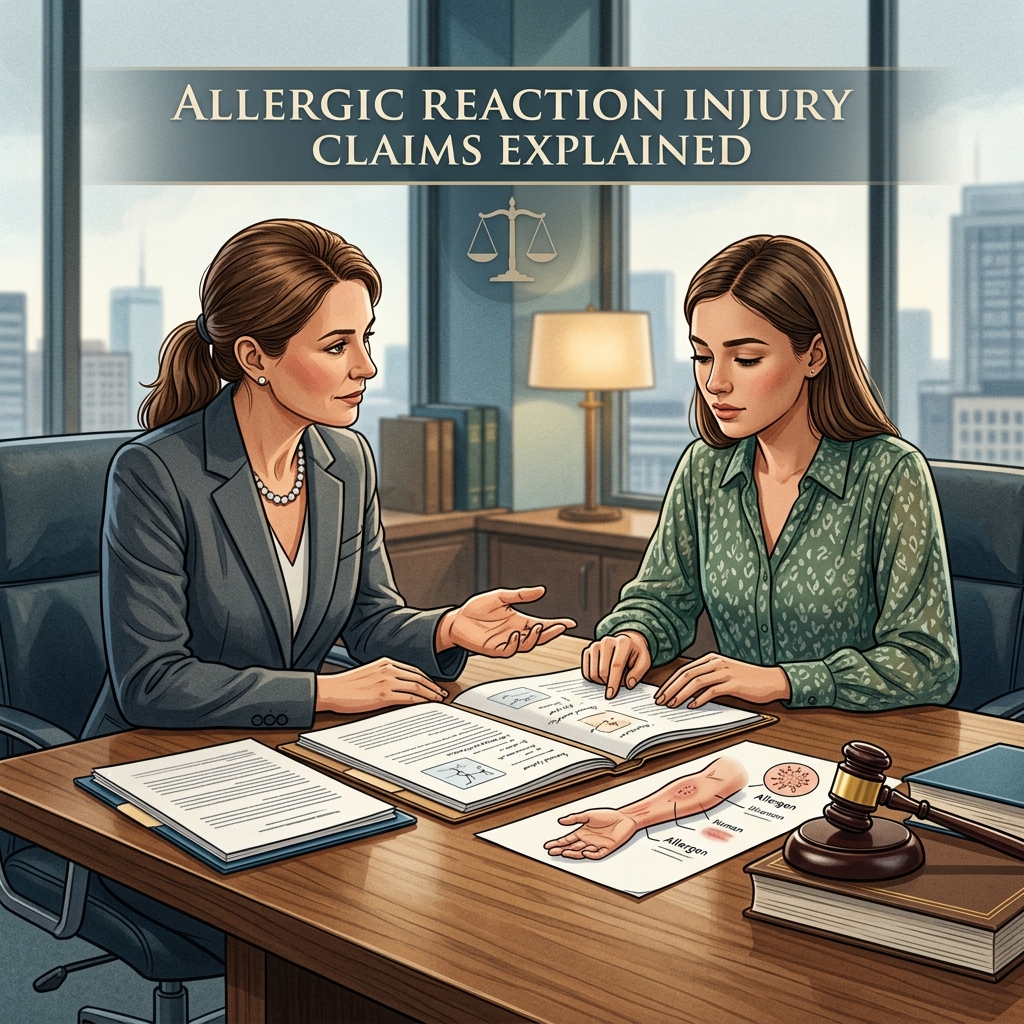
When an Allergic Reaction Can Become a Legal Claim
An allergic reaction is not automatically a lawsuit, even when it is painful, frightening, or expensive. A legal claim usually depends on whether another person, business, manufacturer, or medical provider acted carelessly and caused the exposure that triggered the reaction.
In practical terms, the law looks at two questions: first, whether someone had a duty to act reasonably, and second, whether a failure to meet that duty led to measurable harm. That harm can include emergency care, missed work, long-term complications, scarring, emotional distress, or in severe cases, death.
These claims often arise from food, medication, cosmetics, cleaning products, insect bites, or workplace exposure. The legal theory changes depending on the setting, but the central issue is the same: was the reaction preventable if proper warnings, labeling, communication, or safety steps had been followed?
Common Situations That Lead to Claims
Allergic reaction cases can appear in several different environments. Some involve consumer products, while others involve restaurants, hospitals, schools, or employers.
- Food service: A restaurant may serve a meal containing an undeclared allergen or fail to avoid cross-contact in the kitchen.
- Packaged goods: A manufacturer may omit an ingredient, use unclear labeling, or fail to warn about a known risk.
- Medication: A pharmacy or medical provider may overlook an allergy alert, prescribe the wrong drug, or administer treatment without checking a patient’s history.
- Cosmetics and personal care products: A cream, sunscreen, shampoo, or similar product may contain an ingredient that causes a severe reaction and is not properly disclosed.
- Workplace exposure: Employees may encounter chemicals, airborne irritants, or food allergens without adequate safety procedures.
The strongest claim is usually not based on the existence of an allergy alone. It is based on a preventable mistake, such as bad labeling, poor communication, contamination, or a failure to follow basic safety practices.
Who May Be Legally Responsible
More than one party may share responsibility for an allergic reaction. The correct defendant depends on where the exposure happened and who controlled the risk.
| Potential party | Why liability may arise |
|---|---|
| Manufacturer | Creates or sells a product with missing, false, or misleading allergen information |
| Restaurant or caterer | Serves food containing allergens despite a warning or fails to prevent cross-contamination |
| Pharmacy or healthcare provider | Ignores allergy records, gives a contraindicated medication, or fails to communicate known risks |
| Retailer | Sells a defective or mislabeled product that contributes to the injury |
| Employer | Does not provide reasonable protection from known allergens or hazardous substances at work |
In some cases, liability may be shared. For example, a manufacturer may be responsible for inaccurate labeling while a restaurant may be responsible for improper preparation. A legal review often focuses on which party had the best ability to prevent the harm.
What Must Usually Be Proven
Although every jurisdiction has its own rules, allergic reaction claims generally rely on the same core elements: duty, breach, causation, and damages. The plaintiff must show that the defendant had a responsibility to act with reasonable care, failed to do so, and caused actual loss.
- Duty: The defendant had a legal obligation to protect consumers, patients, customers, or workers from foreseeable harm.
- Breach: The defendant failed to meet that obligation through careless conduct, poor labeling, ignored warnings, or a similar error.
- Causation: The breach directly led to the allergic exposure and the reaction that followed.
- Damages: The reaction caused medical bills, lost income, pain, suffering, or other measurable harm.
Evidence matters because allergic reactions can happen for many reasons. A successful claim usually needs proof that the exposure came from the defendant’s conduct rather than from another source or an unrelated medical issue.
Evidence That Can Strengthen a Case
Documentation often determines whether an allergic reaction claim is strong or weak. The sooner evidence is preserved, the better the chance of connecting the exposure to the injury.
- Medical records from urgent care, the emergency room, or follow-up treatment
- Prescription labels, medication packaging, menus, receipts, or ingredient lists
- Photographs of the product, the meal, the rash, swelling, or other visible symptoms
- Witness statements from family members, coworkers, waitstaff, or medical personnel
- Correspondence showing that an allergy was reported before the incident
- Proof of missed work, out-of-pocket expenses, or ongoing treatment needs
When the case involves a product, saving the item itself can be especially important. When the case involves food, keeping packaging, receipts, and even digital order histories can help prove what was served and who prepared it.
Types of Compensation That May Be Available
If a legal claim succeeds, compensation may cover both financial losses and the human cost of the injury. The exact amount depends on the severity of the reaction, the length of recovery, and the impact on daily life.
| Category of damages | Examples |
|---|---|
| Medical costs | Ambulance care, emergency treatment, prescriptions, specialist visits, and follow-up care |
| Lost income | Missed work hours, reduced earning ability, or unpaid leave |
| Pain and suffering | Physical pain, itching, swelling, breathing difficulty, and recovery discomfort |
| Emotional distress | Anxiety, fear of future exposure, embarrassment, or trauma after a severe episode |
| Future losses | Ongoing treatment, medication, therapy, or long-term complications |
In especially serious cases, a family may also seek damages through a wrongful death claim if the allergic reaction was fatal and another party’s negligence contributed to the death.
How Food Allergy Claims Differ From Product Claims
Food-related cases often turn on communication and preparation practices. If a customer clearly warned a restaurant about an allergy and was still served the unsafe ingredient, the claim may focus on negligent food handling or failure to warn. If the issue was hidden contamination, the analysis may center on cross-contact controls and kitchen procedures.
Product claims usually focus on labels, warnings, and manufacturing quality. A product may be unsafe because an allergen was omitted from the ingredient panel, the packaging was misleading, or the manufacturer failed to disclose a known risk. In these cases, the key question is whether a reasonable consumer would have been protected by clearer information.
Medical and medication cases add another layer: healthcare providers are expected to review patient records, consider known allergies, and communicate risks before treatment. A missed allergy alert can be especially serious because patients often rely on professionals to catch the danger before harm occurs.
When a Personal Injury Lawyer May Be Helpful
Not every allergic reaction requires litigation, but legal help can be valuable when the incident is severe, disputed, or difficult to trace. A lawyer may help identify the responsible party, preserve evidence, and assess whether the facts support a claim for compensation.
Legal help may be especially useful when there are multiple possible causes, such as a restaurant meal, medication side effect, or product defect. It can also be important when records are incomplete, witnesses disagree, or a business denies that it made an error.
Because deadlines can apply to injury claims, waiting too long may make recovery harder. Prompt action can also matter because labels disappear, food evidence is discarded, and memories fade quickly after the event.
Questions People Often Ask After a Reaction
Many people are unsure whether they have a viable claim after an allergic episode. The answers usually depend on the facts of the incident and the seriousness of the injury.
Does every allergic reaction qualify for a lawsuit?
No. The reaction must usually be tied to someone else’s careless or wrongful conduct, and it must cause real losses. Mild discomfort without proof of fault or damages is less likely to support a claim.
What if I knew I had an allergy?
Knowing about an allergy does not automatically prevent recovery. If a business, manufacturer, or provider failed to take reasonable steps after being told about the allergy or after having reason to know of the risk, liability may still exist.
Can more than one party be sued?
Yes. Depending on the facts, a claim may involve a restaurant, supplier, manufacturer, retailer, or medical provider. Responsibility is often shared when several mistakes combine to cause the injury.
What if the reaction happened outside a restaurant or hospital?
Claims can arise from many settings, including home products, workplace exposures, school activities, and retail purchases. The main issue is whether someone failed to take reasonable care in a way that caused the harm.
Practical Steps to Take After an Allergic Injury
After emergency treatment, careful documentation can make a major difference. A person considering a claim should focus on preserving both medical proof and evidence of exposure.
- Get immediate medical care and follow all treatment instructions.
- Save the product, packaging, receipt, order confirmation, or menu if possible.
- Write down exactly what happened while the details are fresh.
- Collect names and contact information for witnesses.
- Keep records of every bill, prescription, and work absence.
- Do not assume the incident was too minor to document.
These steps can help establish a timeline and show how the reaction affected health, work, and daily activities. Even when a case does not lead to court, this information can be useful in a claim for reimbursement or settlement negotiations.
Why These Cases Often Depend on the Details
Allergic reaction cases are highly fact-specific because the same symptom can come from different causes. A rash may be linked to a food ingredient, a medication, a skincare product, or an environmental trigger. That is why the legal analysis focuses on what was consumed, who handled it, what warnings were given, and whether a reasonable safety step was skipped.
The more clearly the exposure can be traced to a specific mistake, the stronger the claim may be. Conversely, if the evidence is vague or the source of the allergen is unclear, proving liability becomes much harder.
FAQs
Can I sue if a product label did not mention an allergen?
Possibly. If a product was mislabeled, lacked required warnings, or contained an undisclosed allergen, a product liability or negligence claim may be possible depending on the facts and applicable law.
What if a restaurant says I never told them about my allergy?
That dispute often becomes central to the case. Evidence such as witness testimony, written orders, or prior communications may help show that the allergy was disclosed.
Are emotional injuries included in an allergic reaction claim?
Yes, in many cases. Anxiety, trauma, fear of future exposure, and other non-economic harms may be part of the damages if they are supported by the evidence.
Do I need a severe reaction to bring a claim?
Not always, but more serious injuries generally lead to stronger claims because the damages are clearer. A minor reaction may still matter if it was caused by a clear breach of duty and produced documented losses.
References
- Food Allergies — National Institute of Allergy and Infectious Diseases. 2024-03-25. https://www.niaid.nih.gov/diseases-conditions/food-allergy
- Food Allergies — U.S. Food and Drug Administration. 2024-04-08. https://www.fda.gov/food/food-labeling-nutrition/food-allergies
- Questions and Answers Regarding Food Allergens, Including the Food Allergen Labeling Requirements of the Federal Food, Drug, and Cosmetic Act — U.S. Food and Drug Administration. 2022-01-20. https://www.fda.gov/food/food-labeling-nutrition/questions-and-answers-regarding-food-allergens-including-food-allergen-labeling-requirements
- Anaphylaxis — Mayo Clinic. 2024-02-20. https://www.mayoclinic.org/diseases-conditions/anaphylaxis/symptoms-causes/syc-20351468
- Food Allergy: What You Need to Know — Centers for Disease Control and Prevention. 2024-05-15. https://www.cdc.gov/food-allergies/about/index.html
Similar Articles








Read full bio of Sneha Tete


