
The Perils of Algorithmic Policing: How Flawed Facial Recognition Upends Innocent Lives
When algorithms dictate justice, innocent citizens pay the price. Discover why flawed biometric surveillance is driving a wave of wrongful arrests.
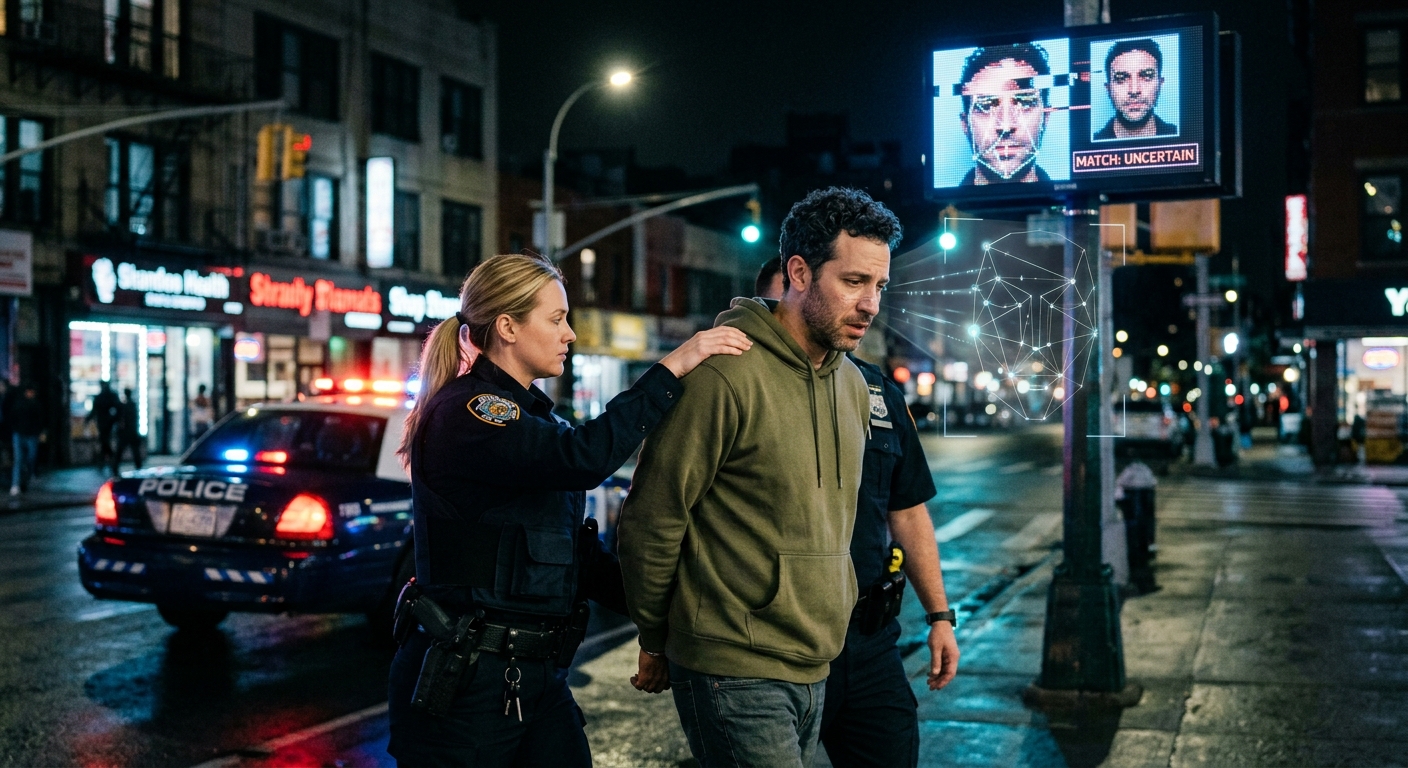
Imagine pulling into your driveway after a long day at work, only to be unexpectedly surrounded by law enforcement officers. You are placed in handcuffs, read your rights, and taken away in a cruiser in front of your family and neighbors. You know with absolute certainty that you have committed no crime. Yet, the police have a piece of paper identifying you as the prime suspect. The source of their confidence? An artificial intelligence algorithm. This terrifying scenario is not an excerpt from a dystopian science fiction novel; it is a disturbing reality for a growing number of innocent citizens who have been misidentified by law enforcement’s use of facial recognition technology (FRT).
As police departments and federal agencies rapidly integrate biometric surveillance tools into their daily investigative operations, the catastrophic consequences of algorithmic errors are becoming impossible to ignore. Proponents of these systems argue that artificial intelligence expedites investigations and helps keep communities safe. However, the unchecked deployment of these digital dragnets has ushered in profound civil liberties violations. A blind faith in computer-generated matches has led to wrongful arrests, extended incarcerations, and life-altering trauma for innocent people. To understand the gravity of this crisis, we must examine the fundamental mechanics of the technology, the deeply ingrained racial biases present in its code, and the severe lack of transparency governing its use.
The Mechanics of Machine Misidentification
Facial recognition technology operates by scanning a photograph or video still—often referred to as a “probe image”—and translating the human face into a mathematical formula. The software maps dozens of nodal points, measuring the distance between the eyes, the width of the nose, and the contour of the jawline to create a unique “faceprint.” This biometric signature is then rapidly cross-referenced against massive databases containing millions of images, ranging from criminal mugshots to state-issued driver’s licenses and publicly scraped social media photos.
In a controlled environment with perfect lighting, high-resolution cameras, and cooperative subjects, these algorithms can demonstrate high accuracy rates. However, law enforcement investigations rarely occur under ideal conditions. The probe images fed into police facial recognition systems are frequently extracted from blurry, low-resolution closed-circuit television (CCTV) footage, distant ATM cameras, or poorly lit smartphone videos. When algorithms are forced to process degraded or partially obscured faces, the system’s confidence plummets, and the mathematical approximations become heavily skewed.
Rather than returning a definitive match, facial recognition software typically generates a gallery of potential candidates, accompanied by a probability or “confidence” score. The crucial error occurs when human investigators treat these probabilistic, highly uncertain suggestions as indisputable evidence of guilt. When an officer assumes the computer is infallible, they often suffer from automation bias, inadvertently tailoring the remainder of their investigation to fit the narrative that the algorithmic suspect is the actual perpetrator. This dangerous intersection of flawed technology and human error sets the stage for disastrous wrongful arrests.
A Built-In Bias: The Disproportionate Impact on Communities of Color
Perhaps the most alarming and well-documented flaw in facial recognition technology is its profound demographic bias. These systems do not fail equally; they disproportionately misidentify people of color, particularly Black and Asian individuals. The root of this disparity lies in the data used to train the machine learning models. If an algorithm is predominantly trained on databases composed of white male faces, its ability to accurately distinguish the nuanced facial characteristics of non-white individuals is severely compromised.
The National Institute of Standards and Technology (NIST) conducted one of the most comprehensive independent evaluations of facial recognition algorithms to date. The landmark federal study analyzed over 18 million images and 189 different commercial algorithms. The findings were staggering: the technology produced false-positive matches for Black and Asian faces at rates 10 to 100 times higher than for Caucasian faces. Furthermore, the highest error rates were observed among West African women.
When false positive rates skyrocket for specific demographics, the real-world implications are horrifying. A false positive means the system has mistaken an innocent person for a suspect. In the context of criminal justice, this computational error directly translates into a police officer knocking on an innocent Black or Asian citizen’s door with an arrest warrant.
Demographic Disparities in FRT Performance
| Demographic Group | Observed Error Trend (NIST Data) | Primary Risk Factor |
|---|---|---|
| Caucasian Men | Lowest rate of false positives. | Overrepresented in foundational algorithm training data sets. |
| Black and Asian Individuals | False positives 10 to 100 times higher than Caucasian baselines. | Underrepresented in training data; algorithm struggles with skin reflectance and contrast. |
| Women of Color (Specifically West African) | Highest aggregate misidentification rates across most tested algorithms. | Intersection of gender and racial underrepresentation in algorithmic development. |
| Elderly and Children | Elevated false positive rates compared to middle-aged adults. | Rapid facial aging and morphological changes not accurately modeled by AI. |
The Devastating Ripple Effects of a Wrongful Arrest
Discussions regarding privacy and technology often remain abstract, focusing on data points and constitutional theories. However, the human toll of an algorithmic wrongful arrest is immediate, tangible, and devastating. Being detained for a crime you did not commit triggers a cascading series of personal and financial catastrophes.
For the victims, the nightmare begins with the traumatic indignity of the arrest itself—often occurring in public or in front of terrified family members. Innocent individuals are subjected to interrogations, forced to provide DNA samples, photographed for mugshots, and locked in holding cells. Even if the charges are eventually dropped, the damage is already done. Victims are frequently forced to drain their life savings to hire criminal defense attorneys. Incarceration and endless court hearings often trigger job loss and total financial ruin.
Furthermore, the psychological scars are permanent. Victims of FRT misidentification report severe anxiety, paranoia, and a lingering fear of law enforcement. Their names and faces may remain permanently etched in local arrest logs or police blotters online, damaging their reputations and future employment prospects. The burden of proof is unjustly reversed; the innocent citizen is forced to exhaust their resources to prove that an opaque, proprietary algorithm made a mathematical error.
The Transparency Deficit in Law Enforcement
Compounding the technical failures of facial recognition is the severe lack of transparency surrounding its use by local, state, and federal law enforcement agencies. A major investigative report by the U.S. Government Accountability Office (GAO) revealed that numerous federal law enforcement agencies utilize biometric surveillance tools without implementing necessary safeguards, tracking mechanisms, or comprehensive privacy assessments. Many agencies could not even provide an accurate accounting of which non-federal systems their employees were using to conduct investigative searches.
At the local level, police departments often use facial recognition software as an initial lead generator but fail to disclose this fact to the defense during criminal proceedings. In the United States justice system, defendants have a constitutional right to examine the evidence against them. However, because law enforcement frequently conceals the use of FRT—often citing the proprietary nature of the commercial software—defendants are denied the opportunity to challenge the algorithm’s accuracy, its historical false-positive rates, or the quality of the probe image utilized.
Guidelines from technology vendors themselves often explicitly state that a facial recognition match should never be used as the sole basis for establishing probable cause or making an arrest. Despite these explicit warnings, officers have repeatedly bypassed independent corroborative police work. They take the computer’s suggestion, present a single photo lineup to an eyewitness, and secure an arrest warrant based almost entirely on the flawed digital match.
The Push for Legislative Guardrails and Bans
As stories of innocent people being hauled off to jail due to algorithmic errors continue to surface, civil rights organizations and grassroots coalitions have launched aggressive campaigns to rein in the technology. Advocacy groups argue that a surveillance technology with a demonstrated racial bias and a propensity for destroying innocent lives has no place in a democratic justice system.
In response to overwhelming public outcry, several municipalities have taken decisive action. Cities such as San Francisco, California, and Boston, Massachusetts, have passed ordinances outright banning the use of facial recognition technology by city agencies and local police. Other jurisdictions have implemented strict regulatory frameworks. For example, following a high-profile wrongful arrest lawsuit, the city of Detroit instituted stringent new rules requiring that FRT only be used in cases involving violent crimes, and strictly prohibited using biometric matches as the sole justification for a citizen’s arrest.
Despite these localized victories, the United States still lacks a comprehensive federal privacy law governing the use of biometric surveillance. Civil liberties advocates are passionately pushing for a nationwide moratorium on law enforcement’s use of facial recognition until the technology can be proven absolutely accurate across all demographic groups, and until robust, standardized legal frameworks are established to protect citizens’ due process rights.
Looking Ahead: Can Biometric Surveillance Be Salvaged?
The intensifying debate over facial recognition in policing forces society to ask a fundamental moral question: Is the marginal benefit of potentially identifying a suspect worth the systemic risk of incarcerating innocent people? Currently, the technology operates as an unregulated digital lineup that disproportionately targets minority communities and subverts foundational legal protections.
If biometric tools are to remain in the investigative arsenal of the future, radical reforms are non-negotiable. Strict legislative guardrails must be enacted to ensure algorithms are independently audited for racial bias before they are ever purchased with taxpayer funds. Furthermore, the legal threshold for probable cause must explicitly forbid the reliance on uncorroborated FRT matches. Until these ironclad protections are enshrined in law, innocent citizens will continue to bear the devastating costs of unchecked algorithmic policing.
Frequently Asked Questions
- What is facial recognition technology (FRT)?
FRT is a biometric software application capable of uniquely identifying or verifying a person by comparing and analyzing patterns based on their facial contours. Law enforcement uses it to compare images of unknown suspects against databases of known individuals. - Why does facial recognition misidentify certain races more often?
Algorithms learn from the data they are fed. Historically, many commercial algorithms were trained on image databases heavily skewed toward white male faces. Consequently, the software struggles to accurately map and differentiate the facial features of Black, Asian, and Native American individuals, leading to a drastically higher rate of false-positive matches. - Can you be arrested solely based on a facial recognition match?
Technically, most internal police guidelines state that an FRT match is only an “investigative lead” and not probable cause for an arrest. However, in practice, several documented wrongful arrest cases have shown that officers sometimes rely almost exclusively on the algorithm’s suggestion to secure arrest warrants without gathering independent corroborating physical evidence. - How can I find out if police used facial recognition against me?
Currently, this is incredibly difficult. There is no federal requirement for police to notify individuals that they were subjected to a facial recognition search. In many criminal cases, the use of the technology is entirely omitted from official police reports, making it nearly impossible for defendants to know if an algorithm played a role in their arrest. - Are there any laws stopping police from using this technology?
There is no overarching federal ban in the United States. However, several progressive cities and a few states have passed localized bans or strict moratoriums restricting how municipal agencies and local police departments can deploy biometric surveillance tools.
References
- Face Recognition Vendor Test (FRVT) Part 3: Demographic Effects — National Institute of Standards and Technology (NIST). 2019-12-19. https://nvlpubs.nist.gov/nistpubs/ir/2019/NIST.IR.8280.pdf
- Facial Recognition Technology: Federal Law Enforcement Agencies Should Better Assess Privacy and Other Risks (GAO-21-518) — U.S. Government Accountability Office (GAO). 2021-06-03. https://www.gao.gov/products/gao-21-518
- The Civil Rights Implications of the Federal Use of Facial Recognition Technology — U.S. Commission on Civil Rights. 2024-09-19. https://www.usccr.gov/files/2024-09/facial-recognition-technology-report.pdf
- Detroit changes rules for police use of facial recognition after wrongful arrest of Black man — Associated Press / The Guardian. 2024-07-01. https://www.theguardian.com/us-news/article/2024/jul/01/detroit-facial-recognition-police-rules
Similar Articles








Read full bio of Sneha Tete


