
Alabama Home Funeral Regulations: Essential Guide For Families
Navigate Alabama's rules for home funerals, burials, cremations, and family-directed end-of-life care with this comprehensive legal overview.
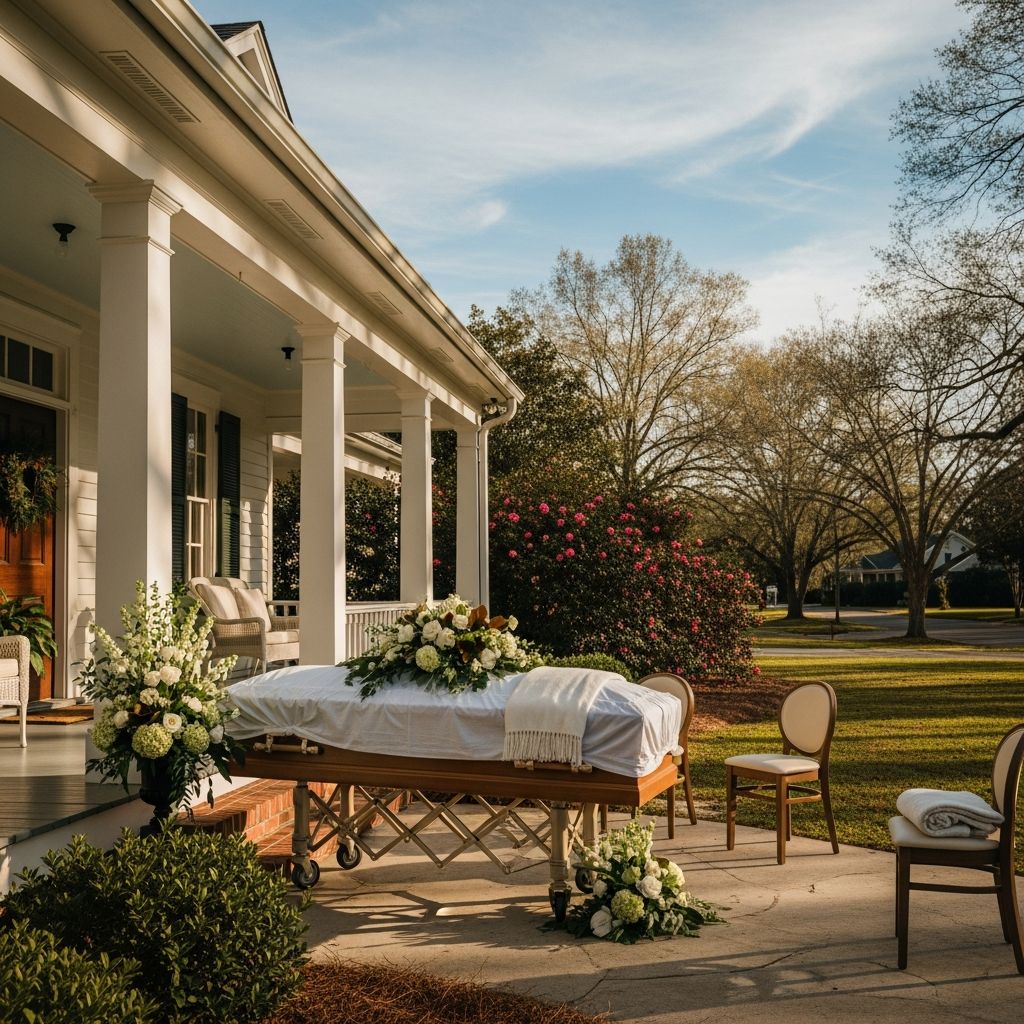
Alabama permits certain aspects of home-managed funerals but imposes strict requirements, particularly mandating licensed funeral director involvement for disposition. Families seeking personal control over end-of-life care must understand these rules to avoid legal issues.
Overview of Family-Led Funeral Practices in Alabama
Home funerals allow families to handle immediate after-death care at home, fostering intimate gatherings without commercial funeral home dominance. However, Alabama law balances this flexibility with oversight to ensure public health and proper documentation. Key statutes from the Alabama Code, such as Title 34 Chapter 13, outline responsibilities that prioritize licensed professionals for critical steps while allowing family input on preferences.
Unlike some states with full family autonomy, Alabama requires a funeral director’s supervision for services and disposition. This stems from public safety concerns and standardized processes for vital records. Rural families often find more leeway for burials, but urban zoning complicates matters. Planning ahead with legal documents empowers families to align arrangements with state mandates.
Role and Responsibilities of Licensed Funeral Directors
A core requirement is that every funeral, memorial, or interment falls under a licensed funeral director’s direct supervision, as per Ala. Code § 34-13-111. This professional handles disposition logistics, from permits to transportation, even if families manage vigils or viewings at home.
- Supervision Scope: Covers all paid or profit-driven services, ensuring compliance with health codes.
- Family Collaboration: Directors work with designated family agents but retain final authority on legal filings.
- Exceptions: Purely private, non-commercial family gatherings may proceed without a director, provided no disposition occurs.
This structure prevents unauthorized handling while permitting home-based rituals. Families should contact the Alabama Board of Funeral Service for licensed provider lists.
Designating a Responsible Party for Arrangements
Families can pre-select who controls remains via a sworn affidavit, overriding default hierarchy. The order of authority follows: surviving spouse, adult children, parents, siblings, or legal guardians (Ala. Code § 34-13-11). Military personnel use Department of Defense Record of Emergency Data for designations.
| Priority Order | Description |
|---|---|
| 1. Spouse | Legal surviving partner holds primary decision rights. |
| 2. Adult Children | Majority agreement if no spouse; unanimous if few. |
| 3. Parents | Both if living; sole surviving parent otherwise. |
| 4. Siblings | Adult brothers/sisters by majority vote. |
| 5. Guardian/Executor | Court-appointed if no kin available. |
Affidavits must be notarized and filed appropriately. This tool ensures wishes like home vigils or simple burials are honored.
Handling the Deceased Body at Home
Families may care for the body at home post-death, including washing, dressing, and private viewings. No embalming is required unless crossing state lines (Ala. Code § 22-19-2). Refrigeration below 45°F is advisable after 30 hours to comply with health standards, especially for communicable diseases.
- Transport locally without embalming if disposition is prompt.
- Report contagious cases to physicians for guidance.
- Use dry ice or cooling units for short-term home care.
These practices support dignified, low-cost home funerals while adhering to hygiene rules.
Filing Death Certificates and Required Permits
The funeral director or custodian files the death certificate within five days of death, before disposition (Ala. Code § 22-9A-14). They gather data from kin and secure medical certification. Certified copies are essential for estates, insurance, and permits.
Burial/removal permits come next, issued by local registrars. No permit voids disposition legally, risking misdemeanor charges with fines up to $100 or jail time (Ala. Code § 22-9A-16). For unknown death details, use discovery date and location.
Home Burial Options and Local Considerations
Alabama has no statewide ban on home burials, favoring rural properties. Check county zoning and health department approvals first—urban areas often prohibit them. A notable case in Stevenson required exhumation due to unpermitted front-yard burial.
- Rural Feasibility: Most likely on owned land with space.
- Family Cemeteries: Possible with inspections; record deeds.
- Restrictions: Avoid wells, waterways; depth minimum 18 inches soil cover.
Consult local ordinances to establish permanent sites legally.
Cremation Procedures and Regulations
Cremation mandates funeral director involvement for permits from coroners or medical examiners (Ala. Code § 22-9A-16). No mandatory waiting period for families, unlike some states.
Facilities follow strict protocols: combustible containers, metal ID tags through process, detailed logs (Ala. Admin. Code 395-X-6). Authorizations detail implants removal, agent signatures, and remains disposition.
| Cremation Step | Requirement |
|---|---|
| Container | Combustible, full coverage; immediate placement. |
| Identification | Metal tag from intake to post-cremation. |
| Authorization | Agent signatures, deceased details, remains recipient. |
| Log | Name, dates, times, cremationist sign-off. |
Families keep or scatter cremains legally on private land with permission; public lands need approval. Water scattering follows Federal Clean Water Act: 3 nautical miles offshore, EPA notification.
Embalming, Refrigeration, and Health Safeguards
Embalming is optional unless interstate transport or specific diseases require it. Express written consent is mandatory if pursued (Ala. Admin. Code 395-X-6). Refrigeration alternatives suit home care, promoting eco-friendly options.
For communicable diseases, notify physicians; board reporting may apply. These rules protect public health without mandating invasive preservation.
Planning Ahead: Documents and Resources
Advance directives like affidavits and wills clarify wishes. Contact the Alabama Board of Funeral Service for rules (fsb.alabama.gov). National Home Funeral Alliance offers guidance.
Costs savings from home funerals arise by avoiding full-service packages, but director fees for essentials remain.
Frequently Asked Questions
Can families conduct a full home funeral without a funeral director in Alabama?
No, a licensed director must supervise disposition and services (Ala. Code § 34-13-111). Families handle care but not legal finals.
Is embalming required for home burials?
No, only for out-of-state transport (Ala. Code § 22-19-2). Refrigeration suffices otherwise.
How soon must a death certificate be filed?
Within five days, by the funeral director (Ala. Code § 22-9A-14).
Are backyard burials legal statewide?
Yes, absent local bans; verify zoning.
Who handles cremation permits?
Funeral directors secure them from authorities (Ala. Code § 22-9A-16).
Can I scatter ashes in Alabama waters?
Yes, with state permits for inland; federal rules for oceans.
This guide equips families for compliant, meaningful home funerals amid Alabama’s regulated framework.
References
- Home Funeral Laws in Alabama — Nolo. 2024. https://www.nolo.com/legal-encyclopedia/alabama-home-funeral-laws.html
- Alabama — National Home Funeral Alliance. Accessed 2026. https://www.homefuneralalliance.org/alabama.html
- Chapter 395-X-6 Funeral Establishment Requirements — Alabama Funeral Service Board. 2022-09-12. https://admincode.legislature.state.al.us/api/chapter/395-X-6
- Alabama Burial & Cremation Laws — Alabama Funeral Homes. Accessed 2026. https://www.alabamafuneralhomes.com/burial-and-cremation-laws/
- Quick Guide to Legal Requirements for Home Funerals by State — National Home Funeral Alliance. Accessed 2026. https://www.nhfuneral.org/uploads/1/1/7/5/117550115/quick_guide_to_home_funerals_by_state.pdf
- Law and Rules — Alabama Board of Funeral Service. Accessed 2026. https://fsb.alabama.gov/law-and-rules/
Similar Articles








Read full bio of medha deb


