
Air Travel Carry‑Ons, Checked Bags and Security Rules
Understand airline baggage limits, TSA security rules and smart packing strategies before you head to the airport.
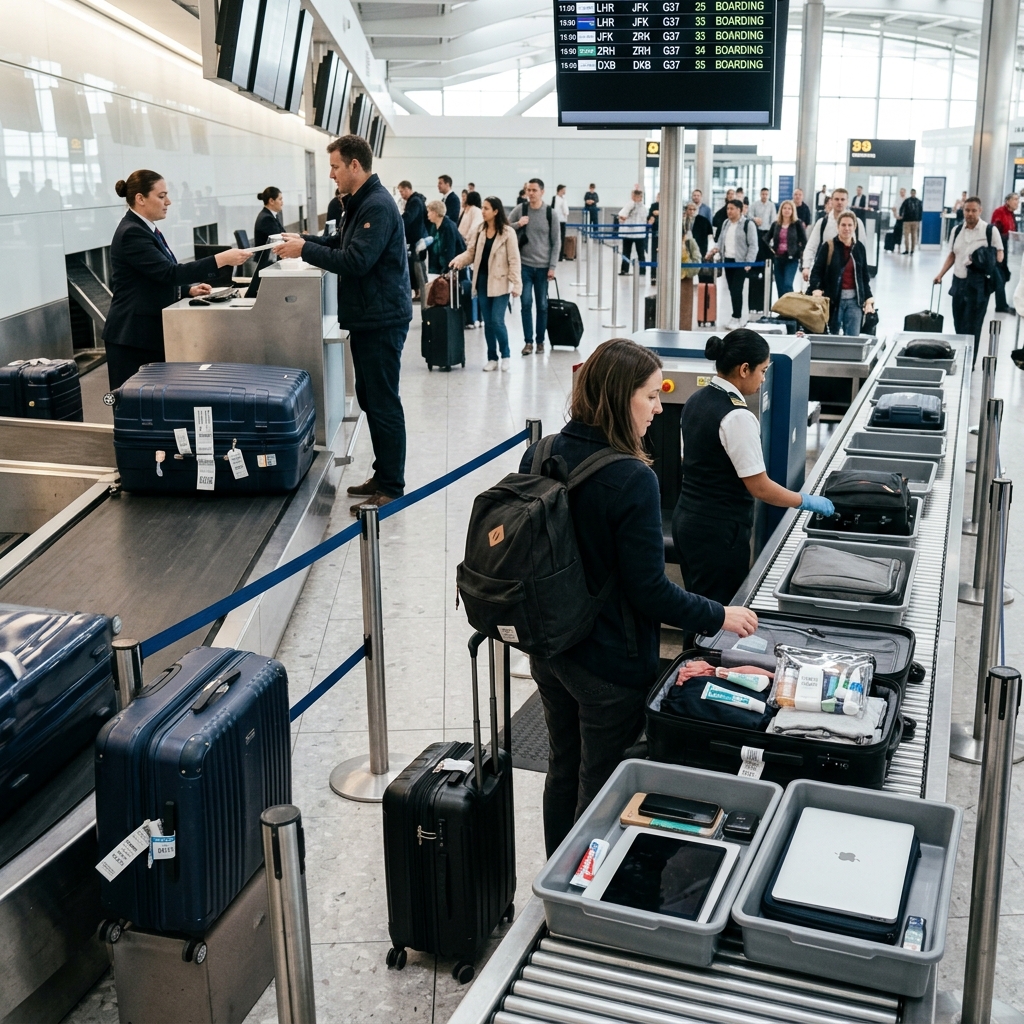
Knowing the rules for carry-on items, checked luggage, and security screening before you fly can save you money, time, and frustration. Airlines and government agencies set limits on what you can bring, how big your bags may be, and how they must be screened to keep flights safe and efficient.
This guide explains major airline baggage policies, outlines Transportation Security Administration (TSA) security rules, and offers practical packing strategies so you can move through the airport with confidence.
Core Carry‑On Rules Every Flyer Should Know
Most U.S. airlines and many international carriers follow similar standards for carry‑on baggage, although details can vary by airline and ticket type.
- Number of items: Typically, you may bring one carry‑on bag plus one personal item (such as a purse or laptop bag).
- Size limits: Common maximum cabin bag dimensions are about 22 × 14 × 9 inches, including wheels and handles.
- Personal item size: Personal items must fit under the seat in front of you; some airlines list typical maximums like 18 × 14 × 8 inches or slightly smaller.
- Linear dimensions: Many airlines and the Federal Aviation Administration (FAA) reference a maximum of 45 linear inches (length + width + height) for carry‑on bags.
- Fit requirement: If a bag cannot fit in the overhead bin or under the seat, the airline may require it to be checked and may charge a fee.
Because airlines can change policies and some fares have stricter rules (such as basic economy tickets), always confirm specific dimensions and allowances directly with your carrier before you pack.
Understanding Personal Items Versus Carry‑On Bags
Airlines distinguish between a carry‑on bag and a personal item, and treating them correctly helps you avoid gate-checking or extra charges.
Common Examples of Personal Items
- Handbag or purse
- Laptop bag or briefcase
- Small backpack or daypack
- Camera bag
These items must fit under the seat in front of you and often have lower size limits than standard carry‑on bags.
Items Often Allowed in Addition to Bags
Certain belongings may not count toward your carry‑on or personal item total. Policies vary, but many airlines allow additional items such as:
- Coat or jacket
- Reading materials
- Small bag of food purchased in the terminal
- Child safety seats or strollers
- Medical or mobility devices (wheelchairs, walkers, etc.)
Even when extra items are allowed, you must still pass security screening, and oversized or heavy items may be subject to further scrutiny.
Checked Baggage: Size, Weight and Fees
Checked bags travel in the aircraft hold and are subject to size and weight limits as well as potential fees. While this guide focuses on carry‑ons, it is important to understand the basic checked baggage rules because airport agents may require you to check items that do not meet cabin requirements.
| Bag Type | Typical Size Limit | Typical Weight Limit | Notes |
|---|---|---|---|
| Carry‑on | Up to 22 × 14 × 9 in or 45 linear inches | Often around 40 lb (varies by airline) | Must fit in overhead bin or under seat. |
| Checked bag | Common limit around 62 linear inches | Common limit around 50 lb | Oversize/overweight bags may incur extra fees. |
Airlines have significant discretion over checked baggage fees, and low‑cost carriers often charge more or provide fewer free checked bags. Always review fee tables for your specific airline and ticket class.
TSA Security Screening: What to Expect
In the United States, the TSA is responsible for airport security screening of passengers and baggage. The agency enforces rules about liquids, prohibited items, and how certain belongings must be handled at checkpoints to ensure aviation safety.
The 3‑1‑1 Rule for Liquids
Liquids, gels, and aerosols in carry‑on baggage are subject to TSA’s well‑known 3‑1‑1 rule.
- 3.4‑ounce (100 mL) limit per container: Each bottle or container must be no larger than 3.4 ounces.
- 1 quart‑size clear bag: All small containers must fit together inside a single clear, resealable quart‑size plastic bag.
- 1 bag per passenger: Only one such liquids bag is allowed per traveler through the screening checkpoint.
Common liquids subject to these limits include shampoo, conditioner, toothpaste, lotions, and many cosmetics. Larger liquid containers typically must be placed in checked baggage.
Exceptions to the Liquids Rule
TSA allows some exceptions, including medically necessary liquids and formula for infants, but these must be declared to security officers for separate screening.
- Prescription medications in liquid form
- Baby formula, breast milk, and juice for infants or toddlers
- Liquids for passengers with disabilities or medical conditions
These items are generally not subject to the 3.4‑ounce limit, but TSA may inspect them more closely and ask you to open containers.
Prohibited and Restricted Items in Cabin Bags
Not everything may be brought onto an aircraft in carry‑on baggage. Some items are completely prohibited, while others are restricted to checked baggage or subject to special conditions.
Commonly Prohibited Items in Carry‑Ons
- Weapons such as firearms, many knives, and some self‑defense tools (e.g., certain stun guns and pepper spray).
- Explosives and flammable materials including fireworks, gasoline, and some aerosol products.
- Large tools like full‑size hammers, crowbars, and some sharp construction tools.
- Certain aerosols that are not considered personal toiletries, such as some bug sprays and large cans of chemical products.
These items should generally be left at home or transported according to specific hazardous materials regulations if allowed at all.
Items Allowed With Conditions
- Small toiletries aerosols (hair spray, deodorant) in 3.4‑ounce containers within the liquids bag.
- Safety matches or a small lighter are often allowed on your person but not in checked baggage.
- Lithium‑ion batteries and power banks are generally restricted to carry‑on baggage and must meet specific size or watt‑hour limits.
- Duty‑free liquids may be allowed in larger quantities when packed in security tamper‑evident bags according to TSA rules.
If you are unsure whether an item is permitted, TSA maintains a searchable “What Can I Bring” database listing allowed, prohibited, and special‑case items.
Special Baggage: Instruments, Garment Bags and Smart Bags
Some belongings do not fit into typical suitcase categories but still may be taken on board if they meet size and safety requirements.
Musical Instruments
Many airlines permit musical instruments as carry‑on items when they can fit in the overhead bin or under the seat. Larger instruments may need a special ticket or must be checked, depending on airline rules.
Garment Bags
Soft‑sided garment bags are sometimes treated as carry‑on items but may have unique size limits, such as a maximum combined length, width, and height.
Smart Bags with Batteries
Suitcases with built‑in lithium batteries for charging devices are increasingly common, but they raise safety concerns. Many airlines require that batteries be removable and carried in the cabin rather than left in checked baggage.
Practical Packing Strategies to Avoid Airport Problems
Beyond understanding the rules, smart packing can reduce stress at security checkpoints and boarding gates.
Measure and Test Your Bags at Home
- Measure height, width, and depth including handles and wheels to ensure your bag meets airline limits.
- Check linear dimensions if your airline uses that standard.
- Weigh your bags with a household scale to avoid surprise overweight fees.
Pack Liquids and Electronics for Easy Inspection
- Place all small liquid containers together in a clear quart‑size bag and store it near the top of your carry‑on for quick removal.
- Pack laptops and large electronics where you can easily take them out for screening.
- Group prescription medications and keep them in original containers to help identify them.
Keep Prohibited Items Out of Your Carry‑On
- Start packing with an empty bag to make sure old items, such as forgotten pocket knives, are not left inside.
- Review TSA guidance if you plan to bring unusual items like sports equipment or specialty tools.
Traveler Rights and Responsibilities
While rules can sometimes feel burdensome, they are designed to protect passengers and crew. As a traveler, you have both rights and responsibilities related to baggage and security screening.
Your Responsibilities
- Follow airline baggage size, weight, and quantity limits.
- Comply with TSA screening procedures, including removing liquids and electronics when requested.
- Declare special items such as medical liquids or assistive devices for appropriate handling.
- Refrain from packing prohibited items and hazardous materials.
Your Rights
- Receive clear information about airline baggage fees and limits through carriers’ published policies.
- Be treated respectfully by security officers and airline staff.
- Ask for clarification or speak to a supervisor if you believe rules are being misapplied.
- Request alternative screening procedures when you have a disability or medical condition, within TSA guidelines.
If you experience problems, documenting the event and following up with the airline or TSA customer service can help resolve disputes.
Frequently Asked Questions
Can I bring two carry‑on suitcases if they both fit overhead?
Generally no. Most airlines allow only one carry‑on bag plus one personal item per passenger, regardless of whether additional bags could fit in the bin.
What happens if my carry‑on is slightly too large?
If your bag exceeds the size limit or does not fit in the overhead bin or the airline’s sizer, the airline may require you to check it, which can mean extra fees and waiting at baggage claim.
Are solid toiletries exempt from the liquids rule?
Many solid products such as bar soap or solid deodorant are not treated as liquids under TSA rules, so they are usually easier to bring in carry‑on bags. However, gels, creams, and many cosmetics are still subject to the 3‑1‑1 rule.
Can I bring food in my carry‑on bag?
Yes, most solid foods are allowed in carry‑on baggage, though they must pass through security screening. Liquid or gel‑like foods may be subject to the same size limits as other liquids.
How do I know if a specific item is allowed?
TSA maintains an online “What Can I Bring” search tool that lists whether items are allowed in carry‑on or checked baggage, prohibited, or allowed with special instructions. Checking this tool before you pack can prevent delays at the airport.
References
- Carry-On Baggage Tips — Federal Aviation Administration (FAA). 2024-03-01. https://www.faa.gov/travelers/prepare_fly/baggage
- What Can I Bring? — Transportation Security Administration (TSA). 2024-02-15. https://www.tsa.gov/travel/security-screening/whatcanibring/all
- Complete List (Alphabetical) — Transportation Security Administration (TSA). 2024-02-15. https://www.tsa.gov/travel/security-screening/whatcanibring/all-list
- Carry-on Baggage — American Airlines. 2024-01-10. https://www.aa.com/i18n/travel-info/baggage/carry-on-baggage.jsp
- Carry-on Bags — United Airlines. 2024-01-05. https://www.united.com/en/us/fly/baggage/carry-on-bags.html
- Carry-On Packing 101: Essentials to Bring and Rules You Need to Know — Squaremouth Travel Advice. 2023-08-14. https://www.squaremouth.com/travel-advice/carry-on-packing-101-essentials-to-bring-and-rules-you-need-to-know
- TSA Carry-on Rules Are Really Confusing — USA TODAY 10Best. 2023-05-10. https://10best.usatoday.com/travel/surprising-tsa-carry-on-rules/
Similar Articles








Read full bio of medha deb


