AI in Law and Business: Key Legal Risks and Practical Safeguards
Understand the evolving legal, ethical, and compliance risks of AI and how legal teams and businesses can deploy it responsibly.
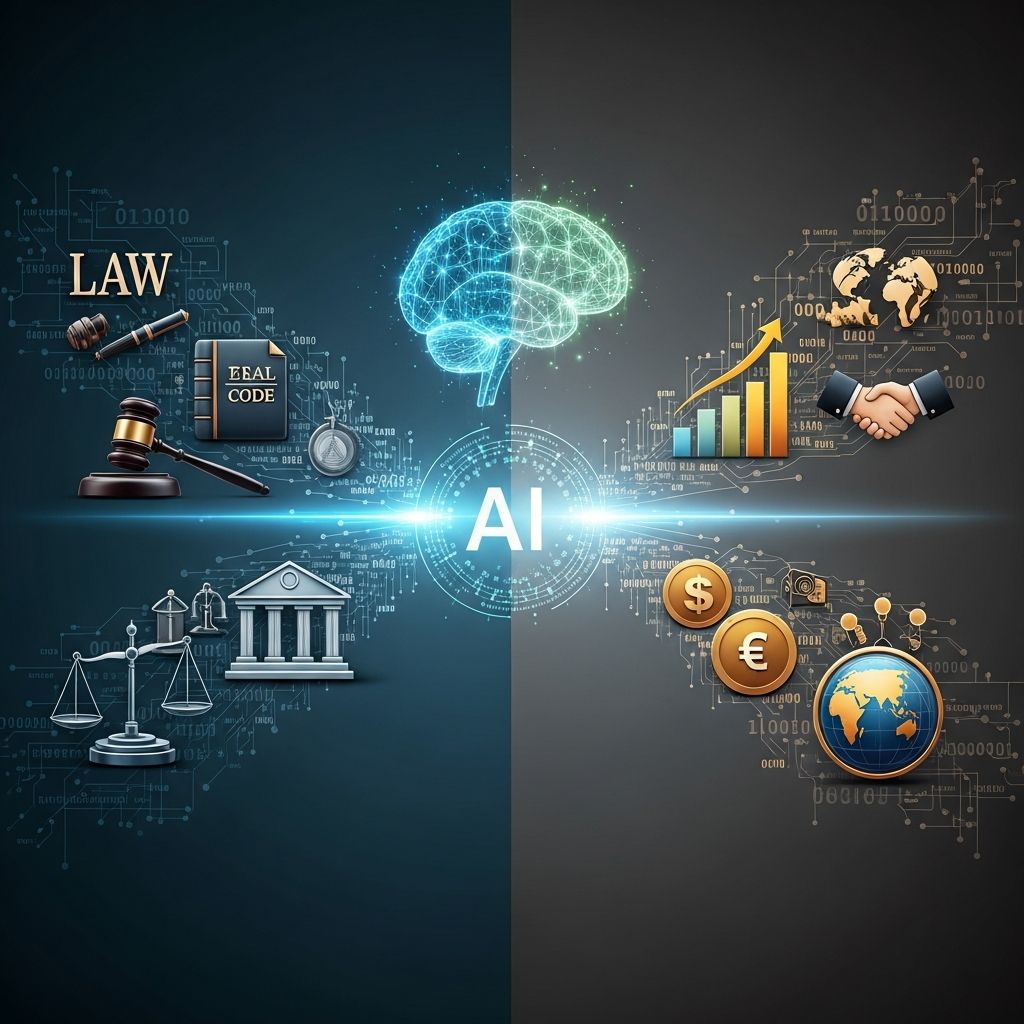
Artificial intelligence is transforming how organizations operate, advise clients, and deliver services. Yet every AI deployment comes with legal, regulatory, and ethical questions that lawyers and business leaders must confront. This article explains the main legal issues raised by modern AI systems, outlines emerging regulatory trends, and offers practical steps to manage risk while still benefiting from innovation.
1. Understanding Modern AI and Why Legal Risks Are Rising
“Artificial intelligence” covers a range of technologies, including machine learning models that detect patterns in large datasets and generative systems that create text, images, code, and other content. These tools rely heavily on data and automation, which directly intersect with core areas of law: privacy, intellectual property, consumer protection, employment, and more.
As lawmakers and regulators react to rapid AI adoption, new rules and lawsuits are emerging around:
- How data is collected, processed, and shared by AI systems
- Who is responsible when AI outputs are harmful or inaccurate
- Whether AI-generated material can be copyrighted or infringes others’ rights
- How to prevent discrimination and unfair practices in automated decision-making
- What professional and ethical duties apply when lawyers themselves use AI
Organizations that understand these themes early can design AI initiatives that are both compliant and defensible.
2. Data Protection, Privacy, and Confidentiality
Most AI tools depend on large volumes of data, some of which may be personal, sensitive, or confidential. This creates a direct connection to privacy regulations and information security obligations.
2.1 Regulatory landscape for AI-related data use
Key legal frameworks for AI-related data processing include:
- Comprehensive privacy laws such as the EU General Data Protection Regulation (GDPR) and state-level laws like the California Consumer Privacy Act and California Privacy Rights Act, which regulate personal data processing, profiling, and automated decision-making.
- Sector-specific rules like HIPAA for health information and financial regulations that govern customer data in banking and securities.
- Cross-border data transfer regimes that restrict moving personal data between jurisdictions without adequate safeguards.
Under many of these statutes, AI-driven profiling or automated decisions affecting individuals may require additional transparency, impact assessments, and opportunities for human review.
2.2 Confidentiality in legal practice
For legal professionals, entering client facts into AI tools raises confidentiality and privilege concerns. Ethics guidance emphasizes that lawyers must understand how a tool handles inputs, retention, and model training and must take reasonable steps to prevent unauthorized disclosure of client information.
Practical measures include:
- Using enterprise or on-premises AI tools with contractual confidentiality protections
- Redacting or anonymizing client identifiers before using external systems
- Reviewing terms of use, privacy policies, and security controls for any AI product adopted by the firm
3. Intellectual Property and AI-Generated Content
Generative AI introduces challenging intellectual property (IP) questions, touching both the training of models and the outputs they generate.
3.1 Training data and copyright risk
Machine learning models are often trained on massive datasets that may include copyrighted text, images, audio, or code. The U.S. Copyright Office has initiated policy studies on how existing copyright doctrines apply to AI training and use, including questions about fair use, licensing, and the rights of content creators whose works are ingested by AI systems.
Organizations that develop or deploy AI models should consider:
- Whether training datasets are properly licensed or lawfully obtained
- How to manage potential claims from rightsholders regarding unauthorized use of their works
- What disclosures or indemnities appear in vendor contracts covering training data and model development
3.2 Ownership and protection of AI outputs
Another key question is who, if anyone, holds copyright in AI-generated content. U.S. copyright law currently requires human authorship for copyright protection, which complicates the treatment of works produced largely or entirely by autonomous systems.
| Scenario | Key IP Considerations |
|---|---|
| AI suggests content, human edits heavily | Human contributions may be copyrightable; clarify ownership in agreements. |
| AI generates text or images with minimal human control | Protection may be limited; policies should address how such outputs are used and attributed. |
| AI output resembles existing protected work | Potential infringement risks; screening and human review are important. |
Contractual terms with vendors and clients should address ownership, licensing scope, permitted uses, and risk allocation for AI-created materials.
4. Bias, Discrimination, and Algorithmic Fairness
AI systems can reproduce or amplify existing biases present in training data or design decisions. When AI tools are used for hiring, lending, insurance, housing, or other high-stakes decisions, skewed outcomes may lead to discrimination claims and regulatory scrutiny.
4.1 Emerging laws targeting algorithmic discrimination
Regulators and legislators are increasingly focused on automated decision-making that could result in unlawful discrimination or other harms. Some state initiatives require organizations to conduct impact assessments, maintain risk management programs, and document measures mitigating foreseeable risks of algorithmic discrimination.
Regulatory trends include:
- Obligations to monitor AI models for disparate impacts on protected groups
- Transparency requirements about when automated tools are used in decisions
- Recognition of adherence to recognized risk management standards as a defense or mitigating factor
4.2 Practical fairness safeguards
To reduce discrimination risks, organizations can:
- Define clear use cases and avoid applying one model broadly without testing new contexts
- Conduct regular bias and outcome audits, using both statistical measures and qualitative review
- Document model development, training data choices, and validation processes
- Ensure meaningful human oversight for high-impact decisions
5. Liability, Litigation, and Evidence Challenges
As AI becomes embedded in products and services, litigation risk grows across multiple doctrines: negligence, product liability, consumer protection, malpractice, and defamation.
5.1 Who is responsible when AI goes wrong?
When AI systems malfunction, provide incorrect output, or are misused, injured parties may seek compensation from a range of actors, including developers, vendors, integrators, and end users. Questions that courts and litigants will confront include:
- Whether AI tools qualify as “products” for traditional product liability claims
- What standard of care applies to the design, testing, and monitoring of AI systems
- How contractual disclaimers, limitations of liability, and indemnities allocate risk
For lawyers, improper use of AI in legal work may also give rise to malpractice claims if it results in missed deadlines, incorrect filings, or reliance on fabricated citations.
5.2 Admissibility and authentication of AI-generated evidence
Civil and criminal litigators increasingly encounter AI-generated or AI-processed evidence, such as deepfake videos, synthetic documents, or analytics-driven conclusions. Courts must evaluate the reliability and authenticity of such materials under existing evidence rules.
Issues likely to arise include:
- Demonstrating how an AI system functions and how it produced the evidence in question
- Explaining validation methods, error rates, and potential sources of bias
- Protecting trade secrets and proprietary algorithms while satisfying disclosure obligations
Lawyers should be prepared to question or defend AI-related evidence by working closely with technical experts and documenting how tools are used.
6. Regulatory and Policy Trends Shaping AI Governance
AI regulation is evolving quickly at international, federal, and state levels. Rather than a single universal rulebook, organizations face a patchwork of obligations depending on geography, sector, and use case.
6.1 Risk-based and sector-based approaches
Recent legislative efforts illustrate two dominant strategies:
- Risk-based frameworks that focus on AI systems posing significant risks to individuals’ rights or safety, often requiring risk assessments, transparency, and governance measures.
- Targeted, sector-specific rules addressing finance, health, employment, or critical infrastructure, enforced by existing regulators such as securities, competition, and data protection authorities.
In parallel, standards bodies and public agencies have published nonbinding frameworks to guide responsible AI development and deployment. These frameworks often emphasize governance, accountability, transparency, and continuous risk management.
6.2 Government enforcement priorities
Regulators have signaled a willingness to use existing laws to address AI-related harms, including:
- Antitrust enforcement where AI is used to facilitate collusion or anti-competitive behavior
- Consumer protection actions against deceptive or unfair uses of AI tools
- Data protection investigations focused on profiling, consent, and cross-border transfers
Because enforcement is often faster than legislation, organizations should assume that AI-related conduct will be scrutinized under current legal regimes, even before new AI-specific statutes are enacted.
7. Ethics and Professional Responsibility for Lawyers Using AI
Professional ethics rules apply fully when lawyers adopt AI tools in their practice. Guidance from bar associations highlights several duties that are especially relevant:
- Competence: Lawyers must understand the basic capabilities and limitations of AI tools they use and remain able to exercise independent professional judgment.
- Confidentiality: Use of AI must not compromise client confidences; reasonable precautions are required when transmitting or processing client information.
- Supervision: AI tools, like human staff or vendors, must be appropriately supervised to ensure that delegated tasks comply with professional standards.
- Honesty and candor: Lawyers may not misrepresent AI-generated work as independently verified research and must avoid submitting inaccurate or fabricated materials to tribunals.
Firms increasingly adopt internal AI policies setting out approved tools, security requirements, review expectations, and training programs to help lawyers comply with these duties.
8. Building Effective AI Governance and Risk Management
To balance innovation with compliance, organizations need structured AI governance. Strong governance frameworks create clear responsibilities, documentation, and controls, which can both reduce risk and demonstrate due diligence to regulators and courts.
8.1 Core components of an AI governance program
- Inventory and classification of AI systems in use, including their purpose, data sources, and risk level.
- Policies and standards covering acceptable use, development practices, privacy requirements, and security controls.
- Risk assessment and impact analysis performed before deployment and periodically thereafter for high-risk systems.
- Human oversight and escalation mechanisms for reviewing AI-driven decisions and addressing adverse outcomes.
- Training and awareness so that staff understand both the capabilities and the legal constraints of AI tools.
8.2 Contracting and vendor management
Many organizations rely on third-party AI vendors. Contracts with such providers should address:
- Data handling, security measures, and confidentiality obligations
- Allocation of risk for errors, security incidents, and IP claims
- Audit rights, performance metrics, and incident reporting obligations
- Compliance with relevant laws and adherence to recognized risk management frameworks
9. Practical Checklist for Deploying AI Responsibly
Before adopting or expanding AI within your organization, consider the following practical steps:
- Map all planned AI use cases and identify which involve personal, sensitive, or regulated data.
- Confirm a lawful basis for data processing and evaluate whether special rules apply to automated decision-making.
- Engage legal, compliance, security, and business stakeholders early in AI design and procurement.
- Conduct privacy impact and algorithmic bias assessments for higher-risk applications.
- Establish clear documentation of model design, testing, monitoring, and update processes.
- Develop internal policies for lawyer and staff use of AI, including rules on confidentiality and quality control.
- Review and update incident response plans to cover AI-related failures or misuse.
10. Frequently Asked Questions About AI Legal Risks
Q1: Is it safe to paste confidential information into a public AI chatbot?
Not without careful review. Public AI services may store or reuse prompts, and their terms of use often permit broad internal use of submitted data. Lawyers and businesses handling sensitive information should avoid using public tools for confidential or regulated data unless contractual protections and technical safeguards are in place.
Q2: Can my organization rely solely on vendor assurances about AI compliance?
No. Vendor statements are important but not sufficient. Regulators increasingly expect organizations to perform their own due diligence, risk assessments, and ongoing monitoring of high-impact AI systems. Contracts should allow for auditing and require adherence to applicable laws and recognized risk management standards.
Q3: Are AI-generated works automatically protected by copyright?
Under current U.S. law, copyright generally requires human authorship, so purely machine-generated works may not qualify for protection. Human selection, arrangement, or modification of AI outputs can still create protectable expression, but each situation must be assessed individually.
Q4: How can we show regulators or courts that we acted responsibly with AI?
Maintaining thorough documentation of your AI governance program, risk assessments, testing, and oversight can help demonstrate that you exercised reasonable care. Aligning internal practices with widely recognized frameworks and complying with privacy and nondiscrimination rules further strengthens this position.
Q5: Do existing laws already cover AI, or are we waiting for new regulations?
Many existing laws—on privacy, discrimination, consumer protection, competition, and professional ethics—already apply to AI-related conduct. New AI-specific legislation is emerging, but regulators are actively using current statutes to pursue AI-related violations today.
References
- What Every Business Should Know About AI in 2025: Legal Perspectives and Predictions — Conn Kavanaugh. 2025-02-03. https://www.connkavanaugh.com/articles-and-resources/what-every-business-should-know-about-ai-in-2025-legal-perspectives-and-predictions/
- Legal issues with AI: Ethics, risks, and policy — Thomson Reuters Legal. 2024-07-25. https://legal.thomsonreuters.com/blog/the-key-legal-issues-with-gen-ai/
- Artificial Intelligence Update — Quinn Emanuel Urquhart & Sullivan. 2025-08-01. https://www.quinnemanuel.com/the-firm/publications/artificial-intelligence-update-august-2025/
- Summary of Artificial Intelligence 2025 Legislation — National Conference of State Legislatures (NCSL). 2025-10-15. https://www.ncsl.org/technology-and-communication/artificial-intelligence-2025-legislation
- Copyright and Artificial Intelligence — U.S. Copyright Office. 2024-03-15. https://www.copyright.gov/ai/
- AI Law Center: Track Evolving AI Laws in the US, Europe & UK — Orrick, Herrington & Sutcliffe LLP. 2025-11-20. https://ai-law-center.orrick.com
Similar Articles








Read full bio of medha deb