
Affordable Attorney Business Cards That Impress
Discover smart strategies for creating professional lawyer business cards on a budget without sacrificing quality or prestige.
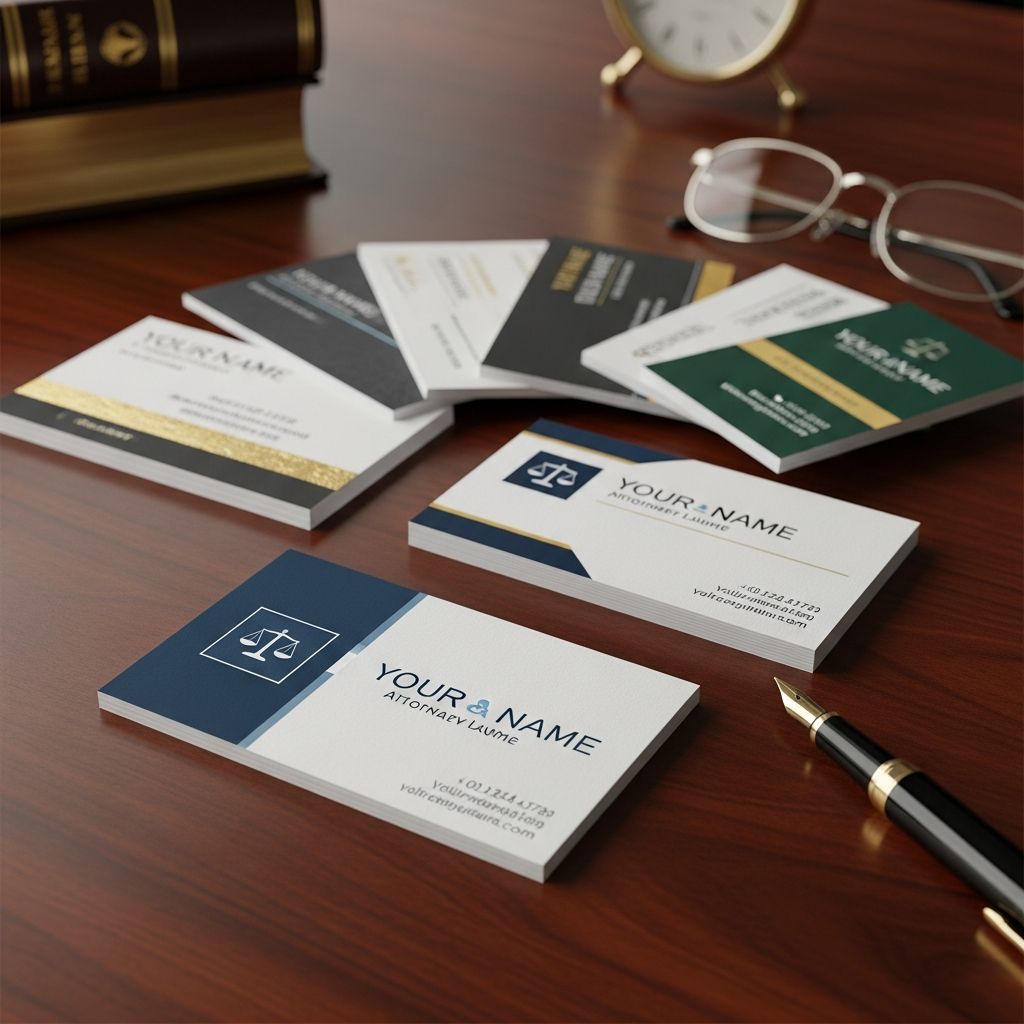
Business cards remain a cornerstone of professional networking for lawyers, offering a tangible way to leave a lasting impression on potential clients and colleagues. Even in a digital age, these compact tools convey credibility and expertise at events, meetings, and casual encounters. The challenge for many attorneys, particularly those in solo practices or small firms, lies in producing cards that exude professionalism without excessive costs. This guide explores practical approaches to designing, sourcing, and distributing high-quality lawyer business cards affordably, ensuring they enhance your brand rather than undermine it.
Why Business Cards Still Matter for Lawyers
In the legal field, first impressions can influence client decisions. A well-crafted business card acts as a physical extension of your professional identity, reinforcing trust and accessibility. Studies from networking experts highlight that recipients are more likely to remember and contact professionals who provide a card during interactions. For attorneys, this tool bridges initial conversations to follow-up opportunities, especially in competitive markets where personal connections drive referrals.
Beyond networking, cards serve practical purposes like sharing contact details quickly. They also align with ethical standards, providing verifiable information that complies with bar association rules. Investing thoughtfully in business cards yields returns through increased visibility and client acquisition, making them indispensable despite digital alternatives like LinkedIn profiles.
Core Elements Every Lawyer Card Must Include
To maximize effectiveness, attorney business cards should feature essential details presented clearly. Prioritize readability and brevity to respect the recipient’s time.
- Full Name: Use your licensed professional name to avoid ethical issues.
- Professional Title: Include credentials like ‘Esq.’ or ‘JD’ without unsubstantiated claims of specialization.
- Firm Name: Prominently display your practice or firm for brand recognition.
- Contact Info: List phone (office/direct), email, and website URL.
- Physical Address: Office location builds local credibility.
- Logo: A subtle firm emblem ties into overall branding.
Avoid cluttering with secondary details like social media unless space allows. Focus on one side for core info and the reverse for practice areas or a tagline, maintaining a clean layout.
Smart Design Principles for Budget-Conscious Attorneys
Great design elevates even low-cost cards, projecting competence and sophistication. Opt for timeless aesthetics over trendy elements to ensure longevity.
Embracing Minimalism for Professional Polish
Minimalist designs dominate legal business cards due to their association with clarity and precision—qualities clients value in lawyers. Employ ample white space, sans-serif or subtle serif fonts (e.g., Helvetica or Garamond at 10-12pt), and neutral palettes like navy, gray, or black with gold accents. This approach conveys reliability without ostentation.
| Design Choice | Budget Benefit | Professional Impact |
|---|---|---|
| Clean Layout | Reduces print complexity/costs | Enhances readability and elegance |
| Neutral Colors | Standard inks keep prices low | Timeless, trustworthy appearance |
| Single-Sided Print | Halves production expenses | Focuses attention on key info |
| Matte Finish | Affordable vs. glossy/foil | Sophisticated, non-reflective touch |
Innovative Touches Without Extra Cost
Incorporate subtle differentiators like vertical orientation or faint watermarks representing justice themes (e.g., stylized pillars). A QR code linking to your bio or firm site adds digital utility at minimal expense. Test designs using free tools to preview before committing to print runs of 250-500 cards, balancing economy with quality.
Navigating Ethical Guidelines in Card Creation
Lawyers must adhere to state bar rules and ABA Model Rule 7.2, which govern advertising and solicitation. Cards qualify as permissible communications if truthful and non-misleading. Key considerations include:
- Accurate titles and credentials; no unverified ‘expert’ claims.
- Practice areas stated generally, e.g., ‘Family Law Attorney’ rather than superlatives.
- Websites and links vetted for compliant content.
Consult your state bar’s ethics hotline for specifics. Compliance safeguards your reputation and prevents disciplinary actions, ensuring cards serve as assets rather than liabilities.
Budget-Friendly Printing and Production Options
Achieving premium results affordably requires strategic vendor selection and order sizing. Online printers offer volume discounts, custom templates, and quick turnaround.
Comparing Top Affordable Providers
Platforms like Vistaprint, Canva Print, and Moo provide lawyer-specific templates with drag-and-drop customization. Start with standard 16pt cardstock for durability without premium pricing. Bulk orders (500+) often drop per-card costs below $0.10.
- DIY Platforms: Canva’s free templates allow in-house design; print via integrated services for $20-50 per 100 cards.
- Specialty Printers: SilkCards or 123Print offer textured options starting at $30 for 250, ideal for subtle luxury.
- Local Print Shops: Negotiate for small runs; bring your design file for oversight.
Request samples to assess paper quality—aim for 14-16pt stock with linen or soft-touch finishes that feel substantial yet cost-effective.
Advanced Features on a Shoestring Budget
Elevate cards with tech integrations without inflating costs. Embed NFC chips for tap-to-share contacts ($0.50/card in bulk) or QR codes directing to vCard downloads. Foil stamping or spot UV on logos adds tactile appeal for under $50 extra per 500 cards.
For eco-conscious practices, recycled stock from providers like Zazzle maintains professionalism at standard rates. Vertical die-cuts or rounded corners offer uniqueness for pennies more per unit.
Maximizing ROI Through Strategic Distribution
Production is only half the equation; effective use amplifies value. Carry 10-20 cards daily in a slim holder. Hand them proactively at networking events, client intakes, and community functions. Include a call-to-action like ‘Scan for free consultation scheduler.’
Track success by noting referral sources in your CRM. Refresh designs annually to reflect branding evolutions, ordering sparingly to minimize waste.
Common Pitfalls and How to Avoid Them
- Overloading Info: Limit to 6-8 lines; use back for extras.
- Cheap Paper: Thin stock feels unprofessional—invest in mid-weight.
- Ignoring Proofs: Always review digital and physical proofs for errors.
- Generic Designs: Avoid clichéd gavels; opt for abstract motifs.
Frequently Asked Questions (FAQs)
What is the ideal thickness for attorney business cards?
14-16pt cardstock strikes the balance between affordability and a premium feel, resisting bends while remaining lightweight.
Can solo attorneys use creative designs ethically?
Yes, as long as content complies with bar rules; creativity in layout enhances memorability without misleading.
How many cards should a new lawyer order initially?
250-500 provides testing volume; reorder based on usage to keep designs fresh.
Are digital business cards a replacement?
They complement but don’t replace physical cards, which foster deeper connections in person.
What if my state has strict advertising rules?
Review ABA Model Rule 7.2 and consult your bar; err conservative on claims.
By prioritizing thoughtful design, ethical compliance, and savvy sourcing, attorneys can secure impressive business cards that punch above their price point. These tools not only facilitate connections but also subtly market your expertise, driving long-term practice growth.
References
- Business Card Designs for Attorneys — Clio. 2023-06-15. https://www.clio.com/blog/business-card-designs-for-attorneys/
- Lawyer Business Cards: A Step-by-Step Professional Guide — Attorney at Work. 2024-02-10. https://www.attorneyatwork.com/lawyer-business-cards/
- Best Lawyer Business Card Examples and Ideas — Grow Law Firm. 2023-11-20. https://growlaw.co/blog/a-lawyer-business-card
- Model Rules of Professional Conduct: Rule 7.2 Advertising — American Bar Association. 2024-01-01. https://www.americanbar.org/groups/professional_responsibility/publications/model_rules_of_professional_conduct/rule_7_2_advertising/
- Ethics Opinions on Lawyer Advertising — New York State Bar Association. 2023-09-05. https://nysba.org/committees/ethics-opinions/
Similar Articles








Read full bio of medha deb


