The intersection of international oversight and domestic child welfare is a critical arena for securing human rights. The Universal Periodic Review (UPR) conducted by the United Nations Human Rights Council evaluates the human rights records of all 193 UN member states, ensuring a baseline of global accountability. However, when federal administrations choose to disengage from these global human rights mechanisms, an accountability vacuum forms. This withdrawal signals a troubling retreat from international standards, particularly regarding the rights of the most vulnerable members of society: children.
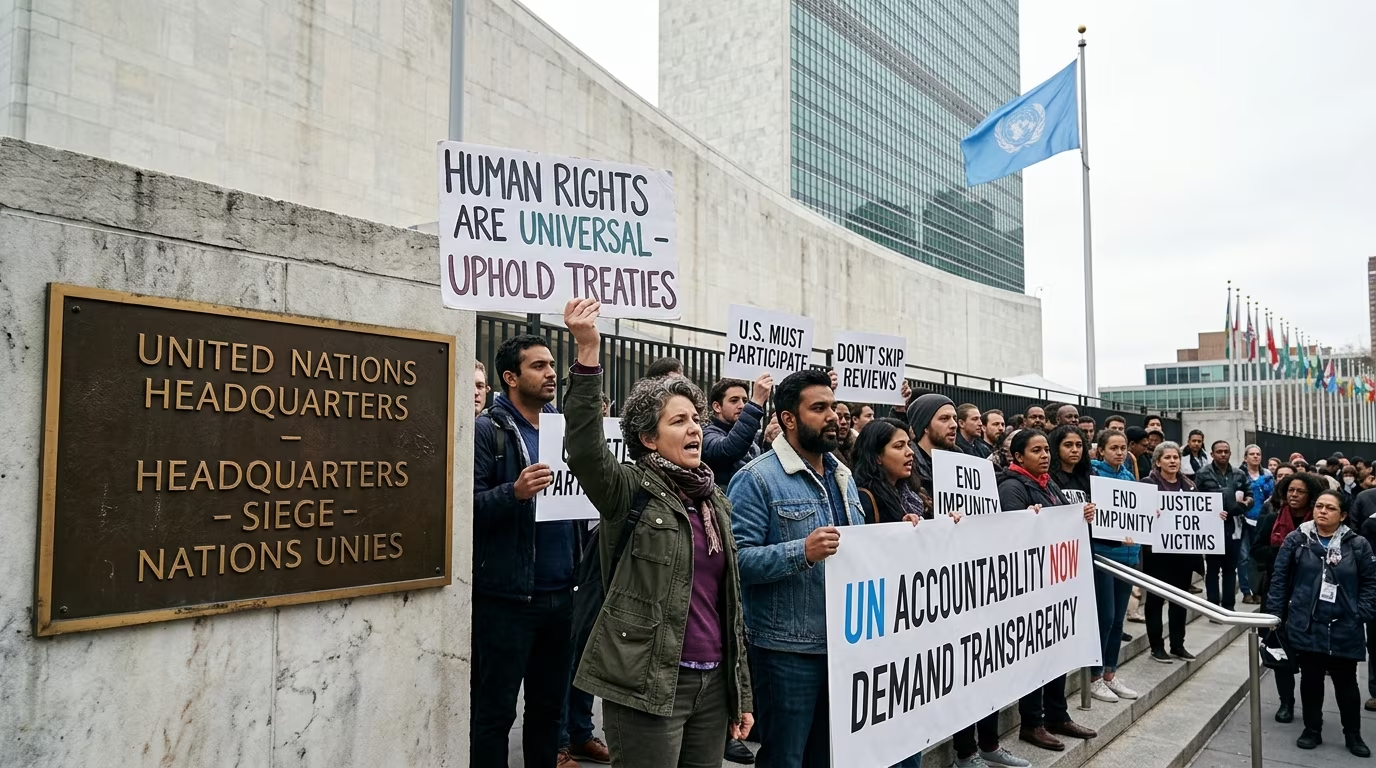
In the face of federal disengagement, grassroots organizations, legal advocates, and youth with lived experience in the foster and juvenile justice systems refuse to let these issues go unaddressed. Recognizing that silence on the global stage translates to unchecked policies at home, these advocates have stepped up. They mobilize to present their own findings to international bodies, determined to expose the realities of children in government custody, highlight the ongoing harms of family separations, and demand systemic changes that prioritize family preservation over institutionalization.
The Global Stage as a Mechanism for Local Justice
The architecture of international human rights is built on the principle of peer review and collective accountability. At the heart of this system is the United Nations Human Rights Council’s Universal Periodic Review. This unique process provides a platform for member states to declare what actions they have taken to improve human rights and to fulfill their obligations. For marginalized groups—and especially for children, who often lack political agency—this international scrutiny is a vital safety net.
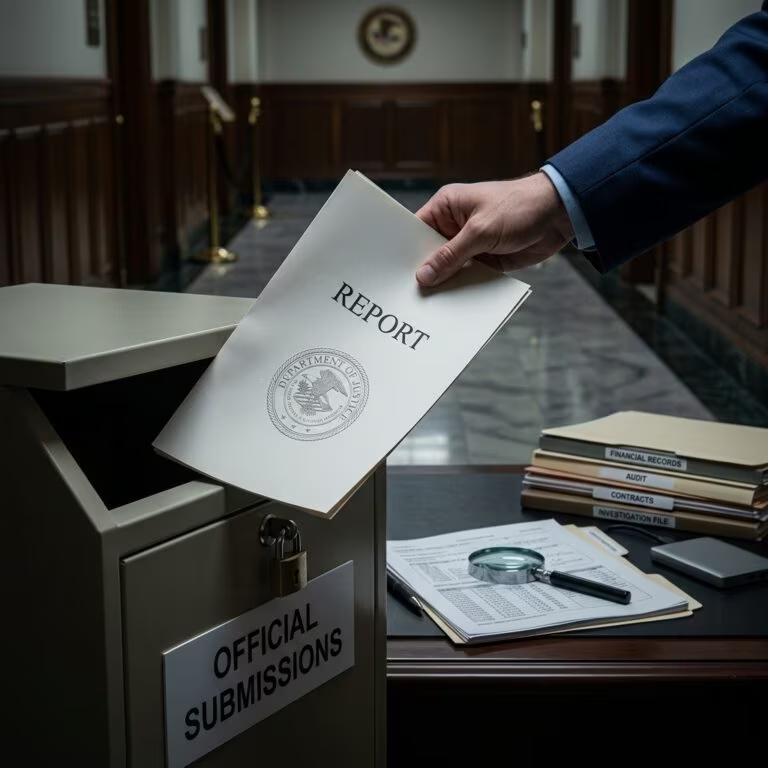
Historically, civil society groups have leveraged the UPR to shine a light on domestic blind spots. By submitting independent shadow reports, these organizations provide alternative data and narratives that frequently contradict official governmental stances. This process is instrumental in addressing issues like juvenile detention conditions, systemic biases within foster care, and the treatment of migrant families at national borders.
When a country’s leadership actively participates in these reviews, it opens the door to constructive criticism and policy reform. The refusal of a government to engage is not merely a diplomatic slight; it is a tactical evasion of scrutiny that undermines the foundational premise that every nation must continually strive to protect its youth.
When Federal Leadership Steps Back
The decision by any federal administration to pull back from the UN human rights apparatus sends a chilling message to both the global community and local watchdogs. Such disengagement typically manifests as skipping scheduled review sessions, refusing to submit required reports, or officially withdrawing from specialized human rights councils. This retreat is often justified by claims of protecting national sovereignty, but the real-world impact is felt most acutely by those trapped in state-run systems.
Without the pressure of international oversight, federal and state agencies operate with less transparency. For example, during periods of decreased oversight, policies that aggressively separate migrant children from their parents at borders have been implemented with devastating speed. The U.S. Government Accountability Office (GAO) has documented the profound administrative failures and human costs of such zero-tolerance immigration policies, noting that agencies frequently lacked the infrastructure to track and reunify separated families properly.
Furthermore, domestic civil rights enforcement can wane when leaders broadcast a dismissive attitude toward universal human rights. The resulting vacuum allows institutional racism and systemic neglect within child welfare and juvenile justice systems to persist unchecked, placing the burden of advocacy entirely on civil society.
Filling the Void: Civil Society Takes the Microphone
Nature abhors a vacuum, and so does the pursuit of justice. When official representatives refuse to sit at the table in Geneva, non-governmental organizations, civil rights attorneys, and youth advocates simply take their place. This coalition of civil society actors recognizes that the global stage remains a powerful venue for narrative shifting, even without the formal participation of the state.
These advocates compile exhaustive documentation detailing human rights violations that occur within their borders. They organize delegations, often centering the voices of individuals with lived experience in the foster care or immigration detention systems. By bringing young people who have survived the trauma of institutionalization or family separation directly to the United Nations, these groups humanize the statistics. They transform abstract policy debates into undeniable, urgent moral crises.
Their testimony covers a broad spectrum of child rights issues. They speak to the psychological scarring caused by solitary confinement in juvenile facilities and detail the educational neglect rampant in poorly regulated foster homes. Crucially, they highlight the disproportionate impact these failing systems have on marginalized communities, particularly Black, Indigenous, and Hispanic youth, keeping the pressure on domestic lawmakers to enact meaningful reforms.
Confronting the Legacy of Family Separation
One of the most glaring human rights crises that advocates have brought to the international forefront is the systemic separation of families at national borders. Policies designed to deter immigration by prosecuting parents and placing their children in government shelters have drawn widespread condemnation. The logistical chaos and profound trauma inflicted by these practices represent a direct violation of the foundational human right to family unity.
According to investigations by the U.S. Government Accountability Office, the agencies tasked with implementing these separation policies frequently failed to plan for the eventual reunification of families. Their reports highlight severe deficiencies in interagency coordination and data tracking, meaning that thousands of children were separated without a clear mechanism for locating their parents later. The trauma experienced by these children—many of whom are placed in unlicensed, large-scale congregate care facilities—is lasting and deeply damaging to their cognitive and emotional development.
Advocates appearing before human rights bodies demand not only an immediate end to all forms of punitive family separation but also comprehensive accountability. This includes providing long-term mental health resources and establishing independent oversight to ensure such draconian measures are never deployed again under the guise of border security.
Exposing Systemic Flaws in Foster Care
Beyond immigration, advocates have utilized international platforms to expose the deep-seated flaws within domestic foster care systems. The numbers paint a stark picture. According to the Adoption and Foster Care Analysis and Reporting System (AFCARS), hundreds of thousands of children are in state custody on any given day. While the system is ostensibly designed to protect children from abuse and neglect, it frequently perpetuates a different kind of trauma.
Civil rights groups argue that the child welfare system is plagued by institutional racism, resulting in the disproportionate removal of children from minority families. These removals are often driven by circumstances rooted in poverty—such as inadequate housing or lack of access to child care—rather than intentional abuse. By framing poverty as neglect, the system unjustly severs family bonds and funnels youth into a pipeline of institutionalization.
Furthermore, advocates fiercely condemn the continued reliance on congregate care settings, such as group homes and residential treatment facilities. Research consistently shows that children in these environments are at a higher risk for physical abuse and further psychological harm compared to those placed in family-based settings. Presenting these realities to international councils bolsters the domestic push for prioritizing community-based support and kinship care.
A New Vision for Youth Justice and Family Unity
The ultimate goal of this international advocacy is not merely to condemn past actions, but to articulate a progressive, rights-based vision for the future. Advocates are demanding a paradigm shift in how governments interact with vulnerable families. This new vision is rooted in the belief that children thrive best in their own families and communities, and that state intervention should be supportive rather than punitive.
To achieve this, reformers are calling for massive divestment from institutional care and immigration detention, and a corresponding reinvestment in community-based resources. This includes expanding access to affordable housing, mental health care, and substance use treatment for parents, thereby addressing the root causes of child welfare involvement. It also requires the implementation of strict, legally binding guardrails to prevent the arbitrary separation of families at borders or within the domestic child welfare system.
By elevating these demands to the global stage, civil society groups are building a robust record of what true justice for children should look like, leveraging global human rights standards to create a blueprint for domestic policy reform.
Moving Forward: The Call to Action
The refusal of federal leadership to engage with international human rights reviews is a significant hurdle, but it is not an insurmountable one. As long as civil society remains vigilant and mobilized, the mechanisms of accountability will continue to function. The courageous actions of youth advocates, legal experts, and human rights organizations demonstrate that the moral authority of a nation does not reside solely in its government offices; it lives in the voices of its people.
Looking forward, the push for children’s rights requires sustained pressure at every level—local, national, and international. Lawmakers must be compelled to codify protections against family separation and to dismantle discriminatory practices embedded in the child welfare system. Citizens must support these advocates by amplifying their findings and voting for policies that prioritize the well-being of all children. True accountability is an ongoing practice, driven by the relentless demand that every child be afforded safety, dignity, and family connection.
Frequently Asked Questions
What is the Universal Periodic Review (UPR)?
The UPR is a process led by the United Nations Human Rights Council that involves a periodic review of the human rights records of all UN Member States. It allows countries to declare what actions they have taken to improve human rights and fulfill their obligations, serving as a global baseline for accountability.
How does federal disengagement from UN reviews affect children?
When a government refuses to participate in UN reviews, it removes a critical layer of international oversight. This lack of transparency can allow harmful domestic policies—such as family separations at the border or the over-reliance on institutional foster care—to continue unchecked by global human rights standards.
Why are advocates pushing to end congregate care in the foster system?
Advocates and youth with lived experience consistently report that congregate care settings, like group homes, expose children to higher risks of trauma, abuse, and neglect compared to family-based care. They argue for reforms that prioritize keeping children with their biological families or in well-supported community settings.
References
- Universal Periodic Review — United Nations Human Rights Office of the High Commissioner. 2024-01-01. https://www.ohchr.org/en/hr-bodies/upr/upr-main
- Southwest Border: Actions Needed to Improve DHS Processing of Families and Coordination between DHS and HHS — U.S. Government Accountability Office (GAO). 2020-02-19. https://www.gao.gov/products/gao-20-245
- Adoption and Foster Care Analysis and Reporting System (AFCARS) — U.S. Department of Health and Human Services, Administration for Children and Families. 2024-06-30. https://www.acf.hhs.gov/cb/data-research/adoption-foster-care-analysis-and-reporting-system-afcars