Advance Parole Application Guide: Travel Document Essentials
Master the Form I-131 advance parole process with our comprehensive application guide for international travel.
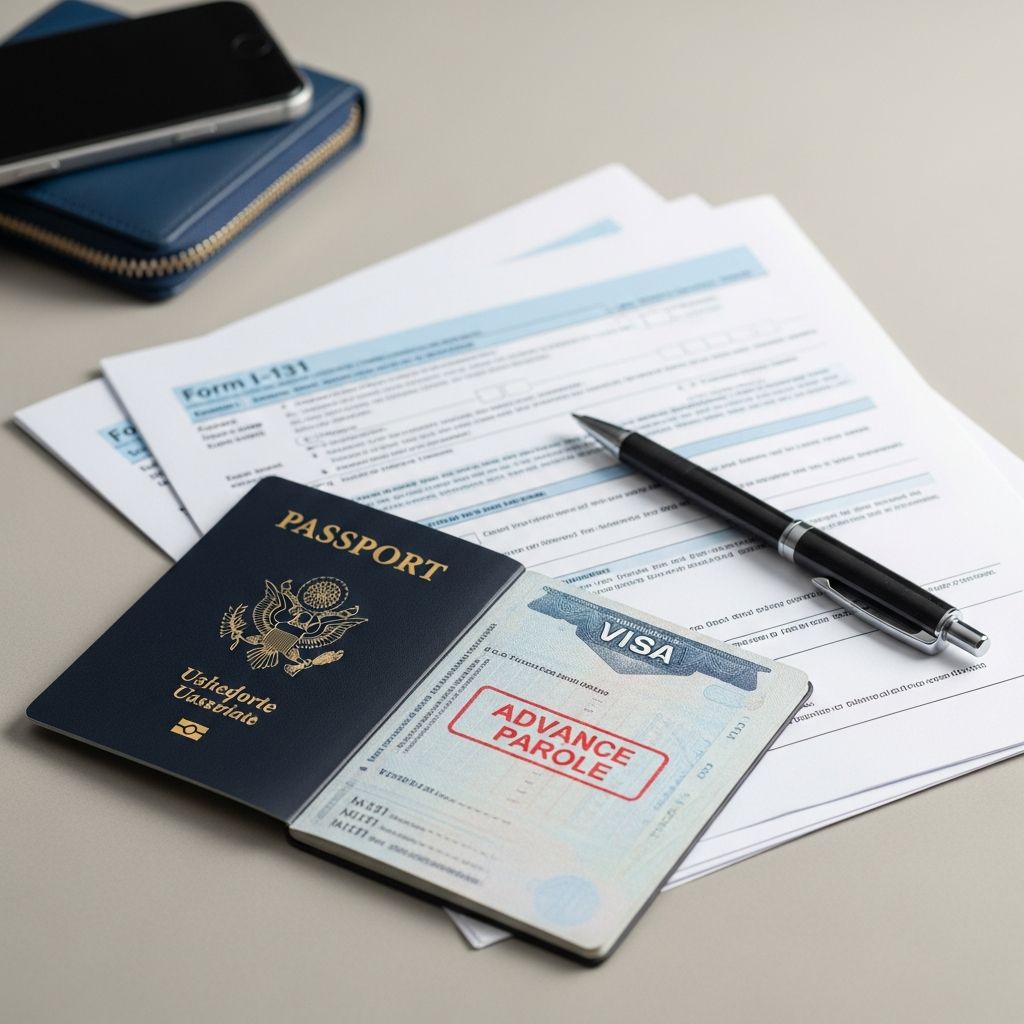
Understanding Advance Parole and Its Purpose
Advance parole serves as a critical tool for individuals seeking temporary authorization to depart from and return to the United States while their immigration applications remain pending. This special travel document allows eligible applicants to leave the country without abandoning their adjustment of status applications, which would otherwise result in automatic cancellation of their cases.
The advance parole document, formally known as Form I-512L, is issued by U.S. Citizenship and Immigration Services (USCIS) exclusively to authorize temporary reentry into the United States. It represents an extraordinary measure reserved for individuals who demonstrate genuine necessity for international travel while maintaining pending immigration petitions or applications. This document is distinct from standard nonimmigrant visas and serves a unique function within the immigration system.
For individuals in the adjustment of status process, advance parole becomes essential when unforeseen circumstances require travel abroad. Without this authorization, departing the country would terminate the adjustment application entirely, forcing applicants to restart the process from their home country and potentially facing significant delays and complications.
Eligibility Criteria and Prerequisites
Not all individuals can apply for advance parole. USCIS has established specific eligibility categories that must be met before submitting an application. Understanding these requirements is fundamental to determining whether filing Form I-131 is appropriate for your situation.
The primary category of eligible applicants includes individuals with a pending Form I-485 application (Application to Register Permanent Residence or Adjust Status) who need to travel abroad for emergent personal or bona fide business reasons. This encompasses adjustment applicants facing genuine circumstances that necessitate international departure.
Additional eligibility categories include individuals who have received deferred action status, such as those approved under DACA (Deferred Action for Childhood Arrivals), and persons holding specific nonimmigrant visa categories that do not already provide travel authorization. Certain qualified beneficiaries of immigrant petitions may also be eligible to apply.
Ineligibility Restrictions
Several circumstances automatically disqualify applicants from obtaining advance parole. Most critically, individuals currently in exclusion, deportation, removal, or rescission proceedings cannot apply for advance parole through standard channels. This means if you have been called to immigration court for a removal hearing, you are not eligible unless you have received deferred action status.
Additionally, applicants must ensure they have not already departed the United States before their advance parole document is issued. If you leave the country before receiving approval and the actual travel document, USCIS will cancel your adjustment of status application. This timing requirement makes it essential to plan travel carefully and ensure advance parole approval before any international departure.
The Form I-131 Application Process
Timing of Filing
Ideally, applicants should file Form I-131 simultaneously with their Form I-485 adjustment of status application. This synchronized filing streamlines processing and minimizes potential delays. However, advance parole applications need not be submitted at the same time; applicants may file Form I-131 separately after submitting their initial adjustment of status petition.
If you choose to file Form I-131 after your I-485 has already been submitted, you must include a copy of your Form I-797 Notice of Action receipt with your advance parole application as evidence that you previously filed and paid the fee for your adjustment of status application.
Navigating Form Sections
Form I-131 contains multiple sections, many of which may not apply to advance parole applicants specifically. Part 4, labeled “Processing Information,” contains a critical question regarding immigration proceedings. Question 1 asks whether you have been in exclusion, deportation, removal, or rescission proceedings. You must answer “No” to this question to be eligible for advance parole; if your true answer is “yes,” you should consult with an immigration attorney before proceeding.
Most other questions on the form are self-explanatory and relate to personal information, biographical details, and travel history. The form is designed to gather comprehensive information about your identity, background, and immigration status. Many sections of the form may be irrelevant to advance parole applicants, so focus on completing only the portions that directly pertain to your situation.
Essential Documentation and Supporting Evidence
Required Documents Checklist
Submitting complete documentation is critical to avoiding delays and potential denials. Your application package must include the following items:
- A completed Form I-131 application form
- A copy of any USCIS-issued document demonstrating your current immigration status in the United States
- Government-issued photo identification (such as a passport or state-issued ID card)
- Passport-style photographs meeting USCIS specifications
- Copy of your I-94 arrival and departure record
- Receipt notice of your pending I-485 application
- Application fee payment (check or money order)
Evidence of Travel Necessity
Perhaps the most important component of your application is clear, compelling evidence demonstrating why advance parole should be authorized. You must provide comprehensive documentation explaining the circumstances that warrant issuance of the advance parole document, including specific dates of intended travel and the expected duration of your absence from the United States.
USCIS has identified acceptable categories of evidence for establishing travel necessity. Medical emergencies requiring treatment abroad, family emergencies such as serious illness or death of an immediate relative, and business needs that cannot be conducted remotely qualify as legitimate reasons. You should provide supporting documents corresponding to your specific situation, such as medical reports, funeral notices, or business correspondence.
The validity period of your approved advance parole document will correspond directly to the documented duration of your travel need. If you claim you need to travel for two weeks, your advance parole will typically authorize reentry for approximately that timeframe. Overestimating travel duration unnecessarily extends the document’s validity, while underestimating may require filing a new application if your circumstances change.
Supporting Documentation for Immediate Relatives
If your advance parole application is based on assisting a family member or relative abroad, you may need to submit Form I-134 (Affidavit of Support) or other evidence establishing your relationship. Documentation should include official identity documents and proof of citizenship or immigration status for both yourself and any relevant relatives mentioned in your application.
Filing Instructions and Submission Procedures
Determining the Correct Filing Address
The address to which you submit your Form I-131 depends on whether you are filing it concurrently with your I-485 or separately. If you are filing with your initial adjustment of status application, follow the general I-485 filing instructions for determining the correct address.
If you are filing Form I-131 after your I-485 has already been submitted, you must send your advance parole application to the specific USCIS office handling your adjustment case. You can identify this office from the receipt number on your Form I-797C Notice of Action that you received when USCIS initially processed your I-485 application.
Making Copies and Maintaining Records
Before submitting your application, prepare a complete copy of your entire Form I-131 application package for your personal records. This copy serves as documentation of what you submitted and provides a reference point should you need to follow up with USCIS or if any questions arise regarding your application status.
Application Fees and Payment Methods
As of current regulations, the application fee for Form I-131 advance parole is $575. This fee must be paid via check or money order payable to “U.S. Department of Homeland Security.” Do not send cash through the mail, as this poses security and verification risks.
Ensure your payment is included with your application package when you submit it. Without payment, USCIS may reject your application outright or delay processing until the fee is received. Many applicants include the fee payment as a separate document in their submission package, clearly labeled and easily identifiable by USCIS processors.
Processing Timelines and Case Status Tracking
Understanding Processing Timeframes
Advance parole applications do not receive expedited processing. It is common for applicants to wait several months or even more than a year to receive a decision from USCIS on their Form I-131 application. These extended timelines reflect the volume of applications USCIS processes and the thoroughness of the review process.
Processing times vary significantly by geographic region and the specific USCIS service center handling your case. Applications filed with the service center in one location may be processed more quickly than those filed elsewhere, depending on local caseload and resource availability.
Checking Your Case Processing Time
USCIS provides a helpful tool for determining typical processing times in your specific geographic area. Access the USCIS Check Case Processing Times webpage, then select “Form I-131” under the “Form” dropdown menu. Next, choose “Advance parole” from the “Form category” options. Finally, select the specific service center to which you sent your adjustment of status application and click the “Get processing time” button.
This tool will display the average time USCIS currently takes to process advance parole applications at your service center. While these are estimates rather than guarantees, they provide a reasonable expectation for how long you should anticipate waiting for a decision.
Critical Considerations and Important Warnings
Timing and Departure Restrictions
The most critical rule regarding advance parole cannot be overstated: you must remain in the United States until your advance parole is fully approved and you have physically received your travel document. USCIS will automatically cancel your entire adjustment of status application if you depart before advance parole is officially issued.
This means that even if USCIS indicates your advance parole has been approved in their system, you should not leave the country until the I-512L document arrives in your mailbox. Plan your travel only after you have the document in hand.
Understanding What Advance Parole Does and Does Not Do
Advance parole is specifically designed to allow you to leave and return to the United States while your adjustment application is pending. However, it does not provide any immigration status or work authorization by itself. If you need to work while your adjustment is pending, you must apply separately for employment authorization using Form I-765 (Application for Employment Authorization Document).
Additionally, advance parole is exclusively for adjustment of status applicants and individuals in other specified categories. It is not applicable to individuals who hold standard nonimmigrant visas such as F-1 student visas or H-1B work visas, as those visa categories typically already authorize international travel and reentry.
Frequently Asked Questions About Advance Parole
Q: Can I work while I have advance parole approval?
A: Advance parole does not grant work authorization. To work legally, you must separately apply for and obtain an Employment Authorization Document (Form I-765) from USCIS.
Q: What happens if I leave the U.S. before receiving my advance parole document?
A: USCIS will automatically cancel your adjustment of status application if you depart before your advance parole document is issued and received. This termination is irreversible through advance parole; you would need to restart your adjustment application from abroad.
Q: Can I extend my advance parole after it expires?
A: If you need to extend your stay abroad beyond your advance parole document’s validity period, you must file a new Form I-131 application before your current parole expires, with updated documentation supporting the extended travel need.
Q: How long is advance parole typically valid?
A: The validity period of your advance parole document matches the duration of your documented travel need. If approved for a two-week family emergency, your document will typically authorize reentry for approximately that timeframe.
Q: Do I need a visa to return to the U.S. on advance parole?
A: No. The advance parole document itself serves as your authorization to return to the United States; you do not need a visa. However, you must present the actual I-512L document when reentering the country.
Q: Can I apply for advance parole if I’m in removal proceedings?
A: Generally, no. If you are in exclusion, deportation, removal, or rescission proceedings, you are ineligible for standard advance parole. However, you may request parole from Immigration and Customs Enforcement (ICE) through alternative procedures.
Q: What should I do if USCIS denies my advance parole application?
A: If your application is denied, you cannot appeal the decision directly. However, you may file a new application if your circumstances have changed or if you have additional evidence supporting your need for travel authorization.
Final Recommendations for Success
Successfully obtaining advance parole requires careful attention to detail, complete documentation, and realistic timeline expectations. Begin by thoroughly reviewing all USCIS instructions and ensuring you meet eligibility requirements before investing time and money in the application process.
Gather all required documentation well in advance of any anticipated travel date. Do not assume advance parole will be approved quickly; instead, plan your travel based on conservative processing time estimates. If you face complex circumstances or have questions about your specific eligibility, consulting with an immigration attorney can provide valuable guidance and increase your likelihood of approval.
References
- Instructions for Application for Travel Document, Form I-131 — U.S. Department of Homeland Security, U.S. Citizenship and Immigration Services. 2024. https://www.uscis.gov/i-131
- Applying for Advance Parole: A Preliminary Checklist — Immigrants Rising. 2024. https://immigrantsrising.org/resource/applying-for-advance-parole-a-preliminary-checklist/
- Form I-131 Guide: Filing, Fees and Timelines — CitizenPath. 2024. https://citizenpath.com/form-i-131-guide/
- USCIS Check Case Processing Times — U.S. Department of Homeland Security, U.S. Citizenship and Immigration Services. https://www.uscis.gov/case-processing-times
Similar Articles








Read full bio of Sneha Tete