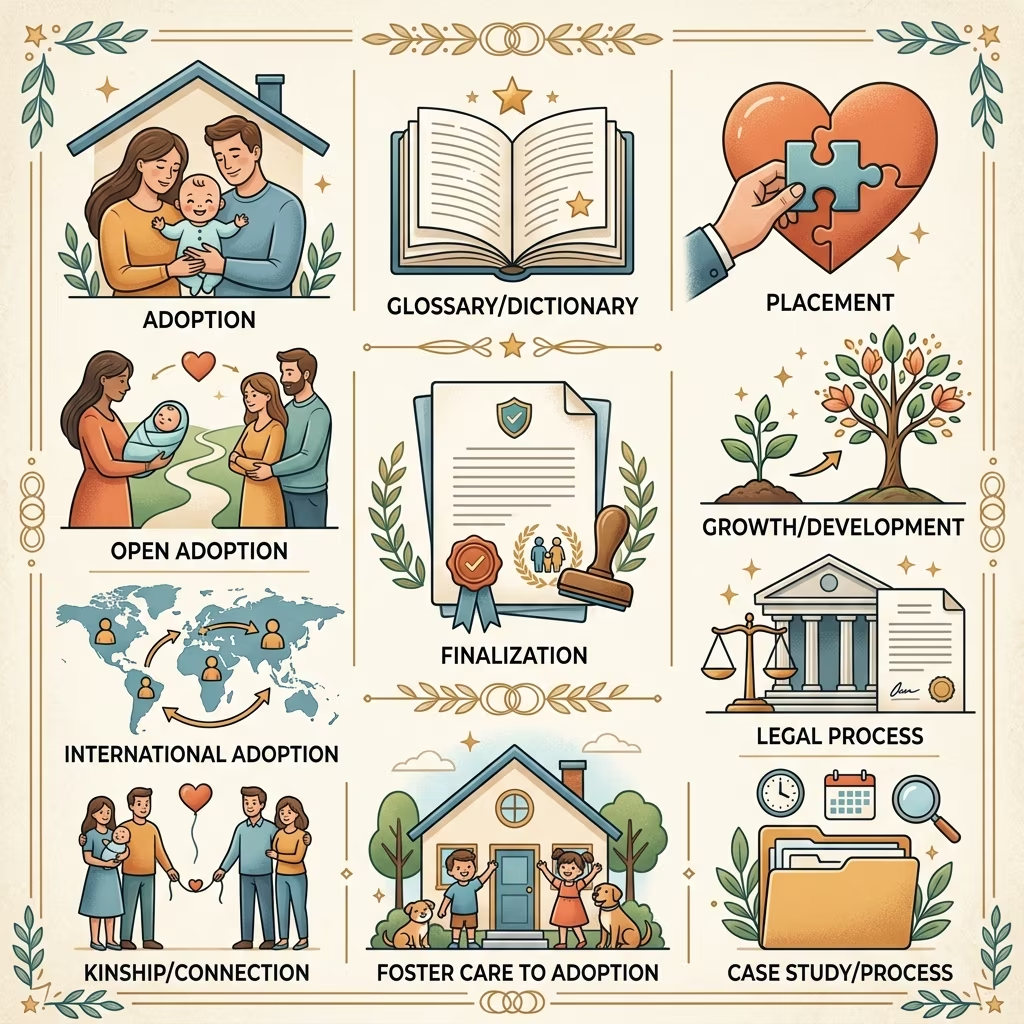
Adoption involves both legal procedure and deeply personal family decisions, which is why the vocabulary around it can feel dense at first. This guide explains common adoption terms in straightforward language so readers can better understand the process, the people involved, and the documents and decisions that shape an adoption.
Some terms describe legal milestones, while others explain relationship structures, agency services, or the level of contact between birth and adoptive families. Knowing the difference can make it easier to follow agency communications, court paperwork, and conversations with professionals.
Why adoption language matters
Adoption is not just a single event. It is a process that may involve home studies, counseling, placement decisions, post-placement supervision, and final court approval. Each stage uses terminology that has legal meaning, so a small word choice can affect expectations and responsibilities.
For example, terms like placement, consent, and finalization refer to different steps in the journey. Meanwhile, words such as open adoption and closed adoption describe the level of contact between families rather than the legal validity of the adoption itself.
- Legal terms explain rights and obligations.
- Relationship terms describe how people are connected.
- Process terms describe the stages before and after the court order.
- Service terms identify agencies, professionals, and support systems.
People and family roles in adoption
Many adoption terms focus on the individuals and families involved. These labels help identify who is legally, biologically, or emotionally connected to the child.
Adoptee refers to the person who has been adopted or is in the process of being adopted. The term may apply to a child, teenager, or adult. Some people prefer the phrase adopted person, which emphasizes identity without describing the person only through the adoption experience.
Adoptive parent is the mother or father who becomes the child’s legal parent through adoption. Once the adoption is finalized, the adoptive parent generally has the same legal rights and responsibilities as any other parent.
Birth parent or biological parent describes the person who gave birth to the child or whose genetic relationship establishes parentage. In adoption planning, this term may be used whether or not the parent retains legal rights at the time of placement.
Prospective adoptive parent means a person or couple who hopes to adopt but has not yet completed the legal process. This distinction matters because the law often treats approval, placement, and finalization as separate stages.
Core legal terms every reader should know
Several adoption terms have precise legal meanings. These words often appear in court orders, agency documents, and state regulations.
Adoption is the legal process that creates a parent-child relationship between people who are not biologically related. It transfers parental rights and duties to the adoptive parent or parents through legal procedure.
Consent is the written permission required from a parent or guardian before an adoption can move forward in many situations. The exact rules for consent depend on state law, the child’s circumstances, and whether parental rights have already been addressed by the court.
Termination of parental rights is the legal ending of the birth parent’s rights and responsibilities. In many cases, this step must occur before the court can finalize an adoption.
Finalization is the last legal step in the adoption process. A court issues an order that makes the parent-child relationship permanent and legally recognized.
Relinquishment refers to the voluntary surrender of parental rights, usually through a signed legal document. Some people and agencies prefer the phrase making an adoption plan because it emphasizes thoughtful decision-making rather than loss.
How agencies and professionals support adoption
Adoptions often involve agencies, attorneys, social workers, and other professionals who help move the process forward and ensure that legal and safety requirements are met.
Adoption agency is an organization licensed by the state to assist with adoption services. Depending on its mission and structure, an agency may be public or private, and it may serve birth parents, adoptive parents, or both.
Adoption professional is a broader term for anyone who handles adoption-related work. This can include social workers, case managers, lawyers, counselors, and other specialists.
Agency tasks may include:
- Preparing adoptive parents for the process
- Counseling birth parents
- Completing home studies
- Managing paperwork and background checks
- Coordinating placement and post-placement follow-up
Home study is the evaluation process used to determine whether a person or family is prepared to adopt. It usually includes interviews, background review, home visits, and documentation about finances, health, and parenting readiness.
Adoption arrangements and contact between families
One of the most discussed parts of adoption is the level of contact between birth families and adoptive families. These arrangements may be formal or informal, and they can vary widely.
Open adoption generally means that the birth family and adoptive family have some level of contact before and/or after placement. Contact may include letters, photos, phone calls, or in-person visits. The amount of contact is usually shaped by agreement and what is practical for everyone involved.
Closed adoption, also called confidential adoption, means there is no identifying information shared and no direct contact between the families. Records may remain sealed or private depending on the law and the adoption arrangement.
Identified adoption or designated adoption usually means the birth parent chooses the adoptive parent for the child. This does not necessarily mean the adoption is open, but it does indicate that the birth family had a role in identifying the adoptive placement.
Adoption agreement is the written understanding between the parties about the terms of the adoption. In some situations, it may address communication, contact, or expectations after placement. The legal enforceability of such agreements depends on state law.
Placement, supervision, and the transition to a permanent home
The period between a child’s move into a home and the final court order is often an important stage in the adoption process. The terminology used here reflects both the practical transition and the legal monitoring that may follow.
Placement is when the child is placed with the prospective adoptive parent or parents and begins living in the adoptive home. This is a major transition point, but it is not always the final legal step.
Adoption placement refers specifically to that act of moving the child into the adoptive home. In many cases, the placement is arranged by an agency or through a court-approved process.
Supervision or post-placement supervision is the period after placement and before finalization. During this time, the supervising agency may check in regularly, observe family adjustment, and prepare reports for the court.
Waiting child describes a child who needs a permanent family and has not yet been placed in a stable, long-term home. The phrase is often used in public child welfare contexts.
Domestic, international, and private adoption terms
Adoption vocabulary also changes depending on whether the adoption occurs within the United States, across borders, or through a private arrangement.
Domestic adoption means the child is born in the United States and the adoption is completed under U.S. law.
International adoption or intercountry adoption involves adopting a child from another country. These cases often require compliance with both U.S. law and the law of the child’s country of origin.
Dossier is a package of required documents submitted to a foreign country in an international adoption. It may include financial records, medical information, background checks, and court documents.
Private adoption, sometimes called independent adoption, typically refers to a placement arranged without a public agency, though attorneys and other professionals may still be involved.
Re-adoption is a later adoption proceeding, often used when a child adopted abroad needs a second court process in the United States to ensure that the adoption is recognized under state law.
Financial and practical support terms
Adoption can involve significant expenses, but there are also support programs that may help families manage the costs and needs that come with caring for a child.
Adoption assistance refers to resources that may help with the financial burden of adoption. Depending on the case and eligibility rules, this can include tax benefits, employer support, state subsidies, or services such as respite care.
Special needs child is a term used in adoption contexts to describe a child who may need extra support because of age, sibling status, medical conditions, disability, or other recognized factors. The exact definition often depends on state law or program rules.
Financial support may be especially important when families adopt children who need ongoing therapy, medical care, or educational services. Understanding these terms can help families identify available benefits and avoid confusion during the application process.
Common adoption terms in a quick-reference table
| Term | Plain-English meaning |
|---|---|
| Adoptee | The person who is adopted |
| Adoption | The legal creation of a parent-child relationship |
| Placement | When the child moves into the adoptive home |
| Finalization | The court step that makes the adoption permanent |
| Open adoption | An arrangement with some contact between families |
| Closed adoption | An adoption with no identifying contact or exchange |
Frequently asked questions
Is adoption the same as guardianship?
No. Adoption creates a permanent parent-child relationship, while guardianship usually gives a person authority to care for a child without ending the legal relationship between the child and the birth parents.
Can adoption terms mean different things in different states?
Yes. Some words are used consistently across the country, but the legal consequences of those terms can vary by state law. That is why local legal advice is often important.
Does open adoption mean the birth parents keep legal rights?
Not necessarily. Open adoption usually describes contact or communication, not ongoing legal custody or parental rights, unless a specific law or agreement says otherwise.
Why do some people prefer different language?
Adoption language can affect how people feel about their role or experience. Some prefer terms that emphasize respect, identity, and family connection rather than loss or separation.
When does an adoption become official?
It becomes official when the court finalizes it. Before that, a child may already be living with the adoptive family, but the legal process is still in progress.
Using adoption terminology with care
Good adoption language is accurate, but it is also respectful. Families, adoptees, and birth parents may prefer different words for the same relationship or event, and those preferences deserve attention. When possible, it is best to use the terms a person uses for themselves and to stay consistent with legal documents when discussing formal matters.
For readers approaching adoption for the first time, the most important thing is not to memorize every possible term at once. Instead, focus on the few words that appear most often in your agency papers, court forms, and conversations with professionals. Once those are clear, the rest of the process is much easier to understand.
References
- Glossary of Adoption Terms — FindLaw. 2026-07-10. https://www.findlaw.com/family/adoption/glossary-of-adoption-terms.html
- Adoption Terminology — Pennsylvania Department of Human Services. 2026-07-10. https://www.pa.gov/agencies/dhs/resources/adopt-pa-kids/adoption-terminology
- Adoption Terms Glossary — Compass Adoption Services. 2026-07-10. https://compassadoptionservices.com/glossary/
- Glossary of Terms — SWAN Permanency Toolkit. 2026-07-10. https://swantoolkit.org/toolkit/01-introduction-to-the-swan-toolkit/glossary-of-terms/
- Common Terms/Definitions — Academy of Adoption and Assisted Reproduction Attorneys. 2026-07-10. https://adoptionart.org/adoption/common-terms-definitions/