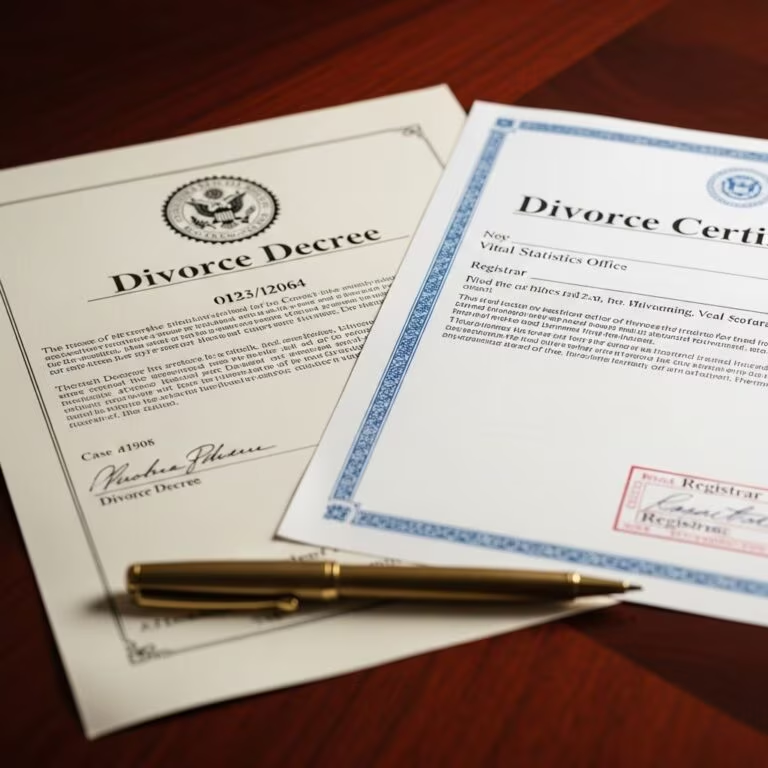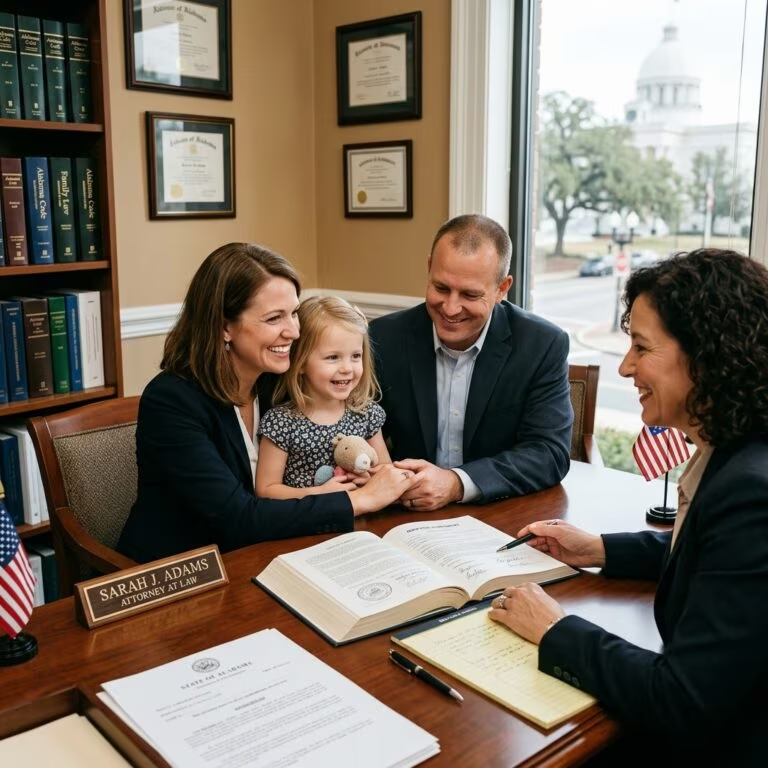
Divorce can complicate adoption, but it does not automatically prevent it. In many cases, the key issue is whether the other parent’s rights are still intact and whether that parent must give formal consent before the adoption can move forward. The answer depends on the child’s legal status, the type of adoption, and the law of the state where the case is filed.
This article explains how consent works when a parent is divorced, separated, absent, or opposed to an adoption. It also covers the role of the court, what happens when consent cannot be obtained, and why the child’s best interests remain central throughout the process.
Why divorce matters in an adoption case
When parents divorce, their marriage ends, but that alone does not end parental rights. A divorced parent may still be the child’s legal parent and may retain custody, visitation, decision-making authority, and the right to be notified about major legal changes affecting the child.
That means a stepparent adoption, relative adoption, or another form of adoption may require the consent of the divorced parent if that parent’s rights have not been terminated. Divorce changes the family structure, but it does not erase parenthood.
- A divorced parent may still have full legal rights.
- Consent may still be required even if the parent no longer lives with the child.
- The court will usually focus on the child’s welfare, not only the parents’ relationship history.
When a parent’s consent is usually required
In most adoption proceedings, the law requires the consent of any living parent whose rights have not been legally ended. This is especially important in stepparent adoptions, where one spouse wants to adopt the other spouse’s child from a prior relationship.
If the divorced parent is still a legal parent, that person generally must agree to the adoption unless a court finds a legal reason to proceed without consent. Courts do not treat divorce as an automatic waiver of parental rights.
| Situation | Is consent typically needed? |
|---|---|
| Divorced parent still has parental rights | Yes |
| Parental rights were terminated earlier | No, in most cases |
| Parent is deceased | No |
| Parent cannot be found after proper search | Sometimes not, depending on state law and court findings |
| Parent signs a valid consent | No further consent issue remains |
What happens if the divorced parent refuses
A refusal to consent does not always end the matter, but it makes the case more difficult. The adopting party may need to show that the parent’s rights should be terminated or that the law allows the adoption to proceed without consent.
Courts usually do not approve adoptions over a living parent’s objection unless there is a strong legal basis. Possible grounds may include abandonment, long-term failure to support the child, lack of contact, abuse, neglect, or another basis under state law.
- The parent has abandoned the child.
- The parent has not maintained meaningful contact.
- The parent has failed to support the child for a legally significant period.
- The parent’s rights were already terminated in a separate proceeding.
Even when one parent objects, the court may still review whether the adoption serves the child’s long-term stability and emotional security. The objection matters, but it is not always decisive.
Special issues in stepparent adoption
Stepparent adoption is the setting where divorced-parent consent most often becomes important. A stepparent usually wants to become the child’s legal parent while the biological or legal parent remains married to that stepparent. If the other biological parent still has rights, the stepparent normally cannot complete the adoption without consent or termination of those rights.
This is true even if the noncustodial parent has little day-to-day involvement. Lack of daily parenting does not automatically eliminate consent requirements. The legal question is whether the parent still has enforceable rights, not whether the parent lives in the home.
- Marriage to the child’s parent does not by itself create adoption rights.
- The other parent’s legal status must be addressed first.
- Courts often require clear evidence before ending parental rights.
How courts handle absent or hard-to-locate parents
Some adoptions involve a parent who cannot be found, has disappeared, or has had no meaningful contact for years. In those cases, the petitioner may need to show diligent efforts to locate the parent before the court will consider moving forward without direct consent.
Depending on the state, this can involve searches of public records, contact with relatives, publication notice, or other steps designed to protect the missing parent’s due-process rights. Courts are careful here because adoption permanently changes the parent-child relationship.
If the court is satisfied that the missing parent had proper notice or cannot be found despite reasonable efforts, it may allow the adoption to proceed. But the required showing is often strict, especially where parental rights have not yet been terminated.
The child’s role in the adoption process
Children may also need to consent, depending on their age and state law. Older children are more likely to be asked directly whether they agree to the adoption, while younger children may simply need to not object. This rule reflects the idea that children old enough to understand the process should have a voice in a life-changing legal decision.
Courts often pay close attention to the child’s emotional ties, daily routines, and sense of safety. A child who has formed a parent-like bond with a stepparent may be more likely to support the adoption. By contrast, a child with a close bond to the noncustodial parent may resist it, and that reaction can matter in court.
Why termination of parental rights is often the turning point
In many contested cases, adoption cannot happen until parental rights are terminated. Termination is a separate legal step that ends the parent’s authority and responsibilities. Once that occurs, the adoption may proceed without the former parent’s consent.
Termination is serious because it permanently ends the legal relationship between parent and child. Courts usually require strong proof before approving it. The process may involve hearings, evidence about the parent’s conduct, and findings that termination is legally justified.
| Legal step | Effect on adoption |
|---|---|
| Parent signs consent | Adoption can usually continue |
| Parental rights terminated | Consent is no longer required |
| Parent remains legally active and objects | Adoption is much harder to complete |
| Parent is missing and cannot be found after proper search | Court may allow alternate procedures |
How divorce before final adoption can affect the case
Sometimes the parents separate or divorce before the adoption is finalized. In that situation, the process can change quickly. The court may need to reassess whether all required consents are still valid and whether the proposed adoption still serves the child’s best interests.
If the relationship that supported the adoption has broken down, the court may pause the case, require new filings, or even deny the petition if the legal foundation is no longer sound. In some situations, the divorce may not stop the case, but it can change which parent must consent and how the court evaluates the request.
The practical effect is that timing matters. A family may begin an adoption while the adults are still together, only to find that a later divorce creates new consent issues before the final order is entered.
Best interests of the child remain central
Even though adoption is a legal process, courts do not treat it as a paperwork exercise. The judge will consider whether the adoption will benefit the child emotionally, legally, and practically. A stable home, consistent caregiving, and a strong bond with the adopting adult often support approval.
At the same time, the court will weigh the child’s relationship with the other parent. If the noncustodial parent is still involved and has not lost parental rights, the court may be reluctant to allow an adoption that would cut off that relationship without a proper legal basis.
- Stability in the home matters.
- Existing parent-child bonds matter.
- Evidence of neglect, abandonment, or absence may matter.
- The child’s safety and long-term welfare remain the court’s priority.
Practical steps for families facing this issue
Families dealing with adoption after divorce should begin by identifying who still has legal parental rights. That question often determines the rest of the process. If consent is needed, it may be wise to address the issue early rather than waiting until a final hearing.
It is also helpful to gather records that show the child’s living arrangements, support history, communication patterns, and any prior court orders. Those materials may help clarify whether a parent’s rights remain active or whether termination may be appropriate.
- Review custody and divorce orders.
- Confirm whether any parental rights were terminated earlier.
- Document attempts to contact a missing parent.
- Consider whether the child is old enough to consent.
- Seek legal advice before filing adoption papers.
Frequently asked questions
Does divorce automatically end adoption rights?
No. Divorce ends the marriage, not the parent-child relationship. A divorced parent may still need to consent to an adoption unless their rights were terminated or another legal exception applies.
Can a stepparent adopt without the other parent’s approval?
Sometimes, but only if the law allows it. This usually requires proving that the other parent’s rights should be terminated or that the parent cannot be found after proper notice and search efforts.
What if the other parent has not seen the child in years?
Lack of contact may help support a case for termination or adoption without consent, but it does not automatically eliminate the need for consent. The court will look at the full legal record and the state’s adoption rules.
Does the child have to agree?
In many states, older children must consent, while younger children must at least not object. The exact age requirement depends on local law.
Can the adoption be denied even if one parent wants it?
Yes. If the other parent’s rights are still active and the court does not find a legal basis to proceed, the petition may be denied.
References
- Adoption | The Maryland People’s Law Library — Maryland Legal Aid / Maryland Courts. 2025-01-01. https://www.peoples-law.org/adoption
- 2025 Florida Statutes, Chapter 63 — The Florida Senate / Online Sunshine. 2025-01-01. https://www.leg.state.fl.us/statutes/index.cfm?App_mode=Display_Statute&URL=0000-0099/0063/0063.html
- When Adoptive Step Parents Divorce Biological Parents — ATC Law. 2024-01-01. https://www.atclaw.com/blog/what-happens-when-adoptive-step-parents-divorce-biological-parents
- When Divorce Is Involved Into your Adoption Process — Clagett Law. 2024-01-01. https://clagett-law.com/blog/when-divorce-is-involved-into-your-adoption-process/