
Adopting Your Stepchild: Legal Steps and Family Impact
A practical, plain‑language guide to the legal process, rights, and emotional realities of stepparent adoption in the United States.
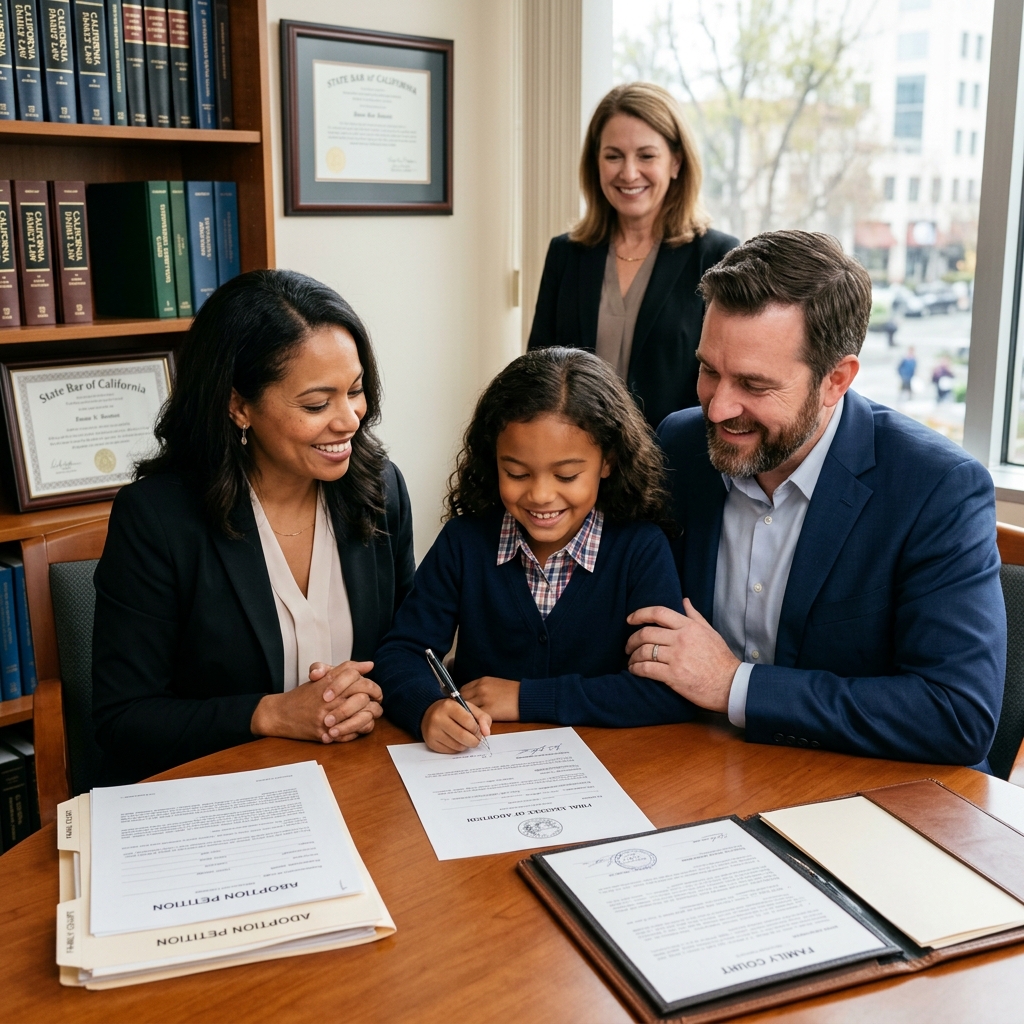
For many blended families, stepparent adoption is a powerful way to formalize the bond that already exists between a child and the stepparent who is raising them. It transforms an emotional commitment into a full legal relationship, with lasting consequences for custody, decision‑making, finances, and inheritance.
This guide explains, in clear language, how stepparent adoption works in the United States, what it changes, and how to decide whether it is the right step for your family. While every state has its own procedures, the core concepts described here are widely shared across U.S. law.
What Stepparent Adoption Really Means
A stepparent adoption is a court process that makes a stepparent the child’s legal parent, with exactly the same rights and responsibilities as a biological or previously adoptive parent. Once completed, the child will usually have a new birth certificate listing the adoptive parent, and the law will treat the stepparent as a parent for all purposes.
Key Legal Effects
- Full parental rights: The stepparent gains the right to make major decisions about education, health care, and religious upbringing, alongside or in place of the other legal parent.
- Termination of another parent’s rights: In most cases, the non‑custodial biological parent’s rights must be legally ended before the court can approve the adoption.
- Child’s new legal status: The child becomes a legal heir of the stepparent, with inheritance rights and eligibility for benefits such as Social Security survivor or dependent benefits where applicable.
- Permanent change: Adoption orders are generally permanent; once a parent’s rights are terminated and the adoption finalized, those rights cannot simply be restored later.
Because these changes are far‑reaching, courts emphasize the best interests of the child when deciding whether to approve a stepparent adoption.
Who Can Adopt a Stepchild?
Eligibility rules vary by state, but common requirements include minimum age, residency standards, and the nature of the relationship between the stepparent and the child.
| Requirement Type | Common Rule | Illustrative Examples |
|---|---|---|
| Minimum age of stepparent | Must be an adult (often 18–21), or obtain special permission from the court. | Colorado requires stepparents to be at least 21, unless the court approves a younger petitioner. |
| Marriage to the child’s parent | Many states require the stepparent to be legally married to the child’s custodial parent. | Alabama law requires petitioners in a stepparent adoption to be “husband and wife,” not just cohabiting partners. |
| Child’s age | Most stepparent adoptions involve minors, though some states allow adoption of older teens or young adults with court approval. | In Colorado, special permission is needed if the child is between 18 and 21. |
| Residency | The child usually must have lived in the state — or be under that state’s jurisdiction — for a set period before filing. | Colorado requires the child to have lived in the state, or be under a Colorado court’s jurisdiction, for at least six months. |
Before beginning the process, it is wise to confirm your state’s specific requirements through official court self‑help materials or a family law attorney.
The Central Issue: Termination of the Other Parent’s Rights
The legal cornerstone of stepparent adoption is the termination of the non‑custodial parent’s parental rights. Courts rarely grant a stepparent adoption unless the other parent either voluntarily gives up their rights or those rights are terminated involuntarily through a separate court proceeding.
Voluntary Relinquishment and Consent
In many families, the adoption proceeds more smoothly when the other biological parent agrees that adoption is best for the child. This can involve:
- The parent signing a written consent to the adoption and appearing in court, as required by state law.
- Signing forms acknowledging they are not the child’s biological parent or waiving involvement, in states that allow this option.
- Recognizing that consent typically includes a permanent relinquishment of parental rights, including future custody and child support obligations.
Involuntary Termination
If the other parent will not consent, the adopting stepparent and custodial parent may seek an involuntary termination of parental rights. Courts use strict standards for such cases, often considering whether the parent has:
- Abandoned the child or had no significant contact for a lengthy period.
- Failed to support the child financially despite a court order.
- Engaged in abuse, neglect, or conduct that endangers the child’s safety.
Evidence standards are high; the judge must find that termination is justified and that adoption serves the child’s best interests. Some states allow a judicial termination when a parent cannot be located despite reasonable efforts or is deceased.
Typical Steps in a Stepparent Adoption Case
Although the details differ by jurisdiction, most stepparent adoption cases follow a similar sequence of events. Understanding the timeline can help your family prepare and avoid surprises.
1. Preparing Information and Documents
Courts require detailed information about the child, the biological parents, and the stepparent. You may be asked to provide:
- Full legal names, dates of birth, and addresses of all parties.
- Certified copies of the child’s birth certificate and your marriage certificate.
- Copies of prior court orders involving the child, such as custody or support orders.
- Records showing compliance or non‑compliance with child support obligations.
Gathering these documents early reduces delays once you file.
2. Filing the Adoption Petition
The adoption process formally begins when you file a petition for adoption with the appropriate court. Depending on the state, this may be:
- A district or family court in the county where the child lives.
- A probate court, in states where probate judges have original jurisdiction over adoptions.
The petition typically includes basic biographical information, a description of the family’s living arrangements, and statements about consent or termination of parental rights.
3. Notice and Service
After filing, the court will require that the other biological parent — and often a state child welfare agency — receive official notice of the adoption case. This ensures that:
- The parent has an opportunity to respond or object.
- State agencies can confirm there are no conflicting child protection concerns.
Service of process must follow your state’s civil procedure rules, which may allow personal service, certified mail, or other approved methods.
4. Home Studies and Background Checks
Many stepparent adoptions require some level of review of the home environment or the stepparent’s background, though requirements can be more limited than in non‑relative adoptions.
- Some states waive formal home studies or certification for stepparents, especially when the child has lived with the stepparent for a long time.
- Other states require a home visit or a brief assessment by a social worker to confirm that the home is safe and stable.
- Fingerprint‑based background checks and child abuse registry checks may be required to ensure the stepparent has no disqualifying history.
These reviews are designed to protect the child, not to judge parenting styles. Honest cooperation usually makes the process straightforward.
5. The Adoption Hearing
The adoption hearing is typically the final step, where the judge reviews documents, hears testimony if necessary, and decides whether to grant the adoption. Common features include:
- The child’s presence at the hearing, unless waived by the court.
- Questions for the stepparent and custodial parent about their relationship, daily involvement, and reasons for seeking adoption.
- The judge’s formal finding that all legal requirements have been met and that adoption is in the child’s best interest.
If the judge approves the adoption, a final decree is entered. This order is subject to appeal under normal court rules, but once the appeal period passes, the adoption is typically permanent.
How Adoption Changes Daily Life and Future Planning
Beyond the legal paperwork, stepparent adoption reshapes how your family navigates everyday decisions and long‑term planning.
Custody, Decision‑Making, and School Matters
As a legal parent, the stepparent can:
- Sign school forms and participate fully in parent‑teacher conferences.
- Consent to routine and emergency medical care, avoiding confusion in hospitals or clinics.
- Share legal custody with the other parent if the court’s orders grant joint authority.
This clarity often reduces stress in situations where institutions require proof of parental status.
Financial and Inheritance Implications
Stepparent adoption also has financial consequences:
- The adoptive parent assumes a legal duty to support the child.
- The child becomes a legal heir of the adoptive parent, which should be reflected in estate planning documents.
- In some cases, adoption can affect eligibility for benefits such as Social Security dependents’ benefits or health insurance coverage.
Families should review wills, beneficiary designations, and insurance policies after completion of the adoption to ensure they match their new legal reality.
Emotional Considerations for Children and Families
While stepparent adoption is a legal act, it carries deep emotional meaning. For many children, it affirms that their stepparent is “really” their parent in every sense. For others, the process may raise complicated feelings about their other biological parent.
Talking with Your Child
Open, age‑appropriate conversations are essential. Consider:
- Explaining what adoption means in concrete terms: a new birth certificate, a new legal parent, and no change in the love they already receive.
- Giving space for questions, especially about how the other parent fits into their life going forward.
- Being honest about the permanence of adoption without pressuring the child to feel a specific way about it.
Managing Relationships with the Other Parent
When a non‑custodial parent’s rights are terminated, the legal relationship ends, but emotional ties may remain. Families sometimes need:
- Clear boundaries around contact, especially if past behavior was harmful.
- Support from counselors or therapists to help the child process mixed feelings.
- Time to adjust to a new pattern of family interactions.
Courts focus on safety and stability, but each family must find its own compassionate approach to ongoing relationships.
Practical Tips Before You Begin
Because stepparent adoption is both legally significant and emotionally charged, careful preparation can make the experience smoother.
- Consult reliable legal information: Review official court self‑help guides or state law libraries for your state’s procedures and forms.
- Consider legal representation: While some families successfully complete stepparent adoptions without a lawyer, consulting a family law attorney can be invaluable in contested cases or when termination of parental rights is complex.
- Organize your documents early: Birth certificates, marriage licenses, prior court orders, and identification documents are typically required.
- Plan for timelines: Many cases take several months, and some states require the child to live with the petitioner for a minimum period before adoption can be granted.
- Support your child emotionally: Consider involving a counselor or child therapist if the child shows anxiety or confusion about the process.
Frequently Asked Questions About Stepparent Adoption
Do I need the other parent’s permission to adopt my stepchild?
In most cases, yes. If the other parent is alive and has legal parental rights, courts generally require either their written consent or a separate court order terminating those rights before granting a stepparent adoption.
Is a home study always required?
No. Some states exempt stepparents from certain adoption requirements, such as full home studies or certification, particularly when the child is already living with the stepparent. However, basic home visits or background checks are common, and you should confirm requirements in your state.
How long does the stepparent adoption process usually take?
Timelines vary with court schedules, state requirements, and whether termination of parental rights is contested. Many stepparent adoptions are completed within six months to a year, though complex cases can take longer.
Will my stepchild need to attend the court hearing?
Often, yes. Many courts require the child to be present at the adoption hearing, unless the judge specifically waives that requirement. For younger children, hearings are typically brief and can be framed as a positive milestone.
Can an adopted stepchild inherit from their former parent after rights are terminated?
Inheritance rules can be complex and may depend on state law and whether a will is in place. Generally, once parental rights are terminated and the child is adopted, the child’s legal relationship — including default inheritance rights — with the former parent may be severed. Families should consult an attorney for specific estate planning advice.
References
- Stepparent Adoption Laws & Procedures — Justia. 2023-01-10. https://www.justia.com/family/adoptions/who-may-adopt/adoption-by-family-members/stepparent-adoption/
- Stepparent Adoption in Texas: Answers to Common Questions — Texas Legal Services Center / TexasLawHelp.org. 2022-08-15. https://texaslawhelp.org/article/stepparent-adoption-in-texas-answers-to-common-questions
- Stepparent Adoption in California | Self-Help Guide — Judicial Council of California. 2023-05-20. https://selfhelp.courts.ca.gov/stepparent-adoption
- Stepparent Adoption — Colorado Judicial Branch Self-Help Center. 2023-03-01. https://www.coloradojudicial.gov/self-help/stepparent-adoption
- I Want to Adopt My Stepchild — Michigan Legal Help. 2022-07-12. https://michiganlegalhelp.org/resources/family/i-want-adopt-my-stepchild
- FROM THE ALABAMA LAWYER: Stepparent Adoptions — Alabama State Bar. 2019-10-01. https://www.alabar.org/news/from-the-alabama-lawyer-stepparent-adoptions/
- How Can I Adopt My Stepchild? — Texas State Law Library FAQ. 2021-11-30. https://www.sll.texas.gov/faqs/stepparent-adoption/
Similar Articles








Read full bio of medha deb


