
Unseen Plight of Adolescent Migrants in U.S. Detention
Examining the legal, physical, and psychological realities of immigrant teenagers held indefinitely in county jails.
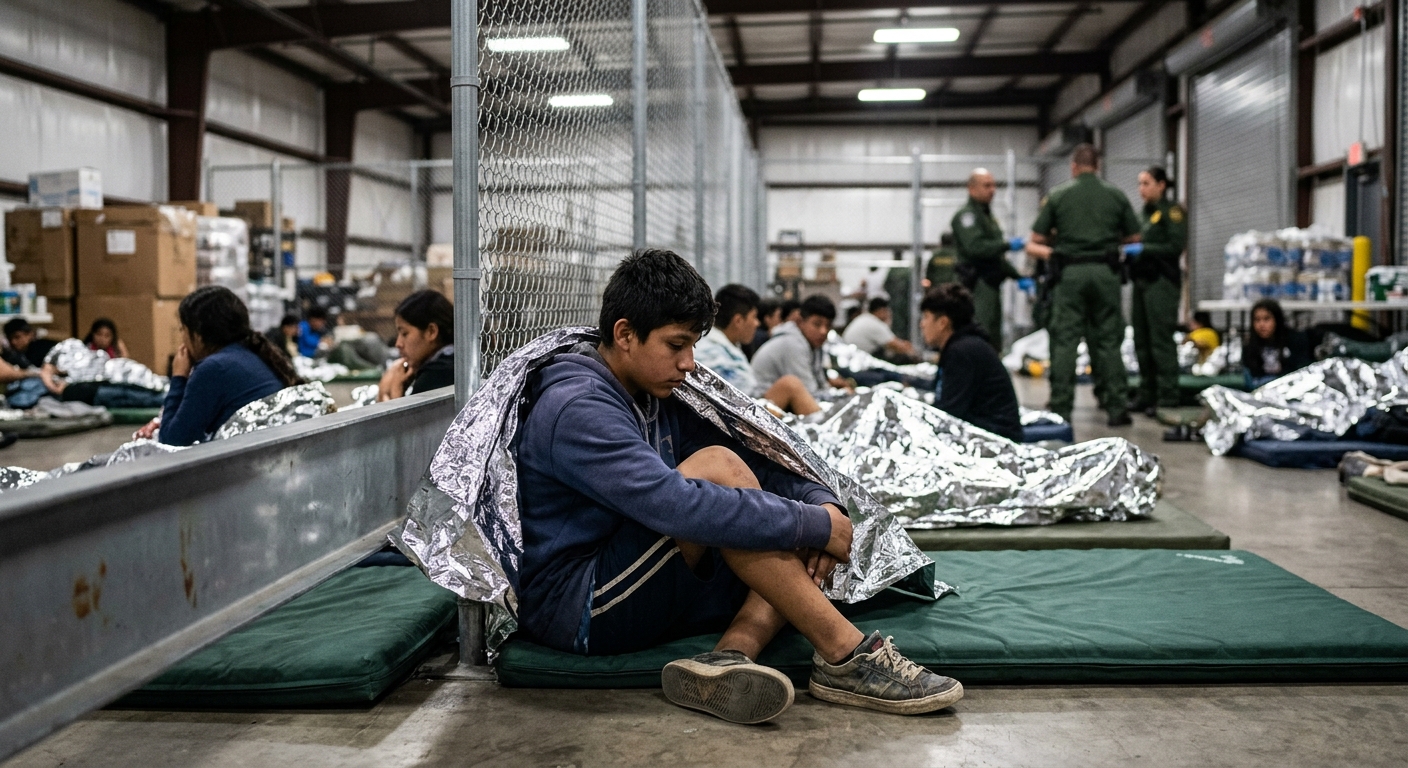
Shadows of Confinement: The Hidden Reality of Migrant Youth in Custody
Every year, thousands of undocumented adolescents navigate the complex, highly bureaucratic United States immigration system. While the overarching public narrative frequently focuses on younger children sheltered under the Department of Health and Human Services (HHS), a specific, far less visible demographic is regularly subjected to a much harsher reality. These are the teenagers, typically between the ages of fifteen and seventeen, who find themselves detained directly by immigration enforcement authorities. Far removed from the child welfare-oriented protocols of the Office of Refugee Resettlement (ORR), these adolescents are frequently housed in local, contracted county jails that are located thousands of miles away from their families.
The systemic practice of holding youth in facilities primarily designed for punitive, criminal incarceration rather than civil administrative processing raises profound questions regarding due process, human rights, and the ethical treatment of vulnerable populations. Without public visibility, these young migrants become trapped in an unforgiving pipeline that treats civil immigration infractions with the severity of criminal confinement. Understanding the mechanisms that allow this to happen requires a deep dive into the legal frameworks, the physical conditions of these facilities, and the resulting psychological toll on the detainees.
Navigating the Legal Labyrinth: Civil vs. Criminal Confinement
The foundational legal framework governing the treatment of migrant children in federal custody is the Flores Settlement Agreement of 1997. This legally binding decree establishes critical national standards, mandating that minors be held in the least restrictive setting appropriate for their age and specific needs, typically in state-licensed child care facilities. Furthermore, the agreement requires the government to release children to approved sponsors—such as parents, close relatives, or designated guardians—without unnecessary delay.
Despite these clear directives, a precarious legal loophole exists that enforcement agencies frequently utilize. Authorities often justify the transfer and continued detention of certain teenagers in secure juvenile correctional facilities by unilaterally classifying them as “public safety threats” or extreme “flight risks.” This administrative classification effectively strips these youths of the fundamental protections afforded by standard ORR shelters, placing them squarely in the jurisdiction of restrictive detention environments.
What makes this practice especially contentious among legal scholars and advocates is that the vast majority of these adolescents are not serving criminal sentences. Their detention is strictly for civil immigration violations while they await deportation hearings or asylum case adjudications. Civil rights advocates point out that the evidence used by immigration enforcement to label these minors as dangerous is often opaque, relying on unsubstantiated gang affiliations, anonymous tips, or very minor juvenile infractions rather than actual, proven criminal convictions in a court of law. This blurring of the lines between civil administrative holds and criminal punitive detention creates a legal gray area where constitutional protections are severely diminished.
Contrasting Custody Standards
To understand the severity of this shift in custody, it is crucial to examine the differences between the intended child-welfare facilities and the contracted county jails where these teenagers end up.
| Facility Characteristic | HHS/ORR Shelter Guidelines | Contracted Juvenile Jails |
|---|---|---|
| Primary Purpose | Child welfare, safety, and eventual family reunification. | Punitive containment and secure physical confinement. |
| Educational Access | Bilingual education tailored to the child’s developmental level. | Limited to local standards, predominantly in English. |
| Mental Health Services | Trauma-informed care, regular counseling, and psychological support. | Basic, infrequent evaluations often lacking bilingual specialists. |
| Physical Environment | Group homes, open spaces, and designated outdoor recreation. | Locked concrete cells, rigid schedules, and severe sensory deprivation. |
Inside the Facilities: A Stark Reality for Minors
For the adolescents transferred into these contracted county facilities, the day-to-day environment is shockingly austere and relentlessly bleak. Local juvenile detention centers are fundamentally designed by state municipalities for short-term stays—typically housing local youths for just a few days or weeks as they move through the state’s juvenile justice system. Conversely, migrant teenagers held under federal immigration holds often languish in these exact same cells for several months, and in some documented cases, longer than a year, locked in a continuous state of indefinite limbo.
The daily conditions these youths endure are characterized by severe sensory and social deprivation. Because the facilities were never architecturally intended for long-term residency, detained adolescents face numerous institutional hardships that erode their well-being. Some of the most severe privations include:
- Lack of Outdoor Recreation: Many local contracted jails lack dedicated, open-air recreation yards. As a result, migrant teens can go months without feeling direct sunlight or breathing fresh air, only stepping outside the facility when they are being transported in shackles to their immigration court appearances.
- Extreme Geographic Isolation: Immigration agencies frequently transfer these youths to facilities located in states entirely across the country from where their families reside. The exorbitant financial costs of cross-country travel mean that in-person visits from parents, siblings, or legal representation are exceedingly rare, leaving the youths entirely isolated.
- Language and Educational Barriers: The educational materials and library resources available in local county jails are predominantly in English. Spanish-speaking migrant teens, or those who communicate primarily in Indigenous languages, are often denied meaningful educational engagement or recreational reading material.
- Systemic Friction and Alienation: Placing federal immigration detainees in the exact same housing pods as local juveniles serving actual criminal sentences can quickly breed conflict. This dynamic leaves the migrant teenagers alienated, deeply misunderstood by facility staff, and highly vulnerable to systemic bullying.
The Psychological Toll of Indefinite Detention
The developmental and psychological ramifications of confining growing teenagers in restrictive, jail-like environments are profound and well-documented by medical professionals. Adolescence is universally recognized as a critical period for emotional regulation, identity formation, and cognitive development. Subjecting youths to prolonged isolation, physical confinement, and the chronic, agonizing stress of an impending deportation severely disrupts this natural developmental process. According to public health researchers and pediatricians, immigrant children and teenagers held in immigration detention exhibit disproportionately high rates of severe psychological distress.
A recent comprehensive study analyzing the medical records of detained migrant youths revealed severe, systemic inadequacies in the mental health infrastructure of these contracted facilities. Researchers noted that standard pediatric screening tools for trauma and depression are rarely utilized effectively, if they are used at all. Instead of receiving comprehensive, trauma-informed psychiatric care, detained teenagers often only have access to brief, superficial evaluations conducted by general case coordinators who lack specialized training in adolescent trauma.
Many of these young migrants carry deep-seated, complex trauma from pre-migration violence in their home countries, the highly dangerous journey to the United States border, or the sheer terror of being forcibly separated from their families upon arrival. When this underlying trauma is met with the punitive, cold architecture of a county jail—complete with steel doors, concrete beds, rigid rules, and a total lack of therapeutic support—the psychological results are devastating. Symptoms of post-traumatic stress disorder (PTSD), severe generalized anxiety, and clinical depression become pervasive. Tragically, this environment leads some youths to experience active suicidal ideation or forces them to voluntarily abandon their valid legal asylum claims simply to escape the agonizing daily reality of confinement.
The Fight for Transparency and Institutional Accountability
One of the most daunting hurdles facing legal advocates, social workers, and civil rights organizations is the pervasive lack of transparency surrounding juvenile immigration detention practices. When an adolescent is abruptly routed to a distant county jail rather than a standard welfare shelter, the specific, granular justifications for this punitive transfer are rarely made available to the public or even to the minor’s family. Obtaining detailed case files or evidence of the alleged “safety threat” can require months of aggressive, costly litigation. Pro bono attorneys and immigrant rights groups consistently argue that the enforcement agencies operate with a level of bureaucratic secrecy that intentionally insulates them from public accountability and necessary judicial oversight.
Furthermore, independent governmental oversight bodies have repeatedly identified massive systemic failures within the tracking and monitoring of migrant children. Official reports from internal federal watchdogs have highlighted glaring gaps in the government’s ability to maintain accurate records regarding the whereabouts, health, and legal status of unaccompanied minors once they intersect with federal law enforcement systems. This deeply concerning administrative opacity not only hampers the immediate legal defense of these teenagers but also creates a highly dangerous, unregulated environment. In such shadows, abuses can easily go unchecked, facility standards can plummet without consequence, and vulnerable minors can essentially disappear into the sprawling bureaucratic void of the national detention apparatus.
Paths Forward: Advocacy and Policy Reform
The ongoing, largely hidden detention of migrant teenagers in adult or mixed-use county jails has sparked a fierce, coordinated call to action among human rights defenders, medical professionals, and progressive lawmakers. Advocacy groups heavily emphasize that mass incarceration is fundamentally not a necessity for effective immigration enforcement. Instead, they champion the expansion of community-based alternatives to detention (ATD). These holistic models pair rigorous case management with direct access to legal counsel, essential social services, and community support networks. Data consistently shows that these community models are highly effective in ensuring compliance with immigration court appearances, cost significantly less taxpayer money, and are drastically more humane.
Simultaneously, major legislative pushes are underway in various jurisdictions to codify significantly stricter time limits on the detention of minors and to completely prohibit the placement of any youths in facilities that are not primarily geared toward comprehensive child welfare. Until these broad systemic reforms are successfully enacted into law, a dedicated coalition of pro bono lawyers, community organizers, and mental health professionals continues to fight an arduous, facility-by-facility battle. They work tirelessly to pull these forgotten adolescents out from behind concrete walls, restore their basic human dignity, and safely return them to their families.
Frequently Asked Questions (FAQ)
Q: What is the Flores Settlement Agreement?
A: The Flores Settlement Agreement is a landmark 1997 federal court settlement that establishes minimum, nationwide standards for the treatment, placement, and release of detained immigrant minors. It explicitly mandates that children be held in the least restrictive setting possible and released to appropriate family sponsors promptly.
Q: Why are some migrant teenagers held in county jails instead of child welfare shelters?
A: While the vast majority of unaccompanied minors are placed in the protective custody of child welfare agencies, immigration enforcement authorities possess the administrative power to divert adolescents to secure juvenile detention centers or county jails if they unilaterally classify the youth as a flight risk or a direct threat to public safety.
Q: Are these detained adolescents serving criminal sentences?
A: The overwhelming majority are not. Their confinement is based purely on civil immigration violations while they legally contest their deportation or seek asylum. However, they are frequently housed in the exact same local facilities as native youths who are actively serving criminal sentences.
Q: How does indefinite detention impact the mental health of minors?
A: Prolonged detention in restrictive, punitive environments invariably leads to severe psychological distress. Extensive medical research indicates drastically high levels of anxiety, depression, and PTSD among detained youth, which is actively exacerbated by a total lack of appropriate psychiatric care and extreme geographic isolation from their families.
References
- Flores Settlement Agreement — The Administration for Children and Families (ACF.hhs.gov). 2014-11-13. https://www.acf.hhs.gov/orr/resource/flores-settlement-agreement
- ICE Cannot Effectively Monitor the Location and Status of All Unaccompanied Alien Children After Federal Custody — Department of Homeland Security Office of Inspector General. 2025-03-25. https://www.oig.dhs.gov/sites/default/files/assets/2025-03/OIG-25-21-Mar25.pdf
- Children’s mental health care lacking in migrant detention centers, study finds — Harvard T.H. Chan School of Public Health. 2025-03-10. https://www.hsph.harvard.edu/news/features/childrens-mental-health-care-lacking-in-migrant-detention-centers/
- U.S. Detention of Child Migrants — Council on Foreign Relations. 2023-03-27. https://www.cfr.org/backgrounder/us-detention-child-migrants
Similar Articles








Read full bio of medha deb




