
Addressing Workplace Discrimination and Harassment in New York
A practical guide for New York workers to recognize, document, and challenge unlawful discrimination and harassment on the job.
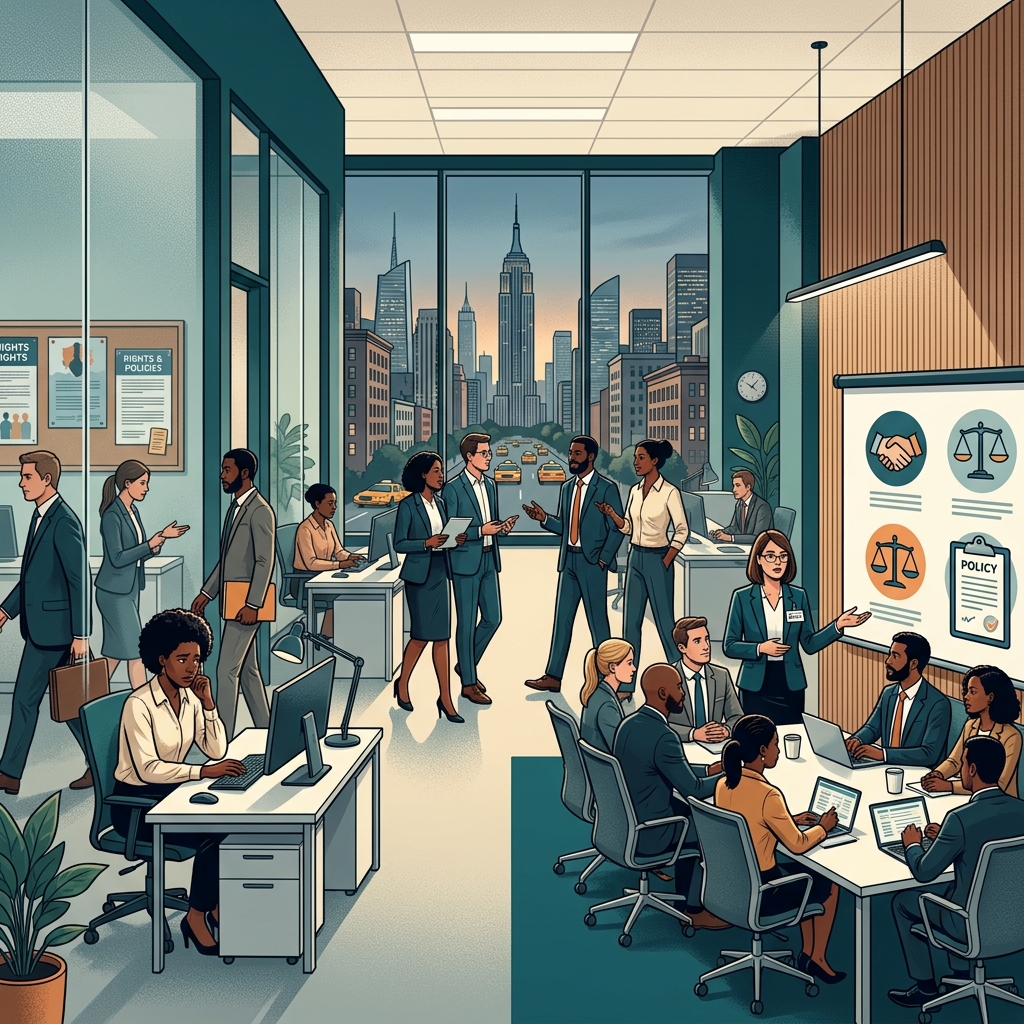
Workers in New York have strong legal protections against discrimination and harassment in the workplace. These protections exist under federal law, New York State law, and New York City law and apply to many aspects of employment, from hiring and pay to discipline and termination. Understanding your rights and the steps you can take if those rights are violated is critical to protecting your career, income, and well-being.
Understanding Workplace Discrimination and Harassment
Workplace discrimination happens when an employer treats a worker or job applicant differently because of a legally protected characteristic. Harassment is a type of discrimination that involves unwelcome conduct based on those protected characteristics that creates a hostile or offensive work environment.
Protected Classes in New York
New York law lists many protected classes—personal traits and statuses that cannot be used as a basis for unequal treatment at work.
- Race and color
- National origin and citizenship or immigration status
- Religion or creed
- Sex, sexual orientation, gender identity, or gender expression
- Age
- Disability
- Marital and familial status, including pregnancy and parenting
- Military status
- Predisposing genetic characteristics
- Status as a victim of domestic violence
In New York City, additional protected categories include caregiver status, credit history, height and weight, salary history, sexual and reproductive health decisions, and status as a victim of stalking or sex offenses.
Examples of Discriminatory Conduct
Discrimination can be obvious or subtle. It is not limited to firing or refusal to hire; it can affect any term or condition of employment.
- Refusing to hire someone because of their race, age, or pregnancy status
- Paying workers in one protected group less than others who perform similar work
- Denying promotions or training based on sex, disability, or national origin
- Assigning undesirable shifts only to workers of a certain religion
- Applying disciplinary rules more harshly to members of a particular protected class
What Counts as Harassment?
Harassment involves unwelcome behavior that targets someone because of a protected characteristic and that is severe or pervasive enough to create a hostile work environment or interfere with work performance.
- Slurs, insults, or jokes about race, religion, gender, or other protected traits
- Repeated sexually suggestive comments, unwanted touching, or pressure for dates
- Display of offensive images or symbols in common areas
- Threats, intimidation, or bullying based on disability, age, or immigration status
New York State law makes clear that even conduct that might be dismissed as “petty slights” or “trivial inconveniences” can be unlawful if a reasonable victim would see it as discriminatory, reducing the burden on workers to show extreme or egregious behavior.
Your Legal Protections: Federal, State, and City Layers
Workers in New York benefit from overlapping legal frameworks. These laws differ in coverage, procedures, and remedies, but they share the goal of preventing discrimination and harassment in employment.
Federal Protections
At the federal level, several statutes protect employees from discrimination:
- Title VII of the Civil Rights Act – bans discrimination based on race, color, religion, sex, and national origin for employers with 15 or more employees.
- Age Discrimination in Employment Act (ADEA) – protects workers age 40 and older.
- Americans with Disabilities Act (ADA) – prohibits discrimination based on disability and requires reasonable accommodation.
- Equal Pay Act (EPA) – requires equal pay for equal work regardless of sex.
For most federal claims, workers must file a charge with the U.S. Equal Employment Opportunity Commission (EEOC) before starting a lawsuit in court.
New York State Human Rights Law
The New York State Human Rights Law (NYSHRL) is broader than many federal laws. It applies to employers of any size and covers an extensive list of protected classes.
- Prohibits discrimination and harassment in hiring, pay, promotion, and all other employment decisions
- Covers employees and, in many circumstances, non-employees such as contractors and interns
- Allows victims to recover damages and, in certain cases, attorneys’ fees and punitive damages
Workers can file a complaint with the New York State Division of Human Rights (NYSDHR) or pursue a lawsuit directly in court without first filing with an agency.
New York City Human Rights Law
The New York City Human Rights Law (NYCHRL) provides additional safeguards for workers within the five boroughs.
- Covers employment, housing, and public accommodations
- Lists many protected classes, including several beyond state law
- Applies to a wide range of employment actions, such as hiring, salary, benefits, evaluations, discipline, and firing
Complaints under NYCHRL can be filed with the New York City Commission on Human Rights, which investigates and may hold hearings or seek settlements.
Comparison of Key Protections
| Law | Who It Covers | Protected Traits (Examples) | Initial Complaint Process |
|---|---|---|---|
| Federal (Title VII, ADA, ADEA, EPA) | Most private employers, generally 15+ employees | Race, color, religion, sex, national origin, disability, age, equal pay | File a charge with EEOC before suing |
| NY State Human Rights Law | Employers of any size in New York | Broad list including race, sex, sexual orientation, gender identity, age, disability, domestic violence status | File with NYSDHR or go directly to court |
| NYC Human Rights Law | Employers in New York City | All state traits plus caregiver status, credit history, height/weight, salary history, and more | File with NYC Commission on Human Rights or bring claims in court |
Recognizing When Your Rights May Be Violated
Not every unfair decision at work violates anti-discrimination law, but you should pay attention when negative treatment seems tied to a protected characteristic.
Warning Signs of Discrimination
- Comments from managers suggesting you are “not a good fit” because of race, age, pregnancy, or disability
- Patterns where employees from one group are consistently denied promotions or raises
- Sudden negative performance reviews after you disclose a disability or request accommodation
- Being excluded from meetings or opportunities after filing an internal complaint
Red Flags for Harassment
- Ongoing jokes, memes, or casual remarks that target your protected traits
- Co-workers or supervisors repeatedly using slurs or derogatory nicknames
- Sexually explicit materials in the workplace or repeated sexual comments
- Retaliation for speaking out, such as reassignment to worse duties or isolation
Documenting Incidents: Building a Strong Record
Evidence often determines whether a discrimination or harassment complaint succeeds. New York authorities and courts encourage workers to keep detailed records of incidents.
What Evidence Matters
- Written communications: emails, text messages, chat logs, and memos that contain discriminatory language or show unfair treatment patterns
- Performance documents: evaluations, performance improvement plans, and disciplinary notices that may reveal inconsistent or pretextual criticism
- Company policies: written handbooks, anti-discrimination policies, complaint procedures, and training materials
- Witness accounts: statements from co-workers who saw or experienced similar behavior
- Statistical or pattern evidence: data showing that certain groups rarely get promoted or are disciplined more frequently than others
How to Keep a Useful Record
Legal guidance from New York emphasizes keeping careful notes about discriminatory conduct to help investigators and courts understand what happened.
- Write down each incident as soon as possible, including date, time, location, and people involved
- Describe the words used, actions taken, and your response in a factual tone
- Keep copies of relevant emails or documents in a secure location, consistent with company policy and law
- Note any complaints you make and how the employer responds
Using Internal Procedures: HR and Workplace Policies
Most employers have policies for reporting discrimination and harassment. Following these procedures can help resolve issues and creates a record that may be important later.
Reviewing Employer Policies
- Locate your employee handbook or code of conduct
- Identify how to report discrimination or harassment (for example, to HR or a designated manager)
- Check whether the policy prohibits retaliation for making good-faith complaints
Making an Internal Complaint
When you report your concerns to HR or management:
- Submit your complaint in writing whenever possible
- Clearly explain the behavior, when and where it occurred, and why you believe it is discriminatory or harassing
- Mention any witnesses and reference relevant documents or messages
- Keep copies of your complaint and any responses from the employer
Your actions may show that the employer was notified and had a chance to correct the problem, which can be important in subsequent legal proceedings.
Filing Formal Complaints with Government Agencies
If internal steps do not resolve the issue—or if the behavior is severe—you can file complaints with state, city, or federal agencies. In New York, you can choose between several routes depending on the facts of your case.
New York State Division of Human Rights (NYSDHR)
The NYSDHR enforces the New York State Human Rights Law and investigates discrimination and harassment claims.
- Workers can report discrimination through the Division’s call center or online reporting form
- After receiving a report, the Division evaluates whether it has authority to act and may investigate the complaint
- If the Division finds probable cause, it can hold hearings and order remedies, including damages and policy changes
New York City Commission on Human Rights
For incidents in New York City, you may file with the City’s Commission on Human Rights. The Commission enforces the NYC Human Rights Law and can investigate and mediate complaints.
EEOC and Federal Charges
For federal claims, you usually must file a charge with the EEOC within a specific time frame (often 300 days for New York claims) before suing in federal court.
- The EEOC investigates, may seek resolution through conciliation, or issue a “right-to-sue” notice
- Many New York workers can cross-file with state or federal agencies so that one complaint is shared between NYSDHR and the EEOC
Direct Lawsuits
Under New York State law, you can bring a discrimination or harassment lawsuit directly in court without first filing with an agency, though deadlines apply.
Remedies and Outcomes
If a claim is successful, a range of remedies may be available, depending on the law and forum involved.
- Back pay: recovering lost wages due to unlawful termination or demotion
- Front pay: compensation for future lost earnings in some cases
- Reinstatement: being returned to a job or position
- Compensatory damages: payment for emotional distress and other harms
- Punitive damages: additional sums intended to punish especially egregious conduct in some private employer cases
- Attorneys’ fees: in certain cases, laws allow recovery of legal fees, which can make pursuing a claim more feasible
- Policy changes and training: orders requiring employers to revise policies and provide anti-discrimination training
Practical Tips for New York Workers
While every situation is unique, some general strategies can help workers protect themselves when facing discrimination or harassment.
Immediate Steps to Take
- Trust your observations: if treatment appears linked to a protected trait, start documenting it
- Review your employer’s policies and consider making an internal complaint
- Preserve emails, texts, and other written materials related to the incidents
- Seek advice from an attorney or legal aid organization experienced in employment law
Protecting Yourself Against Retaliation
It is illegal for employers to retaliate against workers for asserting their rights, such as filing complaints or participating in an investigation.
- Report retaliatory acts (like sudden demotion or exclusion) promptly
- Include retaliation evidence in your documentation and any agency filings
- Understand that retaliation itself may be a separate legal violation, even if the original complaint is still being investigated
Frequently Asked Questions
Do small employers in New York have to follow anti-discrimination laws?
Yes. The New York State Human Rights Law applies to employers of any size, which means even small businesses must comply with state-level protections against discrimination and harassment.
Can independent contractors or interns bring claims?
New York law has expanded coverage so that certain nonemployees, such as contractors and interns, are protected against harassment and discrimination in some circumstances, particularly under the state human rights law.
Do I have to file with the EEOC before suing my employer?
For federal claims under laws like Title VII, ADEA, or ADA, workers typically must first file a charge with the EEOC. However, under New York State Human Rights Law, you can choose to file with NYSDHR or bring a lawsuit directly in court.
How long do I have to file a complaint?
Deadlines vary. Federal complaints often must be filed within 300 days, and state or city proceedings have their own time limits. New York law has extended some deadlines for harassment claims—for example, allowing certain sexual harassment complaints to be filed with NYSDHR within three years. Because timelines are complex, it is important to seek legal guidance promptly.
What if my employer does nothing after I complain?
If internal complaints do not lead to meaningful action, you can escalate the matter by contacting NYSDHR, the NYC Commission on Human Rights, the EEOC, or an employment attorney. Their involvement can trigger formal investigations and potential remedies.
References
- Workplace discrimination and harassment — New York State Attorney General. 2023-06-01. https://ag.ny.gov/publications/workplace-discrimination-and-harassment
- New York’s New Employment Discrimination Laws Are Here — Ogletree Deakins. 2019-09-19. https://ogletree.com/insights-resources/blog-posts/new-yorks-new-employment-discrimination-laws-are-here/
- Employment discrimination — New York State Attorney General. 2023-05-15. https://ag.ny.gov/resources/individuals/civil-rights/employment-discrimination
- Division of Human Rights — New York State. 2024-01-10. https://dhr.ny.gov/
- Protected Classes under the Human Rights Law — NYC Commission on Human Rights. 2023-02-20. https://www.nyc.gov/site/cchr/law/the-law.page
- Holding Employers and Employees Accountable — University at Buffalo School of Law CLE materials. 2018-05-24. https://www.law.buffalo.edu/content/dam/law/restricted-assets/pdf/cle/180524/part-two-greco.pdf
- Proving Workplace Discrimination in New York: What Evidence Matters Most? — Levy Ratner, P.C. 2022-04-01. https://levyratner.com/proving-workplace-discrimination-in-new-york-what-evidence-matters-most/
Similar Articles








Read full bio of Sneha Tete




