
Freedom Of Information Act Guide: How To Make Better Requests
Learn how to use the Freedom of Information Act to obtain federal government records, navigate the request process, and protect your right to know.
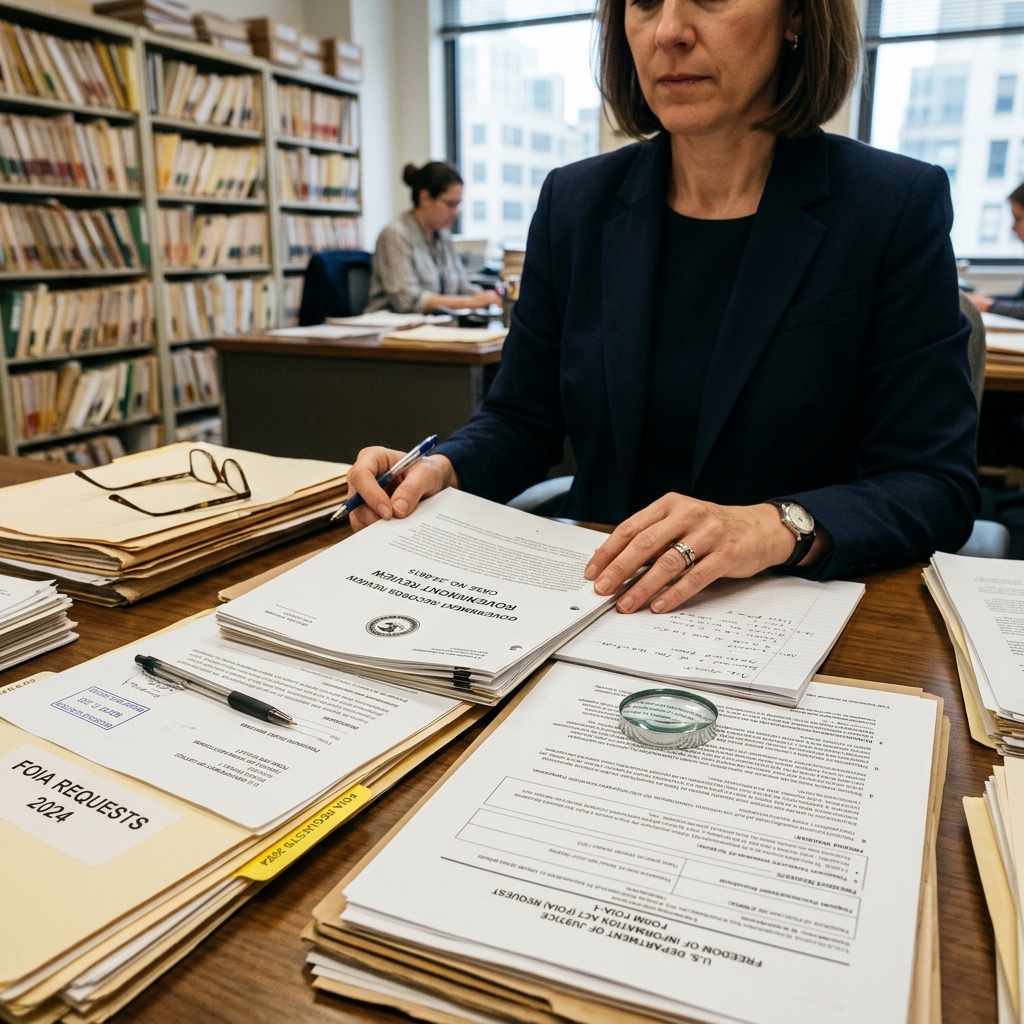
The Freedom of Information Act (FOIA)
1. What FOIA Is and Why It Matters
FOIA, codified at 5 U.S.C. § 552, was enacted in 1966 to give the public a legally enforceable right to obtain federal agency records. It embodies a presumption that government information should be accessible unless a specific exemption applies. By using FOIA wisely, you can uncover data, reports, correspondence, and other documents that illuminate government actions.
At its core, FOIA seeks to balance two interests:
- Transparency: Ensuring the public can see how agencies operate, enabling oversight and informed debate.
- Protection: Safeguarding sensitive information related to national security, law enforcement, personal privacy, and similar concerns through defined exemptions.
1.1 Who Can Use FOIA?
FOIA is intentionally broad. Any person—including U.S. citizens, non‑citizens, organizations, and media outlets—may request records from federal agencies. You do not have to justify why you want the information or how you plan to use it.
1.2 What FOIA Does and Does Not Cover
FOIA applies to federal agencies in the executive branch, such as cabinet departments and independent agencies. It does not apply to Congress, federal courts, the President or Vice President personally, or private companies.
| Covered by FOIA | Not Covered by FOIA |
|---|---|
| Federal executive agencies (e.g., Treasury, GSA, HHS, USCIS) | Congress and legislative branch entities |
| Agency components and offices (Inspector Generals, sub‑units) | Federal courts and judicial records |
| Records created or obtained by an agency and in its possession at the time of request | Private companies, individuals, and organizations that are not federal agencies |
2. Understanding FOIA Records and Exemptions
Before you prepare a request, it helps to know what counts as a FOIA record and why some material may be withheld. FOIA generally covers any documentary material—paper, electronic files, emails, audio, video—created or obtained by an agency and under its control when you submit your request.
2.1 The Nine FOIA Exemptions
Agencies must disclose records unless they fall under one of nine exemptions or three law‑enforcement exclusions. These exemptions protect specific categories of information, including:
- National security: Classified matters related to defense or foreign policy.
- Internal rules: Certain internal personnel rules and practices.
- Information exempted by other statutes: When another federal law bars disclosure.
- Trade secrets and confidential business information: Protecting proprietary commercial data.
- Privileged inter‑ or intra‑agency communications: Such as deliberative process or attorney‑client materials.
- Personal privacy: Personnel and similar files whose release would be an unwarranted invasion of privacy.
- Law‑enforcement records: When disclosure could interfere with investigations, reveal confidential sources, or endanger individuals.
- Financial institution records: Certain records related to financial institutions.
- Geophysical data on wells: Very specific geological and geophysical information concerning wells.
Even when exemptions apply, agencies often must release non‑exempt portions of records by redacting sensitive parts. This approach supports the FOIA presumption of openness.
2.2 Law‑Enforcement Exclusions
FOIA also includes three special exclusions for particularly sensitive law‑enforcement and national security matters. These allow agencies, in limited situations, to treat certain records as if they do not exist in response to a request—such as when acknowledging the records could compromise investigations or reveal confidential informants.
3. Deciding Whether You Need a FOIA Request
Many types of government information are already available online without a FOIA request. To avoid unnecessary delay and effort, you should first determine if the records you seek are publicly accessible.
3.1 Check Existing Public Sources
FOIA guidance emphasizes that you should start by reviewing agency websites, FOIA libraries, and other public databases. Examples include:
- Agency FOIA libraries: Many agencies host reading rooms with frequently requested records, reports, and policy documents.
- Electronic reading rooms: Agencies such as USCIS maintain online collections of posted records.
- FOIA.gov search tools: You can search across multiple agencies to see if your records are already posted.
- Official reports and publications: Inspector General reports, annual FOIA reports, and policy manuals often exist in PDF form online.
If you find what you need through these sources, you can save weeks or months of waiting for a FOIA response.
3.2 When a FOIA Request Is Appropriate
If your target information is not publicly available, a FOIA request becomes the right tool. Common reasons to file include:
- Seeking internal memos, email correspondence, or decision‑making records.
- Obtaining data sets, program statistics, or investigative files.
- Requesting your own immigration or benefits records from agencies such as USCIS.
- Clarifying how an agency interpreted or applied a regulation in a specific case.
4. Preparing an Effective FOIA Request
FOIA does not require special forms for most agencies, but a well‑crafted request can significantly speed up processing. Agencies consistently advise requesters to be precise and to identify the correct agency or component.
4.1 Identify the Correct Agency and Office
Over 100 federal agencies process FOIA requests, each responsible for its own records. You must direct your request to the entity likely to hold the documents. Steps include:
- Use FOIA.gov or agency FOIA pages to identify where relevant records are maintained.
- Check whether a particular office or component (for example, an Office of Inspector General) handles its own FOIA requests separately.
- Review past reports or public documents to see which office appears on the materials you want.
4.2 Describe Records Clearly and Specifically
Agencies are required to respond to requests that reasonably describe the records sought. Vague or overly broad requests frequently cause delays or may be rejected. Agency guidance highlights the importance of specificity:
- Provide date ranges or time periods.
- Identify subjects, programs, or case names.
- Mention relevant offices, locations, or individuals involved.
- Request types of documents (e.g., emails, reports, contracts) rather than “all records” when possible.
Agencies such as HHS’s Office of Inspector General and USCIS explicitly note that precise requests are processed more quickly than broad ones.
4.3 Consider Format and Delivery Preferences
Most agencies can provide records electronically, and many allow you to submit requests online. Submitting electronically can bypass mailing delays and make it easier to receive and download records.
- Use online portals (for example, FOIA.gov or specific agency systems) whenever available.
- Indicate whether you prefer digital copies (PDFs, data files) or paper copies.
- If mailing a request, follow any agency‑specific instructions about forms or identity verification, particularly for records about yourself.
5. Filing a FOIA Request: Methods and Steps
Agencies provide multiple pathways to submit FOIA requests. While exact procedures vary, common methods and steps are consistent across the government.
5.1 Online Submission
Online systems are now the default or preferred method for many agencies because they reduce paper processing and returned mail. For example:
- FOIA.gov: Offers a unified portal to start requests with specific agencies and guides you through the process.
- Agency‑specific portals: The General Services Administration uses a Public Access Link (PAL) to receive requests electronically.
- USCIS online FOIA service: Allows requesters and attorneys to file and receive immigration records digitally.
5.2 Mail, Fax, or Email
Where online systems are not mandatory, agencies may accept requests via traditional channels:
- Mail: Send to the agency’s FOIA Requester Service Center or specified address.
- Fax: Some offices provide fax numbers for FOIA submissions.
- Email: Certain agencies still accept FOIA requests via designated email addresses, though others have discontinued this method.
Always verify current contact details on the agency’s FOIA page before submitting, as procedures may change.
5.3 Example Step‑By‑Step Process
While each agency has its own instructions, a general FOIA request workflow looks like this:
- Research your issue: Confirm that FOIA is the appropriate tool and that the records are not already public.
- Identify the agency/component: Determine which entity has control over the records.
- Draft a specific request: Clearly describe the documents you need and specify your preferred format.
- Submit electronically or by mail: Use FOIA.gov or the agency’s portal when possible; otherwise follow mailing or fax instructions.
- Track your request: Many agencies offer online status checking or contact points for inquiries.
6. Agency Processing, Timelines, and Outcomes
After you submit a FOIA request, the agency will search for responsive records and then review them to determine what can be disclosed. The time required depends on the complexity of your request and the agency’s backlog.
6.1 Search and Review
Agencies must conduct reasonable searches for records and then apply FOIA exemptions where necessary. They often:
- Identify custodians and data systems likely to hold relevant documents.
- Collect and review records for responsiveness.
- Redact sensitive portions under applicable exemptions while releasing the remainder.
6.2 Typical Agency Responses
Once processing is complete, you may receive several types of outcomes:
- Full release: All requested records are provided.
- Partial release: Some material is withheld or redacted under FOIA exemptions.
- No records found: The agency cannot locate records responsive to your request.
- Denial: All responsive records are withheld under one or more exemptions.
Agencies are required to explain the reasons for denials or redactions, typically by citing specific exemptions and often providing information about your right to appeal.
7. Fees, Waivers, and Requester Categories
FOIA permits agencies to charge certain fees for search, review, and duplication. However, fee structures differ depending on the type of requester and the nature of the request.
- Commercial requesters: May be charged search, review, and duplication fees.
- News media and non‑commercial educational requesters: Generally charged only duplication fees after a certain number of free pages.
- Other requesters: Fees may be limited to search and duplication, often with thresholds below which fees are not assessed.
FOIA also allows for fee waivers when disclosure is in the public interest and not primarily for commercial benefit. To request a waiver, explain how the records will significantly inform the public about government operations or activities.
8. What to Do If Your FOIA Request Is Denied or Delayed
FOIA provides both administrative and judicial remedies if you are dissatisfied with an agency’s response. You are not limited to accepting a denial or delay.
8.1 Administrative Appeals
If your request is denied in whole or in part, or you believe the search was inadequate, you may file an administrative appeal with the agency’s designated appeals office. The denial notice should describe:
- The specific FOIA exemptions relied upon.
- Your right to appeal and the time limit for doing so.
8.2 Mediation and FOIA Ombudsman
The Office of Government Information Services (OGIS) serves as the federal FOIA ombudsman, offering mediation services between requesters and agencies. OGIS can help resolve disputes about the scope of requests, delays, or interpretations of FOIA requirements without litigation.
8.3 Judicial Review
When administrative remedies are exhausted, FOIA gives you the right to bring a lawsuit in federal court to challenge an agency’s handling of your request. Courts can order agencies to release records, conduct additional searches, or justify the use of specific exemptions.
9. Practical Tips for Successful FOIA Use
To make FOIA work effectively for you, combine legal rights with practical strategies. The following recommendations derive from common agency guidance and FOIA practice.
- Start narrow, then expand: Begin with a focused request and broaden it later if needed. Agencies process precise requests faster.
- Use online portals: Electronic submission and delivery typically reduce delays and make record management easier.
- Check status regularly: Many systems allow you to track progress. If delays occur, politely contact the FOIA office or public liaison.
- Keep records of communication: Save copies of your request, confirmation numbers, and correspondence in case you need to appeal.
- Understand privacy and security limits: Anticipate redactions in areas like personal data or law‑enforcement details.
- Learn from posted FOIA logs: Some agencies publish logs of past requests. Reviewing them can help you refine your own wording.
10. FOIA FAQs
- Q1: Do I need a lawyer to file a FOIA request?
- No. FOIA is designed for use by members of the public. You can file requests on your own through FOIA.gov or agency portals.
- Q2: How long will my FOIA request take?
- Response times vary. Agencies must respond within statutory time frames, but complex requests and backlogs often lead to delays. Guidance on FOIA.gov notes that processing time depends on complexity and workload.
- Q3: Can I request someone else’s personal records?
- Yes, but you may need their written consent or proof of authorization, especially for records containing sensitive personal information. USCIS, for example, requires consent for immigration records about someone else.
- Q4: What if the agency says no records exist?
- You can challenge the adequacy of the search by filing an administrative appeal and, if necessary, seeking judicial review. Document why you believe records should exist, such as references in public reports or prior communications.
- Q5: Are there limits on how many FOIA requests I can file?
- FOIA does not set numerical limits. However, frequent or very broad requests may take longer to process. Tailoring each request and prioritizing your needs can improve outcomes.
References
- Freedom of Information Act — U.S. Department of the Treasury. 2024-01-10. https://home.treasury.gov/footer/freedom-of-information-act
- FOIA.gov – Freedom of Information Act — U.S. Department of Justice. 2023-09-01. https://www.foia.gov/
- Freedom of Information Act (FOIA) — U.S. Department of Health and Human Services, Office of Inspector General. 2023-11-15. https://oig.hhs.gov/foia/
- Freedom of Information Act (FOIA) — U.S. General Services Administration. 2023-06-30. https://www.gsa.gov/reference/freedom-of-information-act-foia
- Federal: Freedom of Information Act — Florida State University College of Law Library. 2022-04-20. https://guides.law.fsu.edu/FOIA/Federal
- Freedom of Information Act — Electronic Privacy Information Center (EPIC). 2023-05-12. https://epic.org/issues/open-government/foia/
- Request Records through the Freedom of Information Act or Privacy Act — U.S. Citizenship and Immigration Services. 2024-02-05. https://www.uscis.gov/records/request-records-through-the-freedom-of-information-act-or-privacy-act
Similar Articles








Read full bio of Sneha Tete


