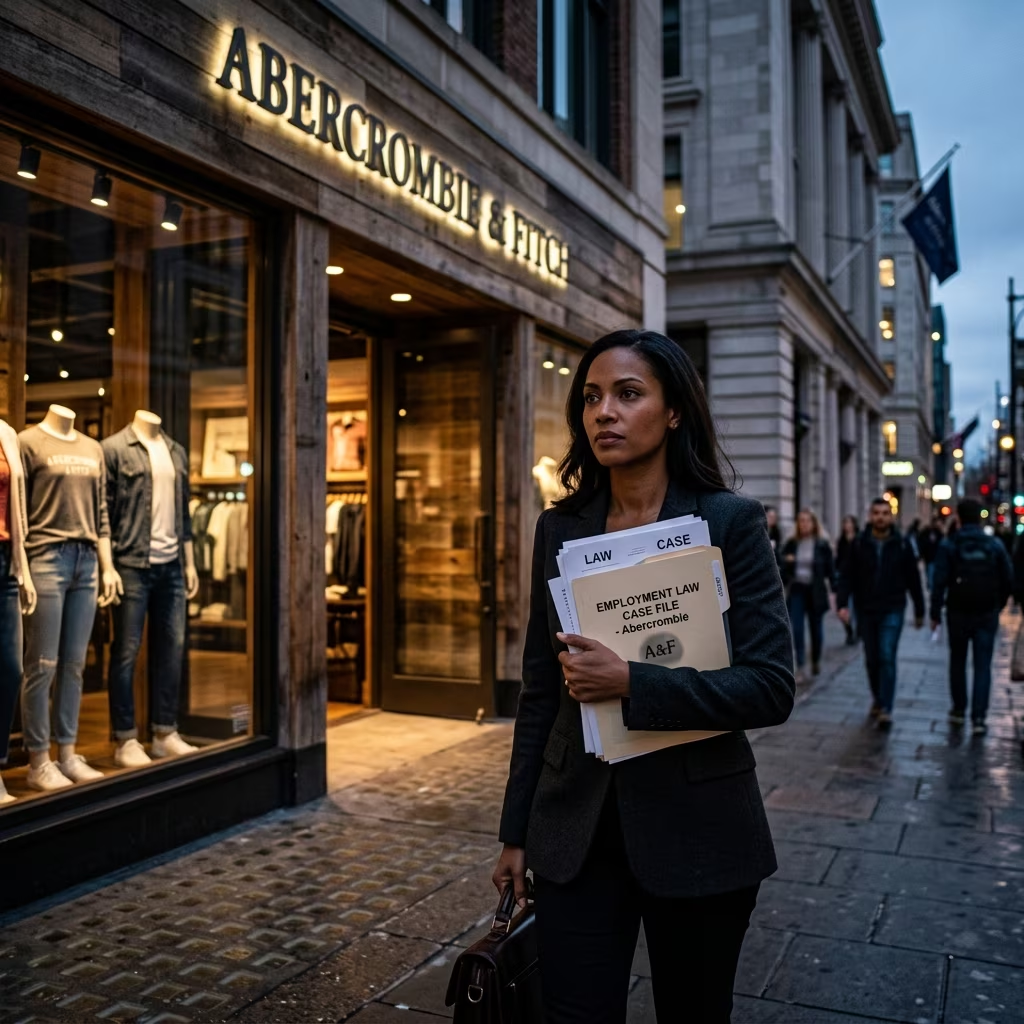
Abercrombie & Fitch, once known primarily for its preppy clothing and highly curated brand image, has also become a reference point in modern employment discrimination law. Over the last two decades, the company has faced major lawsuits alleging race and gender discrimination in hiring practices and religious discrimination in the application of its dress policies. These cases have not only led to substantial settlements and policy changes inside the company, but have also clarified how U.S. employers must handle diversity, branding, and religious accommodation under Title VII of the Civil Rights Act of 1964.
This article uses those lawsuits as a lens to explain key concepts in employment discrimination law, what went wrong in Abercrombie & Fitch’s approach, and what employers and employees can learn from the legal outcomes.
Understanding Employment Discrimination Under U.S. Law
In the United States, most workplace discrimination claims involving hiring, firing, and promotion decisions are governed by Title VII of the Civil Rights Act of 1964. Title VII makes it unlawful for covered employers to discriminate against individuals on the basis of characteristics such as race, color, religion, sex, or national origin in employment decisions.
Broadly, two common theories of discrimination under Title VII are:
- Disparate treatment – when an employer intentionally treats someone less favorably because of a protected characteristic, such as refusing to hire applicants from certain racial groups.
- Disparate impact – when an apparently neutral policy or practice, applied uniformly, disproportionately harms a protected group and is not justified by business necessity.
Religious discrimination claims add another dimension. Title VII requires employers not only to refrain from discrimination, but also to reasonably accommodate an employee’s or applicant’s religious practices unless doing so would cause an undue hardship on the employer’s business.
The Abercrombie & Fitch Race and Gender Discrimination Litigation
One of the most prominent legal challenges Abercrombie & Fitch faced concerned allegations that its recruiting and staffing practices systematically favored white employees and disadvantaged racial minorities and women. Plaintiffs claimed that the company’s branding decisions translated into biased hiring choices that violated Title VII’s protections.
Core Allegations Against the Company
In the race and gender discrimination lawsuits, the plaintiffs argued that Abercrombie & Fitch:
- Prioritized hiring white men and women for prominent sales positions referred to as “Brand Representatives.”
- Assigned minorities and some women to less visible jobs, such as stockroom or overnight positions, away from customer-facing roles.
- Used marketing imagery, word-of-mouth recruiting, and subjective hiring criteria that effectively filtered out many minority candidates.
- Maintained a company culture that equated a narrow, largely white aesthetic with its “ideal” brand image.
These practices were claimed to amount to disparate treatment, because the employer allegedly favored certain groups in hiring and job assignments based on race and gender, and disparate impact, because its recruitment and branding strategies had the effect of reducing opportunities for minorities and women.
Settlement and Injunctive Relief
The litigation resulted in a major class-action settlement approved by a federal court in 2005. The settlement required Abercrombie & Fitch to pay approximately $50 million in monetary relief to Latino, African American, Asian American, and female applicants and employees alleging discrimination.
In addition to financial compensation, the court entered a Consent Decree that mandated significant changes in the company’s operations. Under that decree, Abercrombie & Fitch agreed to:
- Implement wide-ranging policies and programs to promote diversity among its workforce.
- Revise hiring and recruitment practices to reduce subjectivity and increase equal opportunity.
- Provide training and monitoring intended to prevent future discrimination based on race or gender.
- Report to court-appointed monitors and adopt measures to track compliance for several years after the settlement.
The decree remained in effect for a multi-year period, reflecting the court’s view that long-term oversight was necessary to change entrenched practices and to ensure ongoing compliance.
Illustrative Table: Key Elements of the Race Discrimination Settlement
| Issue | Pre-Litigation Practice (Alleged) | Post-Settlement Requirement |
|---|---|---|
| Hiring for Sales Floor Roles | Preference for white employees; minorities often steered away from front-of-store positions. | Objective criteria and oversight to ensure equal opportunity for minorities and women. |
| Recruitment Methods | Informal, appearance-based recruiting aligned with narrow brand image. | Revised recruitment policies aimed at broadening applicant pools and reducing bias. |
| Diversity Programs | Limited formal initiatives to promote workforce diversity. | Mandatory diversity promotion programs and training under court supervision. |
The Religious Discrimination Case: EEOC v. Abercrombie & Fitch Stores, Inc.
A separate high-profile case against Abercrombie & Fitch involved allegations that the company refused to hire a Muslim applicant because her religious headscarf conflicted with its dress rules. This case, EEOC v. Abercrombie & Fitch Stores, Inc., eventually reached the U.S. Supreme Court and reshaped the understanding of religious accommodation at the hiring stage.
The Facts: Samantha Elauf and the Dress Policy
In the case, a young Muslim woman named Samantha Elauf applied for a sales job at an Abercrombie & Fitch store. She wore a headscarf, or hijab, during her interview. The company had a “Look Policy” that restricted certain forms of headwear as part of its effort to maintain a consistent brand image across stores.
Although Elauf did not explicitly state that she wore the headscarf for religious reasons, store managers understood that accommodating the headscarf would conflict with the dress policy. The company ultimately declined to hire her, and the Equal Employment Opportunity Commission (EEOC) brought suit on her behalf under Title VII, alleging religious discrimination.
The Supreme Court’s Ruling
In 2015, the U.S. Supreme Court ruled against Abercrombie & Fitch in an 8–1 decision. The Court held that an employer may be liable for religious discrimination even when the applicant does not explicitly request an accommodation, as long as the need for accommodation is a motivating factor in the employer’s decision not to hire.
Key elements of the decision include:
- The Court interpreted Title VII’s disparate-treatment provision to require proof that the applicant was not hired “because of” religion, which includes religious practices such as wearing a headscarf.
- The employer’s liability does not turn on whether the applicant provided formal notice of a need for religious accommodation. Instead, if the employer’s desire to avoid accommodating a religious practice influenced the decision, that can constitute unlawful discrimination.
- Neutral policies—like a rule against all headwear—cannot be applied in a way that penalizes applicants for their religious practices when accommodation would not cause undue hardship.
Commentators noted that the decision continues a trend of Supreme Court rulings giving significant protection to religious believers under federal law.
Aftermath and Case Resolution
Following the Supreme Court’s decision, Abercrombie & Fitch resolved the case brought by the EEOC. The company agreed to settle the claims, and a federal appellate court granted the company’s request to dismiss its remaining appeal, effectively concluding the litigation.
The case underscored the importance for employers of reviewing dress codes and appearance standards to ensure they allow for reasonable religious accommodations. It also made clear that employers cannot simply rely on “religiously neutral” policies if, in practice, those policies are used to exclude applicants because of their religious practices.
Brand Image vs. Anti-Discrimination Duties
Both the race discrimination settlement and the religious discrimination case illustrate a recurring tension between brand image and legal obligations. Abercrombie & Fitch sought to project a highly specific aesthetic in its marketing and stores. However, when that aesthetic dictated who could work on the sales floor and what they could wear, it collided with legal protections for minorities and religious adherents.
Key lessons for employers include:
- Branding cannot trump civil rights law. Hiring policies that favor one race or gender, or that exclude religious practices without substantial justification, expose employers to significant liability.
- Neutral rules are not automatically lawful. A rule that appears neutral, such as “no headwear,” may be discriminatory if applied rigidly to religious clothing when reasonable accommodation is possible.
- Subjective hiring standards invite scrutiny. Vague criteria like “fits the look” can mask discriminatory decisions and are more likely to be challenged when they correlate with protected characteristics.
Practical Guidance for Employers
Employers across industries can use the Abercrombie & Fitch cases as a roadmap for improving compliance with employment discrimination laws.
Designing Inclusive Hiring Practices
- Use objective criteria – Focus job descriptions and interview assessments on skills, experience, and job-related competencies, rather than appearance or subjective notions of “fit.”
- Broaden recruitment channels – Avoid insular recruiting practices that draw disproportionately from narrow social or demographic networks.
- Train hiring managers – Provide regular training about Title VII, unconscious bias, diversity, and religious accommodation obligations.
- Document decisions – Keep clear, contemporaneous notes on legitimate, nondiscriminatory reasons for hiring or non-hiring decisions.
Managing Dress Codes and Appearance Standards
- Review policies for bias – Examine existing dress codes to see whether they may disproportionately impact certain racial, religious, or cultural groups.
- Build accommodation procedures – Establish straightforward processes for employees and applicants to request religious or medical accommodations, and evaluate those requests promptly.
- Consider undue hardship carefully – Under Title VII, an employer must show more than minor inconvenience to deny accommodation; the hardship must be significant in light of the business.
- Communicate flexibility – Make it clear in policies and training that rules may be adjusted when required by law to accommodate protected practices.
Practical Guidance for Workers and Job Seekers
Employees and applicants also benefit from understanding how cases like those involving Abercrombie & Fitch shape their rights and options.
- Know protected characteristics – Race, color, religion, sex, and national origin are protected under Title VII. Many states add additional protections, such as sexual orientation or gender identity.
- Document experiences – Keep records of interviews, communications, and comments that may indicate discriminatory motives or failures to accommodate.
- Ask about accommodation when needed – While Elauf’s case shows that explicit requests are not always required for protection, clearly communicating needs can help resolve issues early.
- Contact the EEOC or a state agency – Workers who believe they have been discriminated against may file a charge with the EEOC or comparable state agencies, subject to strict deadlines.
FAQs About Abercrombie & Fitch and Employment Discrimination
Did Abercrombie & Fitch admit wrongdoing in the race discrimination settlement?
Class-action settlements and Consent Decrees often involve substantial changes in policies and payments to affected workers, but they do not always include formal admissions of liability. In the Abercrombie & Fitch race discrimination litigation, the company agreed to pay significant monetary relief and implement diversity measures under court supervision, reflecting a recognition that its practices needed to change.
What is the main legal takeaway from EEOC v. Abercrombie & Fitch Stores?
The Supreme Court clarified that an employer can be liable for religious discrimination under Title VII if it refuses to hire someone because of a religious practice that would require accommodation, even when the applicant did not explicitly request that accommodation. The key inquiry is whether the need for accommodation was a motivating factor in the employer’s decision.
Can employers still have dress codes after the Abercrombie cases?
Yes. Employers may adopt reasonable dress codes and appearance standards, but they must be prepared to grant religious accommodations unless doing so would cause an undue hardship. Applying a dress code inflexibly, without considering religious obligations, can lead to liability.
How did these cases influence corporate diversity programs?
The settlement and ongoing oversight in the race discrimination litigation pushed Abercrombie & Fitch to build more robust diversity and equal opportunity programs. More broadly, high-profile cases like these have reinforced for many companies that diversity initiatives, consistent monitoring, and clear policies are essential parts of risk management and corporate responsibility.
What should job applicants do if they suspect discrimination during hiring?
Applicants who suspect discrimination should make contemporaneous notes of what happened, preserve emails or messages, and consider contacting the EEOC or a qualified attorney to discuss their options. Because legal deadlines can be short, timely action is important.
References
- Abercrombie & Fitch Employment Discrimination — NAACP Legal Defense Fund. 2003-06-16. https://www.naacpldf.org/case-issue/abercrombie-fitch-employment-discrimination/
- Gonzalez v. Abercrombie & Fitch Stores, Inc. — U.S. District Court case summary via Lieff Cabraser. 2005-04-12. https://www.lieffcabraser.com/employment/abercrombie-fitch/
- EEOC v. Abercrombie & Fitch Stores, Inc., 575 U.S. 768 — U.S. Supreme Court opinion (Justia). 2015-06-01. https://supreme.justia.com/cases/federal/us/575/768/
- Equal Employment Opportunity Commission v. Abercrombie & Fitch Stores, Inc. — First Amendment Encyclopedia, Middle Tennessee State University. 2017-07-31. https://firstamendment.mtsu.edu/article/equal-employment-opportunity-commission-v-abercrombie-fitch-stores-inc/
- Abercrombie Resolves Religious Discrimination Case Following Supreme Court Ruling in Favor of EEOC — U.S. Equal Employment Opportunity Commission Newsroom. 2015-08-13. https://www.eeoc.gov/newsroom/abercrombie-resolves-religious-discrimination-case-following-supreme-court-ruling-favor
- The Law and Culture of the Abercrombie Case — Stanford Law School. 2015-06-15. https://law.stanford.edu/2015/06/15/the-law-and-culture-of-the-abercrombie-case/